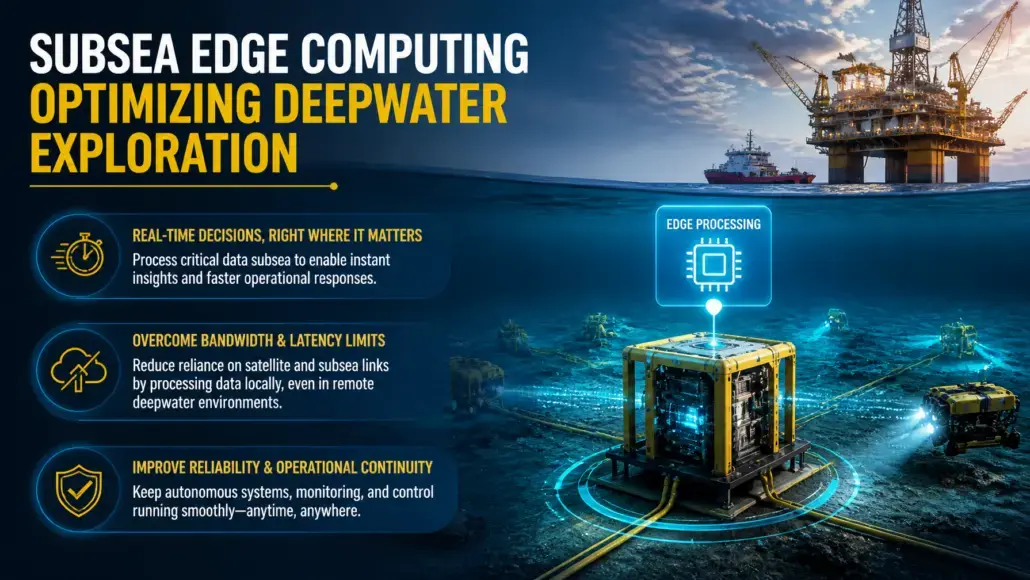
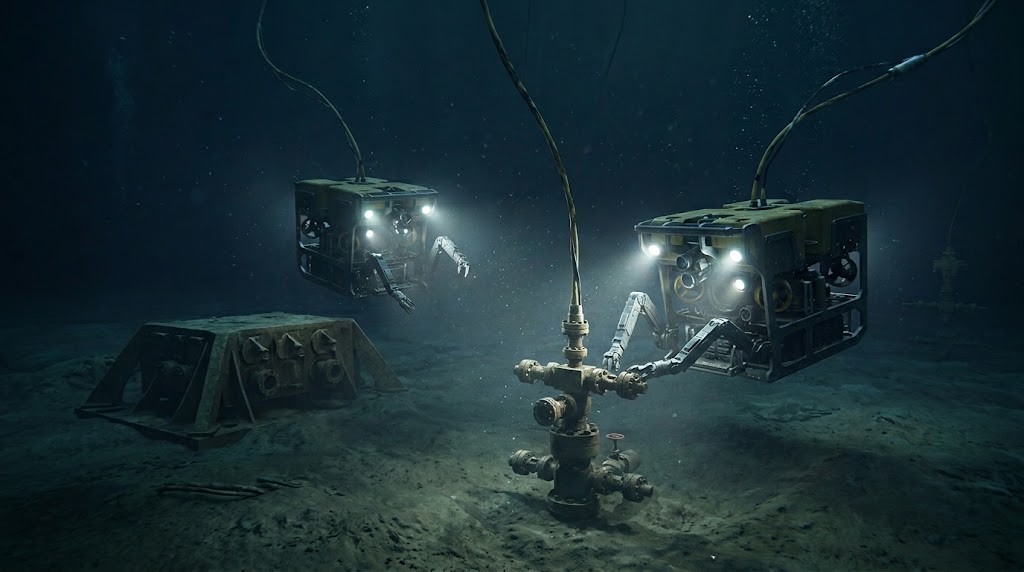
The energy industry is moving into deeper waters where the physical constraints of data transmission often conflict with the need for immediate operational decisions. Offshore operators are increasingly finding that the traditional model of sending massive datasets to onshore facilities for processing is no longer sustainable for complex deepwater oil operations. The delay caused by satellite latency or limited subsea cable bandwidth can hinder the performance of autonomous systems and prevent real time response to critical downhole changes. To address these challenges, many companies are deploying subsea edge computing architectures that allow for local data processing at the site of extraction.
This shift toward localized intelligence is a fundamental change in how the industry handles information in remote environments. Oil & Gas Advancement observes that by placing high performance computing clusters directly on the seabed or within subsea production modules, operators can analyze sensor data and control systems without waiting for a round trip to the cloud.
This capability is becoming essential as deepwater projects become more sophisticated and rely more heavily on robotics and automated subsea trees.
The goal is to reduce the volume of data that needs to be transmitted while increasing the speed at which the system can act on that data. This localized processing capability is also becoming a cornerstone for safety applications, such as AI driven mud monitoring, which requires immediate fluid analysis to prevent drilling incidents.
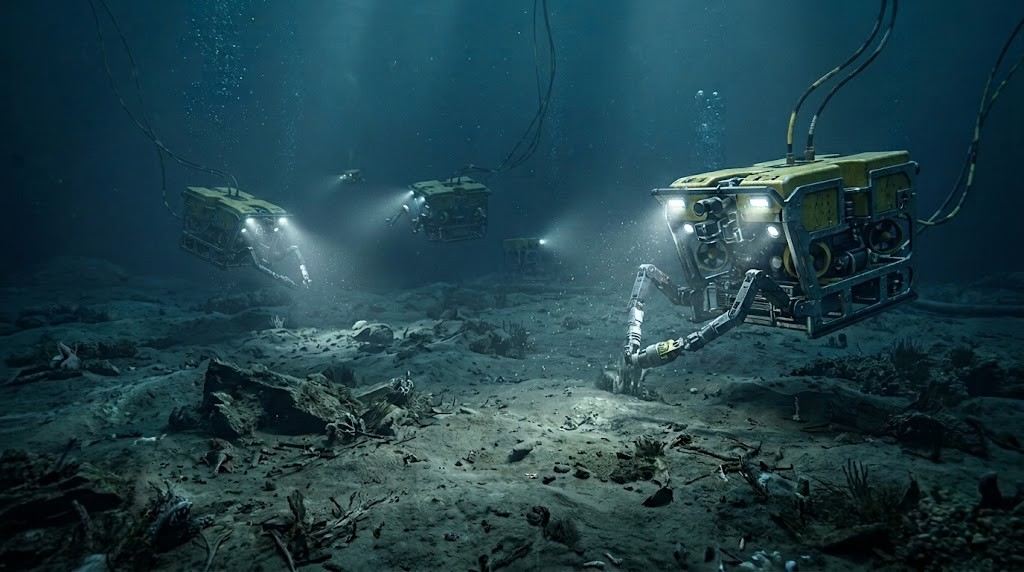
Subsea edge computing provides a robust solution for managing the immense data volumes generated by modern offshore seismic and production sensors. In a typical deepwater environment, thousands of sensors monitor everything from pressure and temperature to the structural integrity of the riser system. Processing this information at the edge allows for the immediate identification of anomalies, which is vital for preventing equipment failure and ensuring environmental safety. The ability to filter and analyze data locally ensures that only the most relevant insights are sent to the surface, optimizing the use of limited communication channels.
Driving Efficiency in Autonomous Oilfields
The development of autonomous oilfields depends on the ability of subsea equipment to make independent decisions based on real time environmental input. Subsea edge computing enables this autonomy by providing the necessary processing power to run advanced algorithms near the wellhead. This is particularly important for autonomous underwater vehicles that perform inspections and light interventions. These machines need to process high resolution video and sonar data in real time to navigate complex subsea infrastructure without human intervention.
When processing occurs locally, the latency associated with remote control is virtually eliminated:
- This allows for more precise movements and faster reaction times when a vehicle encounters an unexpected obstacle or a change in water currents.
- The integration of edge intelligence also supports the longevity of these autonomous systems by reducing the power consumed during data transmission.
- Operators can now deploy fleets of drones that stay submerged for longer periods, significantly lowering the cost of routine maintenance and inspection tasks in deepwater regions.
The rise of digital transformation in the oil and gas sector is accelerating the adoption of these technologies. Market analysts have observed a significant increase in spending on digital infrastructure, with the digital transformation market in the industry reaching approximately 72.18 billion dollars in 2026. This investment is directed toward creating more resilient and efficient operations that can withstand the economic pressures of a volatile energy market. Subsea edge computing is a central pillar of this strategy, as it directly impacts the reliability of remote assets.
Optimizing Offshore Data Processing
Offshore data processing at the edge is not just about speed. It is also about the intelligent management of data lifecycle. In the past, much of the data collected from subsea sensors was simply discarded or stored without analysis because it was too difficult to transmit to the shore. Edge computing changes this by allowing for on site data reduction and feature extraction. This means that instead of sending a raw stream of vibration data from a subsea pump, the edge system can send a simple status report indicating that the pump is operating within normal parameters.
This selective transmission significantly reduces the burden on satellite networks and other offshore communication links. It also ensures that onshore experts are not overwhelmed with trivial data, allowing them to focus on high level strategic decisions rather than basic monitoring. The use of edge nodes also provides a layer of redundancy. If the communication link to the surface is lost, the subsea systems can continue to operate safely using their local intelligence to manage production and protect the wellbore.
As the adoption of these systems grows, the overall edge computing market is seeing substantial growth. Revenues are anticipated to reach approximately 55 billion dollars in 2024 and climb to 68 billion dollars in 2025. This broader trend toward edge intelligence is being mirrored in the subsea sector, where the demand for low latency processing is at its highest. Energy companies are partnering with technology providers to create ruggedized edge servers that can operate reliably in the extreme pressure and low temperatures of the deep ocean floor.
Enhancing Oil and Gas Exploration Capabilities
Deepwater oil and gas exploration is an inherently risky and expensive endeavor. The success of an exploration campaign often hinges on the ability to accurately interpret seismic data and well logs in a timely manner. Subsea edge computing enhances these capabilities by allowing for faster evaluation of potential reservoirs. When sensors in the drill string or on the seabed can process data locally, exploration teams can adjust their drilling parameters in real time to optimize the trajectory of the well and avoid hazardous formations.
This real time insight is particularly valuable when drilling in complex geological settings where the risk of pressure kicks or lost circulation is high:
By analyzing the data at the source, the system can detect subtle changes in rock properties and fluid composition long before they would be visible to a surface operator. This proactive approach to well control significantly improves the safety and efficiency of deepwater drilling operations. It also reduces the time required to complete a well, which can save operators millions of dollars in rig costs.
The integration of subsea energy tech is also fostering a more sustainable approach to exploration:
- By improving the accuracy of drilling and reducing the likelihood of incidents, edge computing helps minimize the environmental footprint of offshore activities.
- The ability to monitor subsea habitats and water quality in real time using edge enabled sensors provides an extra layer of environmental protection.
- This is becoming a critical requirement for companies as they face increasing scrutiny from regulators and the public regarding their environmental performance.
Overcoming Technical Challenges in Deepwater Environments
Implementing subsea edge computing is not without its technical hurdles:
- The equipment must be housed in pressure tolerant enclosures that can withstand thousands of pounds of force per square inch.
- It also requires efficient cooling systems to dissipate the heat generated by high performance processors in an environment where access for maintenance is extremely difficult and costly.
- Engineers are developing innovative thermal management solutions that use the surrounding seawater to keep the edge nodes within their optimal operating temperature range.
Power supply is another major consideration. Subsea edge clusters need a reliable source of electricity to function continuously. This is often provided through umbilicals from a surface platform or a subsea power grid.
However, there is growing interest in using renewable energy sources such as wave or tidal power to supply electricity to remote subsea nodes. This would further enhance the autonomy of the system and reduce the reliance on traditional power infrastructure.
Reliability is the most important factor in the design of subsea electronics. Since a single failure can lead to expensive intervention missions using remotely operated vehicles, every component must be rigorously tested for long term durability.
The industry is moving toward more modular designs that allow for easier replacement of specific modules without disturbing the entire system. This approach to maintenance is essential for making subsea edge computing a viable long term solution for the deepwater sector.
Autonomous Subsea Intelligence and Edge Implementations in Deepwater Extraction
To eliminate latency barriers and bandwidth restrictions across deepwater operations, global energy service majors and upstream operators are actively commercializing localized processing and autonomous robotics directly on the seabed. Saipem achieved a major validation milestone by completing offshore trials with Petrobras for its resident FlatFish autonomous underwater drone, which runs edge computing and computer vision algorithms directly at subsea production risers without human remote control.
In parallel, Oceaneering International and TotalEnergies concluded a joint commercial demonstration using the Freedom™ AUV, leveraging onboard intelligence and autonomous tracking algorithms to survey more than 120 kilometers of deepwater pipelines without surface tether reliance. Addressing computational bottlenecks at the infrastructure level, SLB launched its Lumi™ data and AI platform to execute analytics workflows locally on connected oilfield and subsea edge devices, while Chevron validated its SHIELD technology, a self-powered, subsea edge sensor that harvests thermal pipeline energy to autonomously process wax deposition and flow assurance data on the ocean floor. Together, these technological developments replace reactive, surface-dependent intervention models with localized, predictive intelligence at the point of extraction.
The Future of Subsea Energy Tech
The future of subsea energy tech will be defined by the convergence of edge computing, high speed communication, and advanced robotics. We are seeing the emergence of subsea data centers that can serve multiple fields, providing a shared infrastructure for localized processing.This collaborative model could significantly lower the barrier to entry for smaller operators and encourage the development of marginal fields that were previously considered uneconomical.
As artificial intelligence continues to advance, the capabilities of subsea edge systems will expand even further. We can expect to see systems that can not only detect problems but also predict them before they occur.
Predictive maintenance powered by edge AI will allow operators to schedule repairs during planned downtime, avoiding the massive costs associated with unplanned production halts. This transition from reactive to proactive management is the key to achieving a truly intelligent subsea environment.
The ongoing digitalization of the offshore sector is expected to yield massive savings. A significant portion of these savings will come from improved efficiency in drilling, logistics, and subsea operations enabled by edge computing. As companies continue to push the boundaries of what is possible in deepwater, Oil & Gas Advancement believes that subsea edge computing will remain a critical enabler of success in the most challenging environments on the planet.
References
- Saipem
- Oceaneering International and TotalEnergies
- SLB
- Chevron