


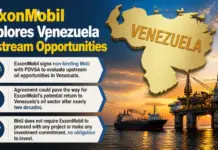








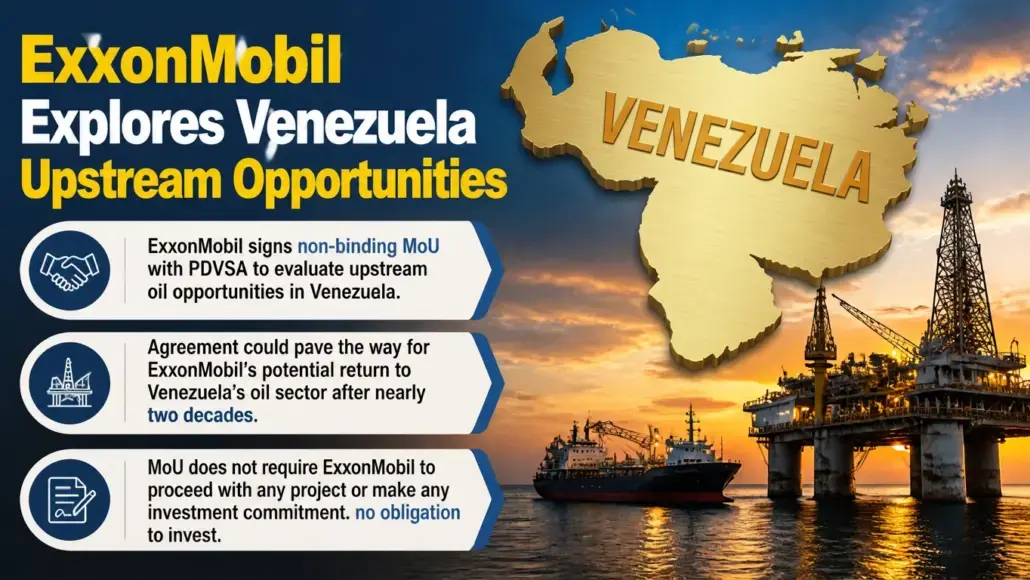
ExxonMobil announced on Monday that it had signed a memorandum of understanding with Venezuelan state oil company PDVSA to evaluate upstream oil opportunities in Venezuela. The agreement could pave the way for the US energy major to re-enter the country’s oil sector nearly two decades after its assets were expropriated. However, the memorandum is non-binding and does not require ExxonMobil to proceed with any particular project or make an investment commitment.
The company clarified that the agreement represents an initial step, with further conditions needing to be met before any investment decision is considered. “This memorandum is a meaningful first step, but any future investment would require stable policies, clear regulations, strong investment protections and competitive returns,” Exxon said in a statement.
Political Significance and Potential Investment Framework
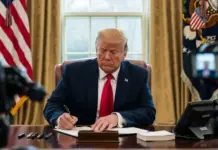
A decision by ExxonMobil to move forward would represent a significant return to Venezuela following the expropriation of its assets under former President Hugo Chavez’s government. The development could also be a political achievement for US President Donald Trump, who has pursued changes to Venezuela’s oil sector and sought to place US companies in prominent positions following the removal of President Nicolas Maduro from power by American forces in January.
Previous Assets and Outstanding Arbitration Dispute
Before its assets were expropriated, Exxon held a 41.67% stake in the Cerro Negro heavy crude project, which is now known as Petromonagas. The company also maintained a 50% interest in the La Ceiba project, located in the southern Maracaibo basin. The expropriation subsequently resulted in legal proceedings initiated by Exxon affiliates against Venezuela. In 2007, the affiliates filed for arbitration at the World Bank’s International Centre for Settlement of Investment Disputes (ICSID).
The proceedings resulted in a 2014 award granting Exxon $1.6 billion plus interest. However, Venezuela challenged the award, and the dispute remains unresolved. Against this background, the latest memorandum with PDVSA introduces a potential opportunity for renewed engagement between the company and Venezuela’s oil industry. Any further progress on Venezuela upstream opportunities will depend on the development of suitable contractual arrangements, regulatory clarity and investment protections. For now, the agreement establishes a preliminary basis for discussions without confirming any specific exploration, production or investment activity.
