


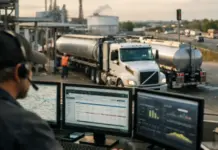












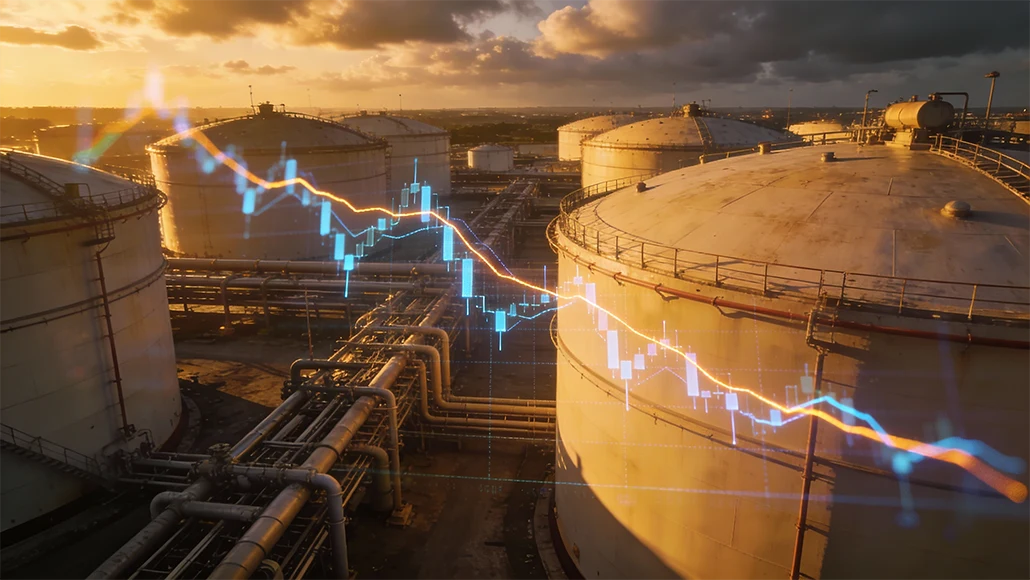
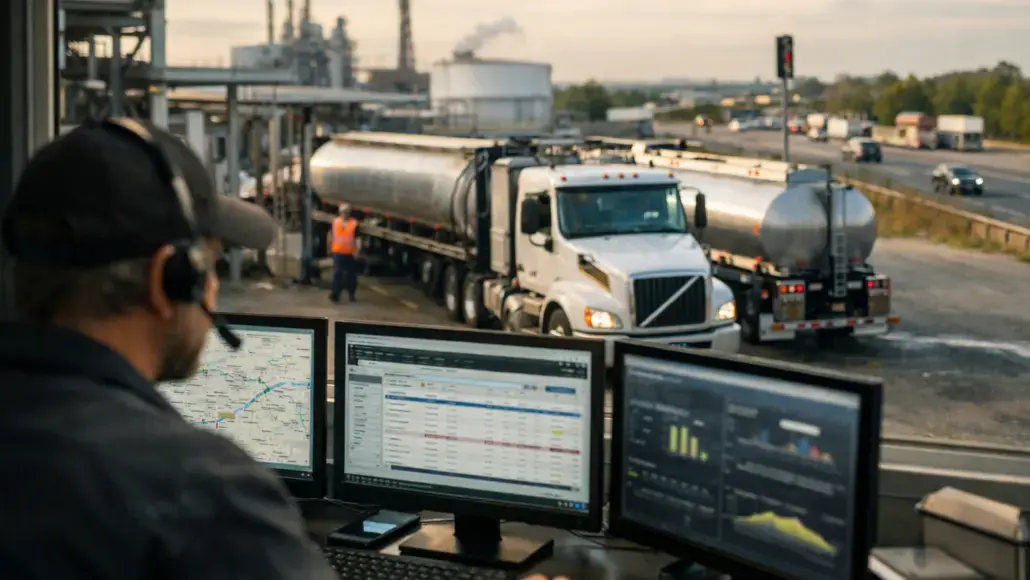
Transporting crude oil, gasoline, diesel, and other petroleum products involves complex logistics operations where even small inefficiencies can create significant expenses. Fleet operators must coordinate deliveries, manage driver schedules, monitor fuel consumption, and comply with strict safety regulations. At the same time, fluctuating demand, traffic conditions, and unexpected disruptions make transportation planning increasingly challenging.
For many businesses, the biggest problem is not a lack of vehicles or personnel. It is the limited visibility and fragmented information that prevent logistics teams from making efficient decisions. Manual dispatching, disconnected tracking systems, and outdated reporting processes can increase transportation costs while reducing operational flexibility.
Modern oil and gas transportation management software helps address these challenges by connecting planning, dispatching, fleet monitoring, and operational analytics within a unified digital environment. Custom development providers such as Wezom can adapt these platforms to the specific requirements of petroleum carriers, distributors, and energy logistics operators.
By introducing targeted automation, companies can reduce unnecessary mileage, improve vehicle utilization, and establish more predictable transportation costs without compromising safety or service quality.
Why Fuel Transportation Costs Are Difficult to Control
Petroleum logistics differs from conventional freight transportation in several important ways. Companies must account for hazardous materials requirements, specialized equipment, loading and unloading procedures, and delivery restrictions that can vary across locations.
These conditions create additional operational complexity. A route that appears efficient based solely on distance may be unsuitable because of vehicle restrictions, terminal schedules, or delivery requirements.
Transportation costs are also influenced by factors that change throughout the day, including traffic congestion, terminal waiting times, equipment availability, and customer demand.
Several recurring issues contribute to unnecessary expenses:
- Empty mileage: Trucks travel without cargo between delivery points, terminals, or depots.
- Inefficient dispatching: Poorly coordinated assignments increase travel distances and waiting times.
- Limited fleet visibility: Dispatchers cannot respond quickly to delays or unexpected route changes.
- Manual documentation: Paper-based processes slow down invoicing, reporting, and delivery confirmation.
- Underutilized assets: Vehicles and drivers are not assigned according to actual capacity and availability.
Individually, these problems may appear manageable. Across a large fleet, however, their combined effect can significantly reduce profitability.
How Intelligent Route Planning Reduces Operating Expenses
Route optimization is one of the most valuable applications of logistics automation.
Traditional route planning often relies on dispatcher experience, static schedules, and manual calculations. Although experienced teams can manage familiar delivery patterns effectively, these methods become less reliable as shipment volumes and operational constraints increase.
Modern transportation platforms can evaluate multiple variables simultaneously, including delivery windows, vehicle capacity, road restrictions, terminal availability, and expected travel conditions.
Reducing Empty Miles and Unnecessary Travel
Empty mileage is a common source of avoidable costs in petroleum transportation. Vehicles may return to terminals without cargo or travel significant distances between assignments.
Automated planning can help identify more efficient delivery sequences and improve coordination between available vehicles and upcoming shipments.
For example, a petroleum distributor serving multiple fuel stations can use optimization tools to group compatible deliveries by geographic area and vehicle capacity.
The objective is not simply to minimize distance. It is to reduce total operating costs while respecting safety requirements, delivery commitments, and equipment limitations.
Improving Delivery Scheduling
Petroleum deliveries frequently depend on terminal loading slots, customer operating hours, and product availability.
When these factors are managed through separate systems, dispatchers may struggle to maintain accurate schedules.
Integrated planning software allows teams to coordinate transportation assignments with loading and unloading requirements.
This can reduce avoidable waiting periods, improve schedule reliability, and help operators respond more effectively when circumstances change.
Automating Dispatch Operations for Better Fleet Utilization
Dispatching is a central activity in petroleum logistics. Every assignment requires coordination between drivers, vehicles, cargo requirements, and delivery destinations.
Manual dispatching becomes increasingly difficult when operators manage large fleets or frequent schedule changes.
Custom oil and gas transportation management software can automate selected dispatching tasks while allowing employees to retain control over important operational decisions.
Typical capabilities include:
- Automated assignment recommendations based on vehicle availability.
- Real-time updates to delivery schedules and shipment status.
- Driver notifications through mobile applications.
- Digital confirmation of loading and unloading activities.
- Centralized visibility into active and upcoming assignments.
These features help reduce repetitive administrative work and improve communication between dispatchers and drivers.
Matching Vehicles to Operational Requirements
Not every vehicle can transport every petroleum product.
Dispatching systems must consider tank configuration, compartment capacity, equipment certifications, product compatibility, and applicable transportation regulations.
A properly configured platform can incorporate these constraints into assignment recommendations.
This reduces the risk of unsuitable vehicle allocation and helps operators make better use of specialized transportation assets.
Responding Faster to Operational Disruptions
Unexpected delays are unavoidable in logistics.
Traffic incidents, equipment problems, terminal congestion, and last-minute customer requests can disrupt carefully prepared schedules.
A centralized dispatching platform gives teams access to current information, allowing them to evaluate alternatives without relying on multiple phone calls or disconnected spreadsheets.
Faster coordination can help limit the financial impact of disruptions and improve delivery reliability.
Real-Time Fleet Visibility and Telematics Integration
Effective cost management depends on understanding what is happening across the transportation network.
GPS tracking and vehicle telematics provide valuable information about vehicle location, movement, engine performance, and selected operational events.
However, tracking data becomes more useful when it is connected to dispatching, shipment management, and business analytics.
An integrated platform can present operational information through a centralized dashboard, helping managers identify delays, unusual vehicle activity, and potential inefficiencies.
| Operational Data | Potential Business Benefit |
| Vehicle location | Better shipment visibility and dispatch coordination |
| Engine idling | Identification of avoidable fuel consumption |
| Route history | Analysis of inefficient travel patterns |
| Vehicle diagnostics | Earlier identification of maintenance needs |
| Delivery timestamps | More accurate performance measurement |
| Driver activity records | Improved scheduling and compliance monitoring |
Reducing Fuel Consumption
Fuel consumption represents a major operating expense for transportation companies.
Telematics data can help identify excessive idling, inefficient routing, and other patterns that contribute to unnecessary fuel use.
Managers can use these insights to refine operating procedures and support driver training.
The results depend on vehicle condition, operating environment, driver behavior, and the quality of collected data. Software provides visibility and recommendations, but measurable savings require appropriate operational changes.
Supporting Preventive Maintenance
Unexpected equipment failures can interrupt deliveries and generate additional costs.
By connecting vehicle diagnostics with maintenance management systems, companies can improve the scheduling of inspections and servicing.
This approach helps operators address developing issues before they cause more expensive disruptions.
For petroleum carriers, reliable maintenance planning also supports safety and regulatory compliance.
Connecting Transportation with Enterprise Systems
Many petroleum logistics companies already use software for accounting, inventory management, customer relationships, and fleet maintenance.
The problem is that these systems frequently operate independently.
Dispatchers may update transportation schedules in one application, while accounting teams manually transfer delivery information into another. Warehouse or terminal personnel may maintain separate records of product availability.
These disconnected processes create duplicate work and increase the risk of inconsistent information.
Custom integrations can establish a more reliable flow of operational data.
For example, a completed delivery can automatically update shipment status, generate documentation, and provide relevant information to the accounting system.
Important integration opportunities include ERP platforms, terminal management systems, inventory applications, electronic logging solutions, and customer portals.
The objective is to create a connected transportation workflow rather than replace every existing business application.
Measuring the Financial Impact of Logistics Automation
Investing in transportation technology should produce measurable operational improvements.
However, companies need to establish baseline performance before evaluating the return on investment.
A platform may improve dispatcher productivity or shipment visibility without immediately reducing every cost category. Financial results depend on the organization’s starting conditions, implementation quality, and adoption by employees.
Several performance indicators can help measure progress.
| KPI | What It Measures | Why It Matters |
| Cost per delivery | Transportation spending per completed shipment | Tracks overall delivery efficiency |
| Cost per mile | Operating expenses relative to distance traveled | Supports route and fleet analysis |
| Empty-mile percentage | Share of distance traveled without cargo | Reveals utilization inefficiencies |
| Vehicle utilization | Productive use of available fleet capacity | Helps optimize asset allocation |
| On-time delivery rate | Percentage of deliveries meeting schedules | Measures service reliability |
| Average terminal waiting time | Time spent waiting for loading or unloading | Identifies scheduling bottlenecks |
These metrics should be evaluated together.
For example, reducing total mileage may not improve profitability if it causes missed delivery windows or requires more expensive equipment.
A comprehensive cost analysis must consider service quality, safety, and operational constraints alongside financial efficiency.
Building a Practical Automation Strategy
Successful logistics modernization does not require replacing every process simultaneously.
A phased approach allows companies to address their most expensive inefficiencies first while reducing implementation risks.
Identify the Largest Cost Drivers
The first step is understanding where unnecessary spending occurs.
Companies should analyze route efficiency, vehicle utilization, dispatcher workload, terminal delays, and administrative processing times.
This assessment helps determine which software capabilities are most likely to generate meaningful improvements.
Prioritize High-Impact Features
Not every organization needs the same functionality.
A regional fuel distributor may benefit most from route planning and delivery scheduling, while a large transportation operator may prioritize fleet-wide visibility and integration with enterprise systems.
Development priorities should reflect actual operational requirements.
Validate the Platform with Real Operations
Before expanding a new system across an entire fleet, businesses can test it with selected routes, vehicles, or distribution locations.
Pilot projects provide an opportunity to evaluate software performance, collect employee feedback, and identify integration issues.
They also help establish whether expected operational improvements are achievable under real working conditions.
Support Employee Adoption
Automation is most effective when employees understand how it improves their daily work.
Dispatchers, drivers, fleet managers, and administrative personnel should participate in implementation planning and testing.
Clear workflows, appropriate training, and reliable technical support help organizations avoid introducing unnecessary complexity.
The Future of Cost-Efficient Petroleum Transportation
Digital transportation platforms are evolving through advances in predictive analytics, artificial intelligence, cloud computing, and connected vehicle technology.
Predictive models may help operators anticipate maintenance requirements, estimate delivery delays, and identify patterns in transportation demand.
More advanced planning systems can evaluate changing operational conditions and recommend adjustments to routes or vehicle assignments.
Cloud-based platforms also make it easier to coordinate operations across terminals, depots, and regional offices.
These capabilities can improve decision-making, but their effectiveness depends on reliable data and integration with established business processes.
Companies should therefore focus on building a strong digital foundation before investing in more complex automation technologies.
Making Petroleum Logistics More Efficient Through Automation
Reducing fuel transportation costs requires more than finding shorter routes or increasing the number of daily deliveries.
Petroleum carriers and distributors must coordinate specialized vehicles, manage strict operational requirements, and respond to disruptions while maintaining safety and service reliability.
Smarter logistics automation addresses these challenges by connecting route planning, dispatching, fleet monitoring, and enterprise data.
For businesses managing complex petroleum transportation networks, the greatest value comes from identifying specific inefficiencies and implementing technology that directly addresses them.
With a carefully planned digital strategy, transportation companies can improve fleet utilization, reduce unnecessary operating expenses, and create more predictable, scalable logistics operations.
