






















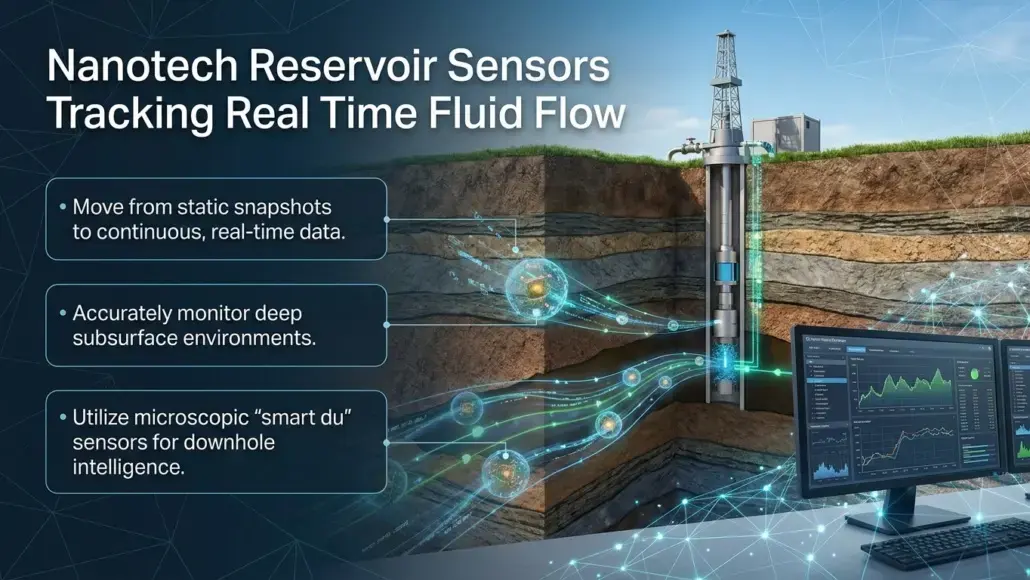
The ability to accurately monitor what is happening deep within a hydrocarbon reservoir has long been a challenge for the energy industry. Conventional monitoring techniques often rely on infrequent well tests or static reservoir models that provide only a snapshot of the subsurface environment. However, the introduction of nanotech reservoir sensors is changing this paradigm by providing a continuous stream of real time downhole data. These microscopic sensors, sometimes referred to as smart dust, are injected into the reservoir where they travel with the fluids, collecting and transmitting information about pressure, temperature, and chemical composition.
This level of insight is becoming essential as operators strive to maximize the recovery factor from existing fields:
- By understanding the path of fluid movement and identifying areas of bypassed oil, companies can more effectively plan their production strategies and optimize the use of injection wells.
- The deployment of nanotech reservoir sensors represents a significant leap forward in reservoir fluid mapping, allowing geoscientists to visualize the dynamic behavior of the reservoir with unprecedented detail.
- This technology is a core component of oilfield nanotechnology, a field that is increasingly focused on developing materials and devices that can operate at the molecular level to solve macroscopic engineering problems.
- By capturing this molecular level information, operators can feed high fidelity data into digital thread integration frameworks that unify well records from inception to abandonment.
The integration of these sensors is part of a broader trend toward digital transformation in the oil and gas sector. As energy companies face the twin pressures of maturing fields and the need for more sustainable operations, Oil & Gas Advancement observes that the role of real time monitoring becomes a critical driver of efficiency.
Precision Monitoring with Smart Dust Sensors
Smart dust sensors are a subset of nanotech reservoir sensors that are designed to be small enough to flow through the pore spaces of a rock formation. These sensors are typically coated with specialized materials that allow them to selectively bond with certain fluids or react to specific chemical signatures. Once they have traveled through the reservoir, they are recovered at a production well where the data they have collected is downloaded and analyzed. This provides a direct measurement of the fluid path and the conditions encountered along the way, which is far more accurate than estimates based on surface measurements.
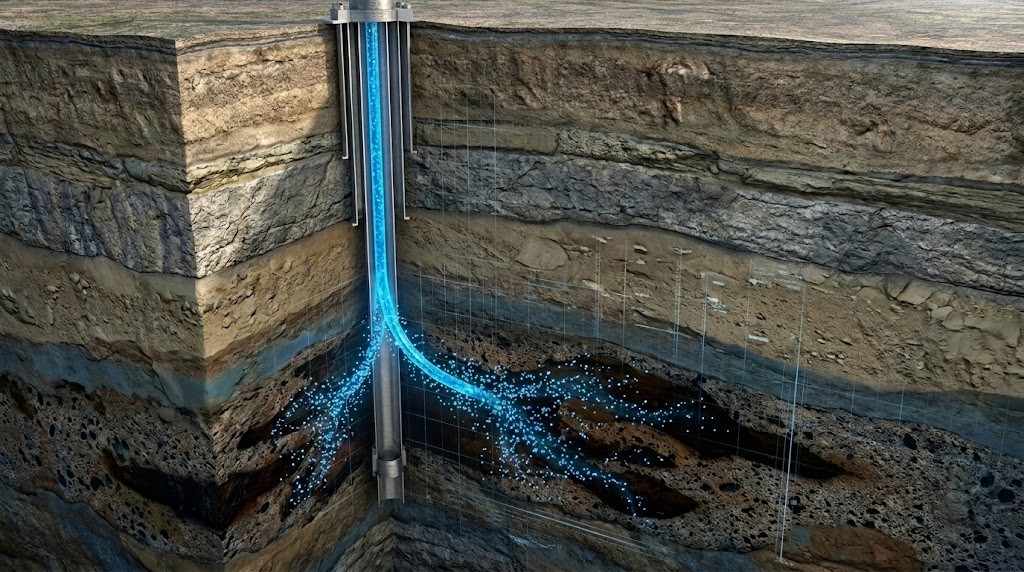
One of the key benefits of these sensors is their ability to detect changes in salinity and water saturation in real time. This information is vital for managing waterflooding operations, where water is injected into the reservoir to push oil toward the production wells. If the injected water breaks through to a production well too early, it can lead to a significant decrease in oil production and an increase in water handling costs. By using smart dust sensors to track the water front, operators can adjust their injection rates and well patterns to maintain a uniform displacement of the oil.
The accuracy of these measurements is also being improved by advancements in quantum sensing. The quantum sensors market is projected to see substantial growth as these devices are integrated into downhole tools. Quantum sensors can provide incredibly precise measurements of gravity and magnetic fields, which can be combined with the data from nanotech sensors to create a more comprehensive model of the reservoir. This multi sensor approach is the hallmark of modern enhanced oil recovery strategies.
Optimizing Enhanced Oil Recovery
Enhanced oil recovery or EOR involves the injection of chemicals, gases, or steam into a reservoir to increase the amount of oil that can be extracted. The success of an EOR project depends heavily on the ability to target the injected fluids into the right parts of the reservoir. Nanotech reservoir sensors provide the feedback loop necessary to ensure that these treatments are effective. By monitoring the concentration and movement of injected chemicals, operators can verify that the EOR agents are reaching the intended zones and reacting as expected with the reservoir fluids.
This real time feedback allows for more agile reservoir management:
- If the sensors indicate that the EOR treatment is not performing as planned, the operator can make immediate adjustments to the injection parameters rather than waiting months for the results to show up in production figures.
- This proactive approach can significantly improve the return on investment for EOR projects, which are often capital intensive.
- The use of oilfield nanotechnology in this context is not just about improving recovery but also about reducing the waste of expensive chemicals and energy.
The economic impact of improved recovery is substantial. With global oil demand remaining resilient, the ability to extend the life of existing assets is a major strategic priority for both national and international oil companies. The move toward more intelligent and data driven recovery techniques is a direct response to this challenge. As the industry continues to advance its sensing capabilities, the boundary between what is technically recoverable and what is economically viable will continue to shift in favor of the operator.
Real Time Downhole Data for Better Decision Making
The value of real time downhole data extends beyond reservoir management to encompass well integrity and safety. Nanotech reservoir sensors can be used to monitor the condition of the wellbore and detect early signs of casing failure or cement degradation. By identifying these issues before they lead to a significant leak or blowout, companies can perform preventative maintenance and avoid the massive costs and environmental damage associated with wellbore incidents.
In high pressure and high temperature wells, where conventional electronics often fail, nanotech sensors offer a more robust solution:
- Many of these sensors are passive devices that do not require an internal power source, relying instead on external stimulation to transmit their data.
- This makes them ideal for long term monitoring in the most extreme downhole environments.
- The ability to collect data from these wells without the need for expensive intervention missions is a major advantage for deepwater and unconventional operators.
The development of these technologies is also being supported by advancements in wireless communication. Researchers are working on ways to transmit data from nanotech sensors to the surface using acoustic or electromagnetic signals, eliminating the need for physical connections to the sensors. This would allow for the deployment of sensors throughout the reservoir, creating a truly transparent subsurface environment where every change in fluid flow is immediately visible to the operator.
Overcoming Challenges in Nanotechnology Deployment
Despite their potential, the deployment of nanotech reservoir sensors faces several challenges:
- Rock interaction and chemical degradation: One of the main hurdles is the potential for the sensors to be trapped in the rock matrix or to be degraded by the harsh chemicals found in some reservoirs. Engineers are developing sophisticated coatings and protective structures to ensure that the sensors remain functional and mobile throughout their journey. The design of these coatings is a complex task that requires a deep understanding of the surface chemistry of the reservoir rocks.
- Environmental considerations: Another consideration is the environmental impact of injecting millions of microscopic sensors into the earth. While most of these sensors are made from inert materials such as silica or carbon, companies must still demonstrate that they do not pose a risk to groundwater or surface ecosystems. The industry is working closely with regulators to establish clear guidelines for the use of nanotechnology in the oilfield, ensuring that the benefits of the technology are not overshadowed by environmental concerns.
- Manufacturing costs: Cost is also a factor, as the production of high performance nanotech sensors remains relatively expensive. However, as the technology matures and production scales up, the cost per sensor is expected to decrease significantly. For many operators, the potential for increased production and reduced operational risk far outweighs the initial investment in the sensors. The long term value of the data they provide is increasingly seen as a critical asset in the competitive energy market.
Industrial Leaders Deploying Nanoscale Diagnostics and Smart Fluids to Unlock Subsurface Reservoir Potential
The industrial deployment of nanotechnology in upstream operations is shifting reservoir management from macroscopic estimation to molecular-level precision and autonomous fluid tracking. National oil major Saudi Aramco has pioneered subterranean nanoagents, utilizing fluorescent carbon “A-Dots” and micro-tracers, to flow directly through pore matrices, providing direct empirical data on sweep efficiency, bypassed oil zones, and water breakthrough.

In parallel, global conglomerates SLB and TotalEnergies continue to scale functionalized tracer nanoparticles and nano-surfactants within automated EOR workflows to monitor dynamic sweep fronts and optimize chemical displacement. Together, these technological developments illustrate how integrating nanoscale sensing, molecular wellbore treatments, and digital reservoir models enables energy operators to mitigate formation risks and substantially increase the ultimate recovery factor of mature fields.
The Future of Oilfield Nanotechnology
The future of oilfield nanotechnology will be characterized by the integration of sensing, computing, and intervention at the molecular level. We are seeing the development of autonomous nano agents that can not only sense their environment but also react to it by releasing chemicals or altering their physical properties. These agents could be used to selectively block high permeability channels in a reservoir, forcing the injected fluids into less permeable zones where oil is still trapped.
This move toward intelligent and active nanotechnology will further improve the efficiency of oil and gas production:
- As the digital and physical worlds continue to converge, the ability to manipulate the reservoir at the nanoscale will become a standard part of the engineer’s toolkit.
- We are also likely to see the emergence of hybrid sensors that combine nanotechnology with biotechnology, using modified microbes or enzymes to detect specific hydrocarbons or environmental conditions.
The overall growth in the digital oil field services market is a strong indicator of the industry’s commitment to these advanced technologies. With the market projected to grow further, the demand for more integrated and data rich services is clear. Oil & Gas Advancement believes that nanotech reservoir sensors will be at the forefront of this evolution, providing the foundational data that powers the next generation of reservoir simulations and autonomous production systems.
References
- Saudi Aramco
- TotalEnergies
- SLB
