




AI Summary
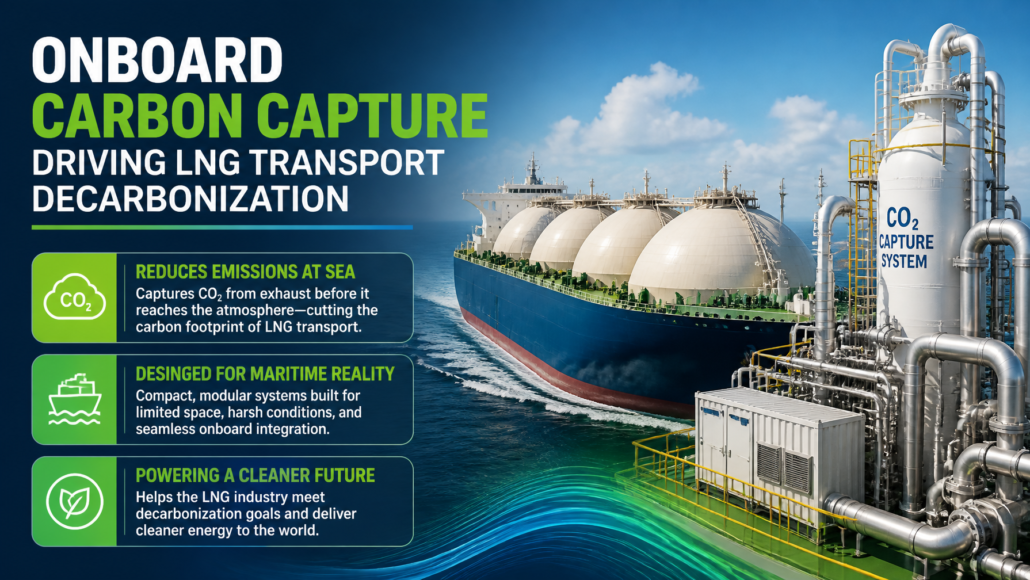
The maritime industry, responsible for transporting the vast majority of the world’s liquefied natural gas, is facing intense pressure to reduce its carbon footprint. While LNG is already a cleaner-burning fuel than heavy fuel oil, the greenhouse gas emissions associated with the transport phase remain a significant challenge for the industry’s long-term sustainability goals. In response, the development and deployment of onboard carbon capture (OCC) technology has emerged as a high-impact solution, allowing shipowners to actively capture and store carbon dioxide directly from the vessel’s exhaust stream. This innovation is transforming the LNG carrier fleet into an active participant in the global carbon management ecosystem, rather than just a passive conduit for energy.
Mechanisms and Engineering of Onboard Capture
The process of onboard carbon capture involves the installation of specialized equipment—such as chemical absorption towers or cryogenic separation units—within the ship’s engine room or on the deck. As the vessel’s engines burn fuel, the resulting exhaust gas is passed through the OCC system, where the carbon dioxide is separated and liquefied.
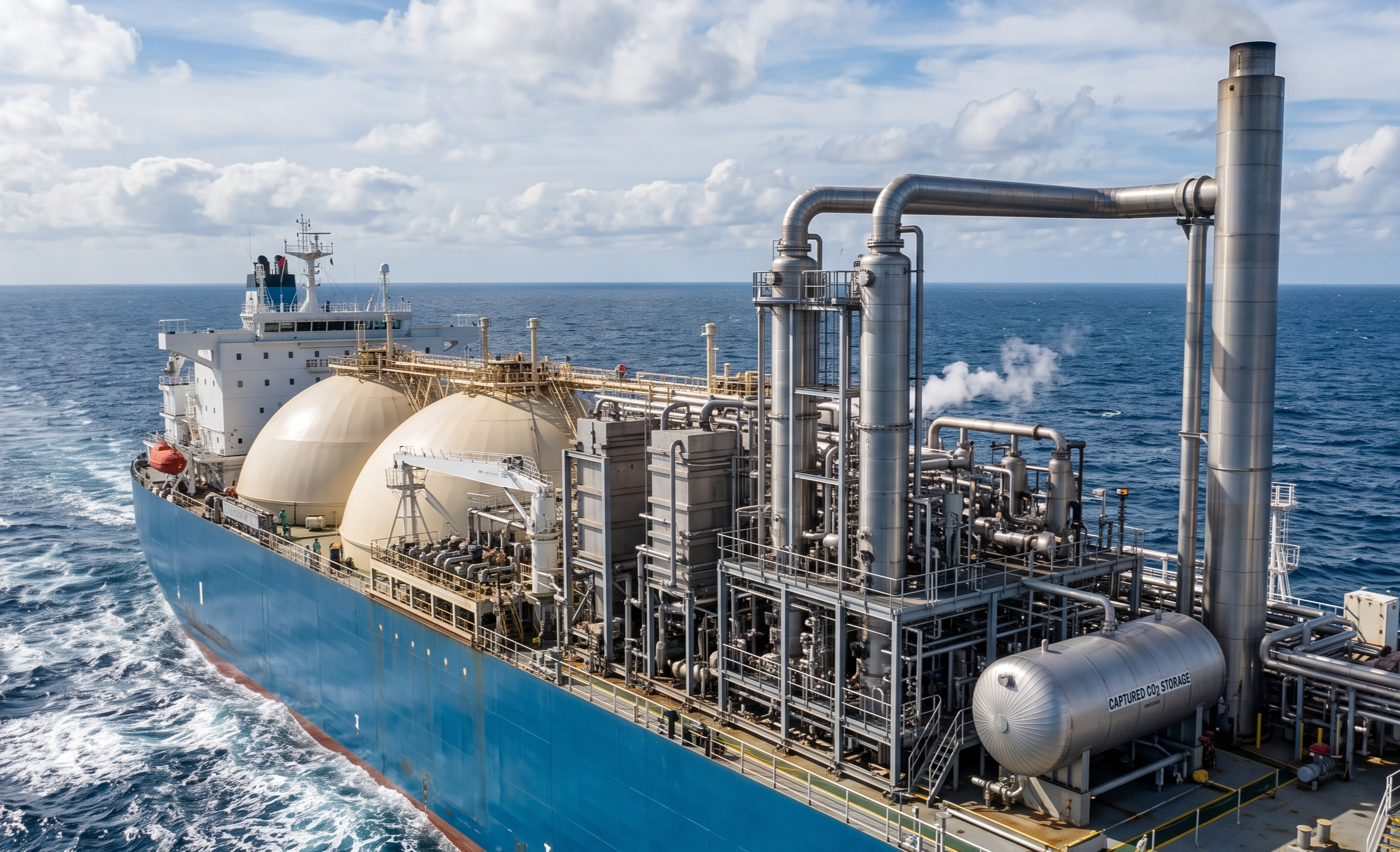
The captured CO2 is then stored in dedicated pressurized tanks until the ship reaches a port equipped with offloading infrastructure. This technology is particularly well-suited for the LNG sector, as the existing cryogenic expertise and infrastructure at liquefaction and regasification terminals can be leveraged to manage the captured carbon. The ultimate goal is to create a closed-loop system where the carbon emitted during transport is permanently sequestered or repurposed for industrial use.
Technological Pathways: Chemical Absorption vs. Cryogenic Separation
There are several competing methods for capturing carbon onboard, with chemical absorption using amines being one of the most mature technologies. In this process, a solvent reacts with the CO2 in the exhaust gas, which is then released and concentrated in a separate heating stage. Cryogenic capture, on the other hand, involves cooling the exhaust gas until the CO2 desublimates into solid ‘dry ice’ or liquefies, allowing for separation based on temperature. Each method has its own set of trade-offs regarding energy consumption, footprint, and capture efficiency. The choice of technology often depends on the specific vessel type and its operational profile, with shipowners carefully evaluating the total cost of ownership over the life of the ship.
Hybridization with Alternative Marine Fuels
Furthermore, the integration of OCC with alternative fuels like ammonia and methanol is a burgeoning area of research. While these fuels offer a lower carbon footprint than traditional marine gas oil, their combustion still produces some emissions. By combining these cleaner fuels with onboard carbon capture, shipowners can achieve even deeper levels of decarbonization, potentially reaching net-negative emissions in some scenarios. This multi-layered approach to maritime sustainability is essential for meeting the IMO’s increasingly stringent targets. The technical complexity of managing both a new fuel system and a carbon capture unit on a single vessel is significant, but it represents the frontier of modern naval architecture.
Milestone Commercial Deployment: The Nexus Victoria Project
A significant step forward in the commercialization of this technology occurred in April 2024, when Mitsui O.S.K. Lines (MOL) announced its decision to equip an LR1 product tanker with an onboard CO2 capture system. This project, which involves the installation of a system developed by Value Maritime, marks the first time a Japanese operator has committed to a commercial-scale installation of this type. The system is designed to capture approximately 10% of the vessel’s emissions, providing a vital real-world test case for the efficacy and reliability of onboard carbon capture in a demanding maritime environment. The successful delivery of the vessel, the ‘Nexus Victoria’, in early 2025 further solidified MOL’s leadership in the maritime decarbonization space. The ‘Nexus Victoria’, a 75,000 DWT LR1 product tanker, utilizes the ‘Filtree’ system from Value Maritime, which not only captures CO2 but also filters sulphur and particulate matter from the exhaust, providing a comprehensive environmental solution. The system includes a ‘CO2 Battery’ that allows for the safe storage and transfer of the captured gas, highlighting the innovative engineering required to bring OCC to the commercial market.
Market Validation and Fleet-Wide Scalability
The success of the ‘Nexus Victoria’ project has already sparked interest from other major shipping lines, who are closely monitoring the operational data from the vessel. The ability to demonstrate that OCC can be integrated into a commercial tanker without significant disruption to its schedules or payload capacity is a major hurdle that has now been cleared. This successful deployment is expected to lead to a surge in orders for similar systems, particularly for vessels operating in emission control areas (ECAs) where environmental regulations are most stringent. The role of MOL as an early adopter has been crucial in proving the viability of the technology and paving the way for its wider adoption.
Full-Value-Chain Decarbonization and Scope 3 Reductions
The integration of onboard carbon capture is intrinsically linked to the broader efforts to enhance the sustainability of the entire gas value chain. For instance, the process of scaling E-drive technology in LNG production addresses the emissions associated with the production phase, while OCC targets the transport phase. Together, these technologies provide a comprehensive framework for reducing the carbon intensity of LNG, ensuring that it remains a competitive and socially acceptable fuel source in a net-zero world. The ability to offer carbon-neutral or low-carbon LNG is becoming a key differentiator in the market, as buyers look to minimize their Scope 3 emissions.
Naval Architecture and Retrofit Challenges
Furthermore, the development of OCC technology is driving innovation in maritime engineering and vessel design. Integrating a complex carbon capture system onto a ship requires careful consideration of weight, stability, and power consumption.
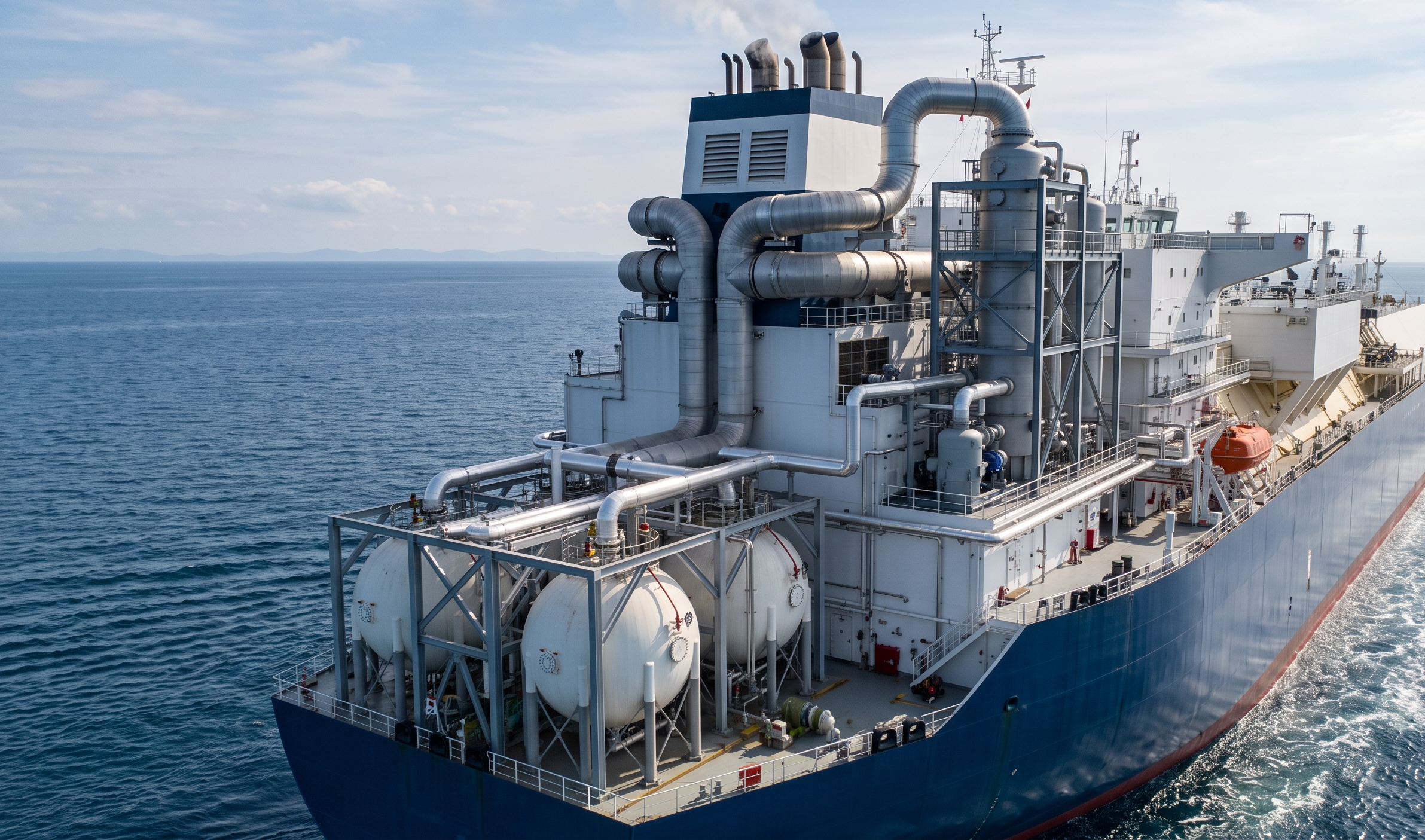
Engineers are developing more compact and efficient capture units, as well as optimizing the integration of these systems with the ship’s existing propulsion and power management systems. The data generated from early pilot projects is being used to refine the technology, leading to improved capture rates and lower operational costs. As the technology matures, it is expected to become a standard feature on newbuild LNG carriers and a common retrofit for existing vessels.
Port Infrastructure and Regional Carbon Hubs
The success of onboard carbon capture also depends on the development of a robust global infrastructure for CO2 offloading and sequestration. Ports must invest in specialized facilities to receive, store, and transport the captured carbon to sequestration sites or industrial users. This requires a high degree of coordination between shipowners, port authorities, and carbon management companies. The emergence of carbon hubs at major maritime centers is a key trend in this regard, providing a centralized infrastructure for managing captured emissions from multiple sources. These hubs will play a vital role in creating a viable commercial market for captured carbon, incentivizing further investment in OCC technology.
Regulatory Pressures: IMO Mandates and the EU ETS
The economic case for onboard carbon capture is also being bolstered by evolving international regulations. The International Maritime Organization (IMO) has set ambitious targets for reducing the carbon intensity of international shipping, and the European Union has included maritime transport in its Emissions Trading System (ETS). These regulations are creating a financial incentive for shipowners to invest in decarbonization technologies, as the cost of carbon emissions continues to rise. In this context, OCC offers a cost-effective way to achieve significant emission reductions, particularly for larger vessels that are difficult to electrify or convert to alternative fuels like ammonia or hydrogen.
Repurposing Captured Carbon in a Circular Economy
Moreover, the role of onboard carbon capture in supporting the global transition to a circular carbon economy cannot be overlooked. The captured CO2 can be used in a variety of industrial applications, such as enhanced oil recovery (EOR), the production of synthetic fuels, or the manufacture of carbon-based chemicals and materials. By turning a waste product into a valuable resource, the industry is contributing to a more sustainable and resource-efficient global economy. This circular approach to carbon management is a key pillar of the broader effort to mitigate climate change while maintaining economic growth.
Strategic Imperatives for Next-Generation Fleets
Looking ahead, Oil & Gas Advancement believes that the commitment to onboard carbon capture will be a defining characteristic of the maritime industry in the coming decades. The ongoing development of more efficient capture technologies, the expansion of global CO2 infrastructure, and the implementation of robust regulatory frameworks will all play a vital role in the success of the sector. By embracing this innovation, shipowners are not only reducing their environmental impact but also building a more resilient and sustainable foundation for global trade. Onboard carbon capture is not just a technological fix; it is a strategic necessity for an industry that is vital to the global energy system.
Classification Standards and Digital Verification
The role of international standards in the development of OCC cannot be overstated. As the technology becomes more widespread, there is a need for clear guidelines on capture efficiency measurement, storage safety, and CO2 offloading procedures. Organizations like the American Bureau of Shipping (ABS) and DNV are already working with industry partners to develop these standards, providing the regulatory certainty needed for large-scale investment. Furthermore, the integration of digital tracking systems for captured carbon will be essential for ensuring the integrity of carbon credit markets and providing verifiable data for corporate sustainability reporting. The transparency and accountability provided by these systems will be key to maintaining public trust in the industry’s decarbonization efforts.
Workforce Upskilling and Operational Competency
Finally, the development of a skilled workforce capable of operating and maintaining complex carbon capture systems is a critical challenge. Training programs for marine engineers and crew members must be updated to include the latest advances in OCC technology, ensuring that vessels can be operated safely and efficiently. This investment in human capital is as important as the investment in the hardware itself, as the long-term success of the technology depends on the expertise and dedication of the people who work with it every day. The maritime industry’s transition to a low-carbon future is a collective effort that will require the participation of stakeholders across the entire supply chain, from shipbuilders and fuel suppliers to port operators and regulators.
References
-
MOL Becomes First Japanese Operator to Commercially Install Onboard CO2 Capture System | Press Release | Mitsui O.S.K. Lines, Ltd.
-
Value Maritime Equips MOL Tanker With Carbon Capture System
-
First Japanese Ship with Onboard Carbon Capture Delivered – Ship & Bunker
