













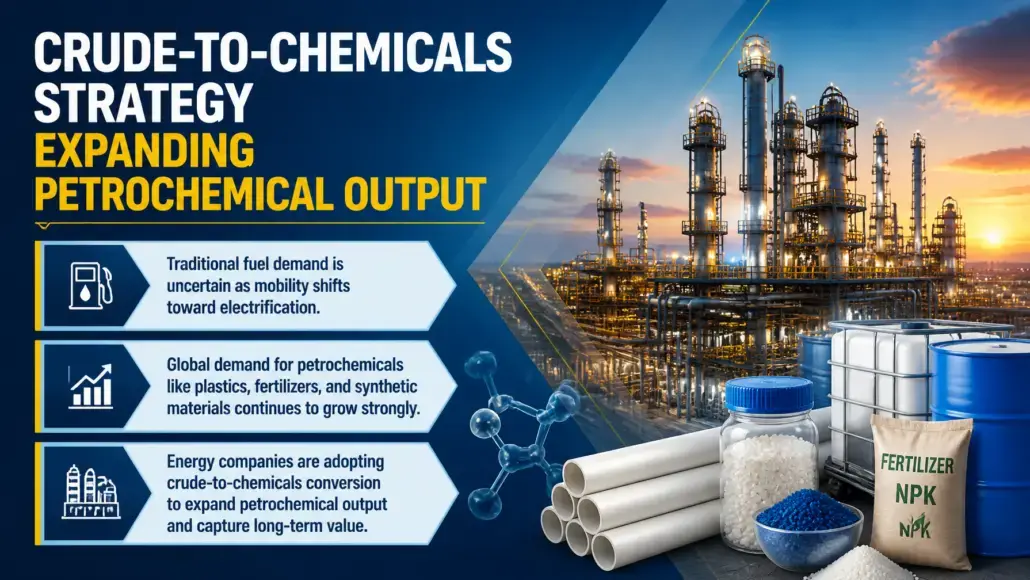
The global refining landscape is witnessing a pivot as the long-term outlook for traditional transportation fuels like gasoline and diesel becomes increasingly uncertain. While the demand for mobility is shifting toward electrification, the global requirement for petrochemicals, including plastics, fertilizers, and synthetic materials, continues to grow at a robust pace. To capitalize on this trend, major energy companies are implementing strategic crude to chemicals conversion (COTC) pathways. This approach involves reconfiguring traditional refinery layouts to maximize the direct production of chemical feedstocks, often bypassing the fuel production stages that have historically dominated the sector.
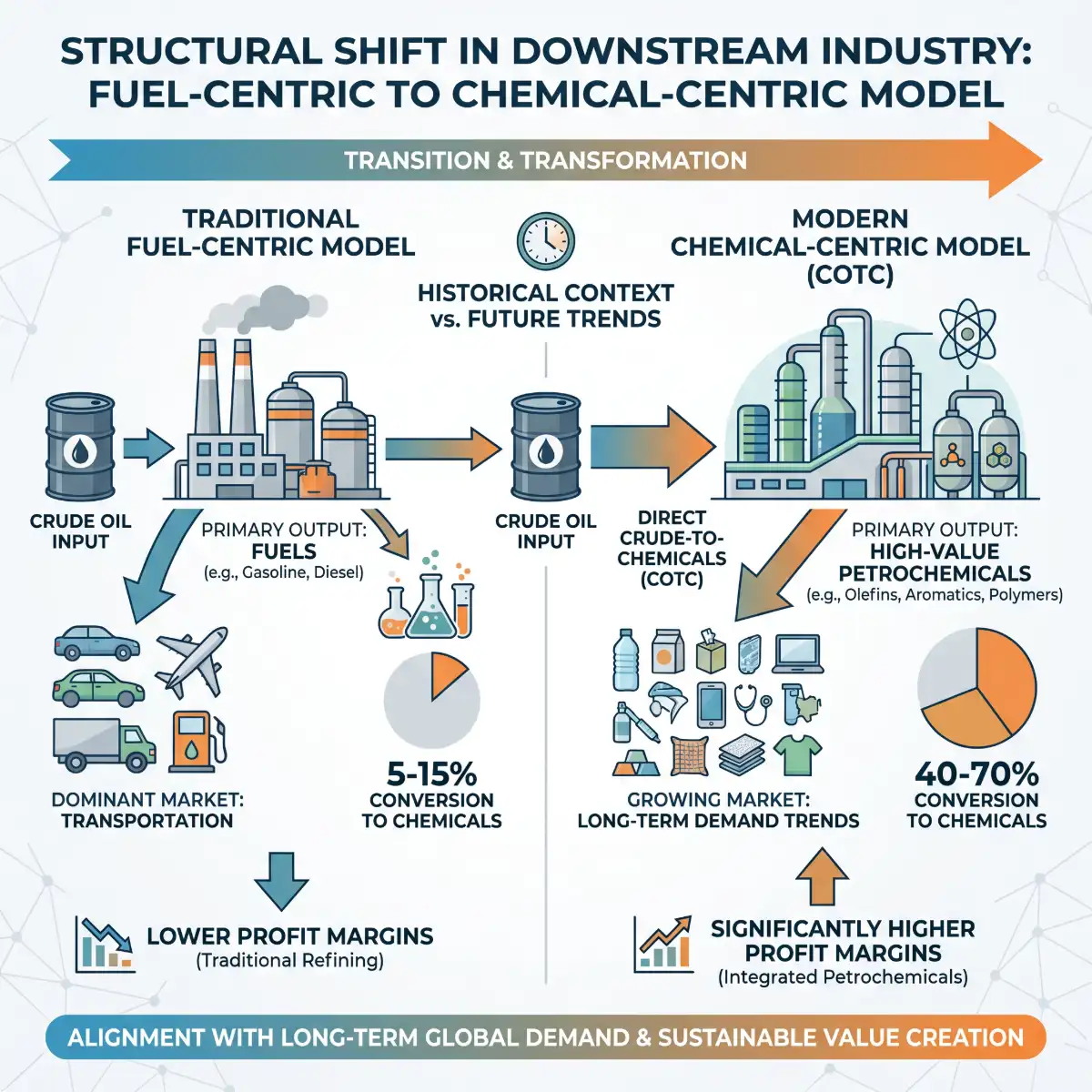
Oil & Gas Advancement believes that the transition from a fuel-centric model to a chemical-centric model represents one of the most significant structural changes in the downstream industry in decades. Historically, refineries would convert approximately 5 to 15 percent of a crude barrel into chemicals. In contrast, modern COTC facilities are designed to convert 40 percent or even up to 70 percent of the crude oil directly into high-value petrochemicals. This shift not only aligns the industry with long-term demand trends but also offers significantly higher profit margins compared to traditional refining.
Technical Architectures of COTC Complexes
Achieving high chemical yields requires the integration of advanced cracking and conversion technologies. A typical COTC complex replaces traditional units with a combination of high-severity fluid catalytic cracking (HS-FCC) and steam cracking units that are optimized for maximum light olefin production. By processing the crude oil more aggressively and recycling intermediate streams, these facilities can produce vast quantities of ethylene, propylene, and aromatics. The strategic crude to chemicals conversion model also involves the direct processing of whole crude oil in steam crackers, a technology that has seen significant advancement in the last two years.
In 2025, several technology providers launched new catalyst systems specifically designed for COTC applications. These catalysts allow for higher conversion rates at lower temperatures, reducing the total energy consumption of the complex. Furthermore, the integration of hydrocracking units with chemical production allows refiners to process heavier, more difficult crude slates while still maintaining high chemical yields. This flexibility is essential for maintaining competitiveness in a global market where the availability and price of different crude grades can vary widely.
The complexity of these facilities is unparalleled in the downstream sector:
-
High operational complexity: A single COTC complex can include dozens of integrated units, each governed by unique operating constraints and optimization targets.
-
Autonomous system requirements: Managing these massive facilities requires autonomous refinery control systems to ensure every unit operates at peak efficiency and maximizes overall plant margins.
-
Real-time market optimization: Digital control systems dynamically balance chemical stream production in real time to capture the highest output value based on live market prices.
Market Drivers and Economic Rationalization
The economic case for strategic crude to chemicals conversion is driven by the structural decline in refining margins for traditional fuels. As carbon taxes and environmental regulations increase the cost of producing and consuming fossil fuels, the financial attractiveness of the petrochemical sector becomes even more apparent. Petrochemicals are often used in long-lived products that do not release CO2 into the atmosphere upon use, which can lead to a more favorable regulatory treatment compared to transportation fuels.
By 2030, Saudi Aramco aims to convert up to 4 million barrels of crude oil per day into petrochemical feedstock, a scale that demonstrates the massive commitment to this strategy. This level of investment is driven by the realization that petrochemicals represent the most resilient segment of the oil demand curve. In 2026, the growth in petrochemical demand is expected to outpace global GDP growth, with particularly strong demand from emerging economies in Asia and Africa.
Furthermore, the direct conversion of crude to chemicals reduces the total number of processing steps, which lowers the capital and operating costs on a per-ton-of-product basis. By eliminating the need for extensive fuel finishing and blending infrastructure, refiners can simplify their operations and focus their resources on the most profitable products. This streamlined approach is a key component of the strategic crude to chemicals conversion model and is a major reason why many new grassroots projects are being designed as integrated COTC complexes from the outset.
Global Company Developments in COTC Technology
The leadership in COTC technology is concentrated among a handful of major global energy firms and their technology partners. these organizations are developing the next generation of conversion processes and deploying them at an unprecedented scale.
- Saudi Aramco: The company is at the forefront of the COTC movement, with several multi-billion dollar projects in various stages of development. In 2026, Aramco confirmed that its joint venture project with SABIC for a massive liquid-to-chemicals complex in Ras Al-Khair is on track. The facility will be one of the largest in the world, processing 400,000 barrels of crude per day to produce 9 million tons of chemicals.
- Reliance Industries: The company’s Jamnagar complex in India is already one of the most integrated refining and petrochemical sites globally. Reliance has been a pioneer in the Oil to Chemicals strategy and continues to invest in new technologies to increase its chemical yields. In 2025, Reliance announced plans to further integrate its refining and chemicals operations to maximize the production of high-value polymers.
- Sinopec: The Chinese state-owned giant is aggressively scaling its COTC capabilities to meet the growing domestic demand for petrochemicals. In late 2025, Sinopec reported the successful startup of several new units that utilize direct crude-to-olefins technology, marking a major milestone in China’s downstream industrial strategy.
- Hengli Petrochemical: As a private Chinese refiner, Hengli has built one of the world’s most advanced integrated complexes. The facility is designed to maximize chemical output and has served as a blueprint for the modern strategic crude to chemicals conversion model. Throughout 2026, Hengli has been optimizing its operations to achieve even higher yields of paraxylene and other key chemical building blocks.
- ExxonMobil: The company has developed its own proprietary technology for the direct steam cracking of crude oil. In 2025, ExxonMobil announced that it would deploy this technology at its Singapore refining and chemical complex, allowing for higher flexibility and better margins in the Asian market.
These companies are not just changing their product mix but are fundamentally redefining the role of the refinery in the global energy system.
Sustainability and the Circular Economy
While the primary focus of COTC is on economic growth, sustainability is also playing an increasingly important role. Strategic crude to chemicals conversion allows for the production of the materials needed for the energy transition, such as the high-performance plastics used in electric vehicles and the lightweight composites used in wind turbine blades. Furthermore, by concentrating the production process in a few massive, integrated sites, the industry can more easily implement carbon capture and storage technologies.
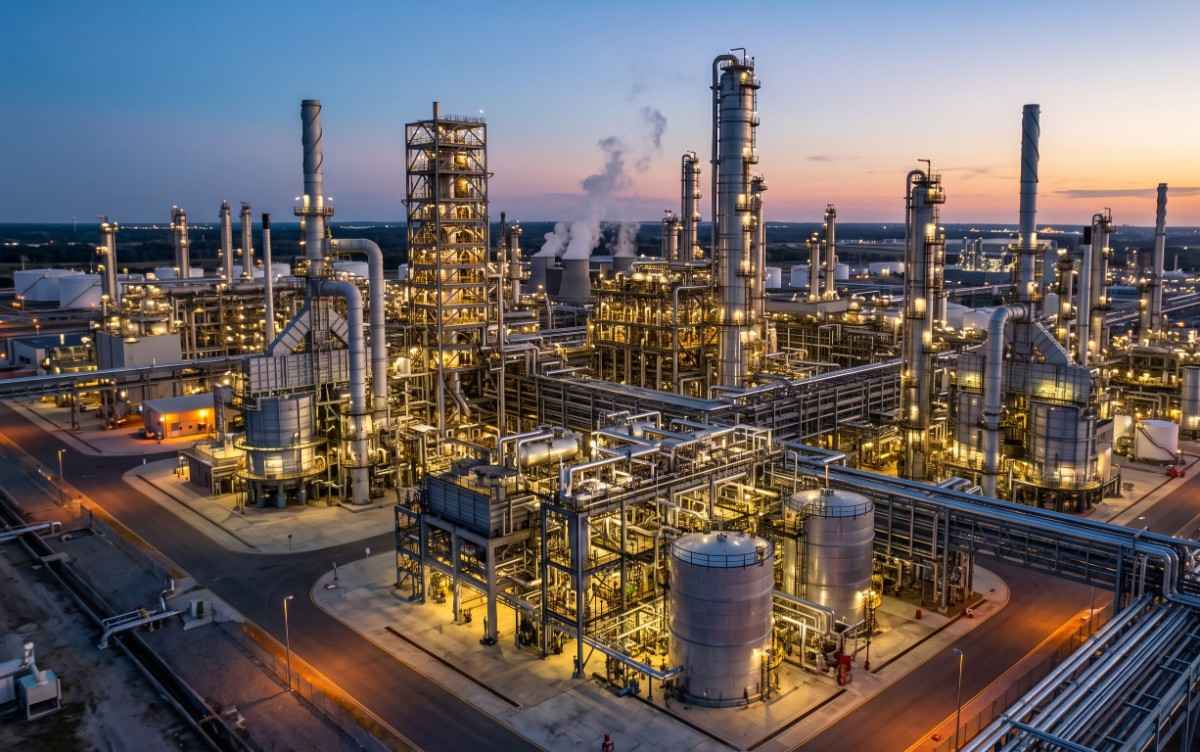
The integration of chemical recycling is another emerging trend in the COTC landscape. Some refiners are beginning to co-process plastic waste alongside crude oil, effectively using the COTC complex to close the loop on plastic production. In 2026, several pilot projects are testing the use of pyrolysis oil derived from waste plastic as a feedstock for COTC units. This approach aligns the industry with the principles of the circular economy and helps address the global problem of plastic waste.
Furthermore, the high level of heat integration in a COTC complex improves overall energy efficiency. By using waste heat from one process to power another, refiners can reduce their total fuel consumption and carbon footprint. This focus on efficiency is a core part of the modern strategic crude to chemicals conversion strategy and is essential for meeting the industry’s long-term sustainability goals.
Challenges in Scaling and Capital Intensity
Despite the clear benefits, the transition to COTC is not without challenges. The primary obstacle is the massive capital intensity of these projects. A world-scale COTC complex can cost between $15 billion and $30 billion, which requires a significant amount of debt and equity financing. In 2026, the high-interest-rate environment in many countries has made the financing of these projects more complex, requiring a clear and compelling business case to attract investors.
The technological risks are also significant. Direct crude-to-chemicals processes are still relatively new at the commercial scale, and any operational issues can lead to costly delays and downtime. To mitigate these risks, many refiners are opting for a phased approach, starting with smaller-scale units before committing to a full-scale complex. Additionally, the industry is investing heavily in digital twin technology to simulate the behavior of these complex facilities before they are even built.
Finally, the global market for petrochemicals is becoming increasingly competitive. As more COTC capacity comes online, there is a risk of oversupply for certain chemical products, which could depress margins. Refiners must therefore focus on producing a diverse range of high-value chemicals rather than just commodity olefins. The ability to quickly adapt the product mix in response to changing market conditions will be a key differentiator for the next generation of downstream operators.
Future Outlook for the Chemicals-First Refinery
Looking ahead to 2030 and beyond, the trend toward strategic crude to chemicals conversion is expected to accelerate. As the demand for transportation fuels peaks and then declines, the transformation of refineries into massive chemical manufacturing hubs will be the primary pathway for the industry’s survival. This shift will require not only new technologies but also a new mindset that prioritizes chemical value over fuel volume.
The successful implementation of this strategy will depend on the continued integration of digital technologies, sustainable practices, and innovative financing models. The progress made in 2025 and 2026 has set the foundation for this transformation, and the downstream industry is now moving firmly toward a chemicals-first future. Oil & Gas Advancement observes that this evolution will ensure that crude oil continues to play a vital role in the global economy, not as a fuel to be burned, but as a valuable feedstock for the materials that define modern life.
References
- Aramco’s Crude to Chemicals Strategy in Saudi Arabia – Saudi Energy Consulting
- Saudi Aramco and SABIC MOU for Innovative COTC Complex – Saudi Aramco
- Sinopec Success in Direct Crude-to-Olefins Technology – Sinopec News
- ExxonMobil Direct Steam Cracking Technology Update – ExxonMobil
- 2026 Global Petrochemical Demand and COTC Growth – International Energy Agency
