





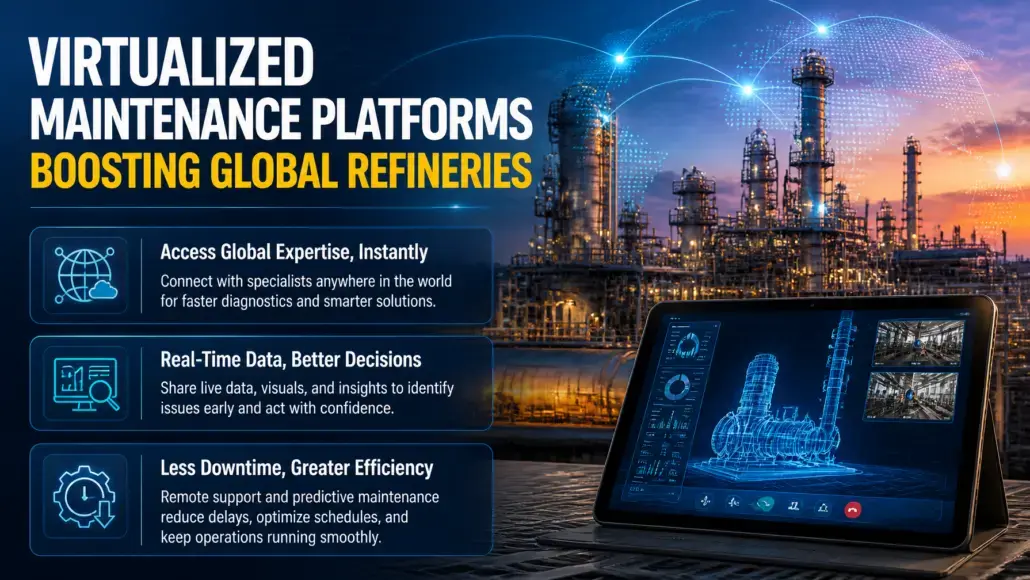
The downstream oil and gas sector is undergoing a profound transformation in how it manages asset integrity and maintenance schedules. Traditionally, maintenance was a localized, manual process that required specialized technicians to be physically present at the refinery for every inspection or repair. However, the emergence of virtualized maintenance platforms has fundamentally changed this dynamic. By creating a digital environment where data, visuals, and expertise can be shared across continents, these platforms are breaking down the geographical barriers that once slowed down critical decision making.
In 2026, Oil & Gas Advancement observes that the need for global collaboration has never been more urgent. Refineries are operating with leaner teams, yet the complexity of the equipment continues to increase. Virtualization allows a small group of highly specialized engineers located in a central hub to oversee maintenance activities across multiple facilities worldwide. This center of excellence model ensures that the best available expertise is applied to every problem, reducing the likelihood of costly errors and extending the operational life of expensive assets like hydrocrackers and fluid catalytic cracking units.
Digital Twins as the Foundation of Virtualized Maintenance
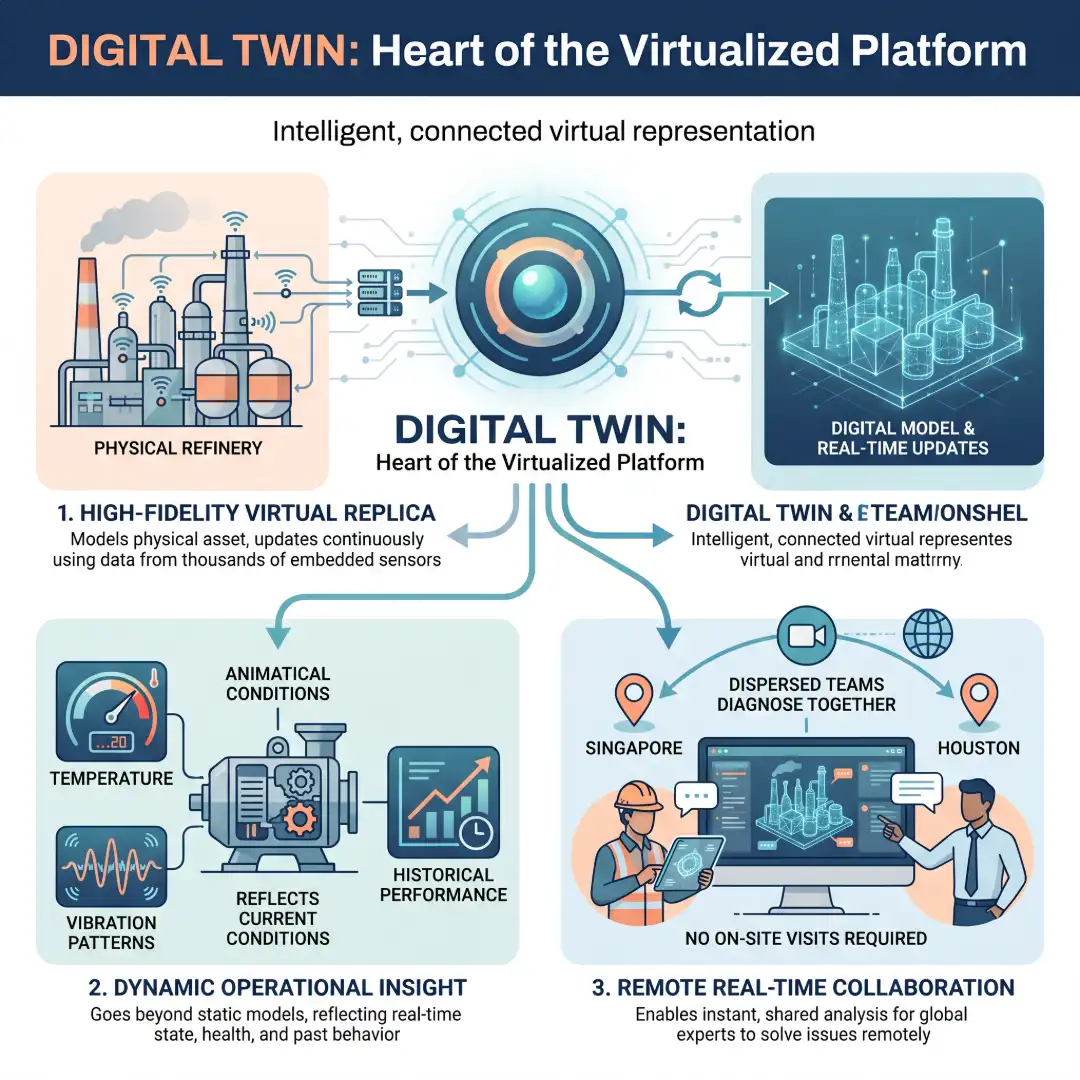
At the heart of any effective virtualized platform is the digital twin:
- High-fidelity virtual replica: Digitally models a physical refinery and updates in real time using data from thousands of embedded sensors.
- Dynamic operational insight: Goes beyond a static 3D model by reflecting current equipment conditions, including temperature, vibration patterns, and historical performance.
- Remote real-time collaboration: Enables dispersed teams, such as a maintenance crew in Singapore and an expert in Houston, to diagnose machinery issues together without on-site visits.
The accuracy of these models has improved significantly due to the integration of photogrammetry and laser scanning. In 2025, major engineering firms began using autonomous drones to conduct weekly scans of refinery structures, ensuring that the digital twin is always an exact match of the physical plant. This allows maintenance planners to walk through a virtual version of the facility to plan complex turnarounds. They can identify potential obstacles, determine where to place cranes, and ensure that all necessary parts are staged in the correct locations before the actual work begins.
By simulating the maintenance process in a virtual environment, refiners can identify and resolve conflicts that would otherwise lead to delays. For instance, if two different crews need to work in the same confined space, the virtualized maintenance platforms will flag the scheduling conflict during the planning phase. This foresight has been shown to reduce turnaround durations by as much as 15 percent, representing a massive financial saving for the operator.
Enhancing Field Productivity with Augmented Reality
While the planning happens in the virtual office, the execution takes place in the physical world. Field technicians are now being equipped with augmented reality (AR) headsets that connect directly to the virtualized maintenance platform. These devices overlay digital information onto the technician’s field of vision, providing step-by-step instructions for complex repairs. If a technician is unsure about a specific valve configuration, they can initiate a live video call with a remote expert who can see exactly what the technician sees and provide real-time guidance.
This capability is particularly valuable for training the next generation of downstream professionals. Junior technicians can perform complex tasks under the watchful eye of a senior mentor, gaining experience in a safe and controlled manner. In 2026, several global refiners have reported that AR-assisted maintenance has reduced human error during repairs by nearly 40 percent. This improvement in quality directly translates to higher asset reliability and fewer unplanned shutdowns.
The success of these digital collaboration tools is often predicated on the data provided by advanced hardware, where deploying ultrasonic sensor networks and robotic inspection 2026 tools helps downstream operators mitigate downtime while improving safety and asset reliability. These robotic systems can venture into hazardous areas where human entry is restricted, providing the high-resolution data that keeps the virtualized platform accurate and actionable.
Global Company Initiatives in Virtualized Collaboration
Leading global energy companies are aggressively scaling their virtualized maintenance capabilities to gain a competitive edge. These investments are driven by a desire to improve safety and operational efficiency across their diverse portfolios.
- Shell: In 2025, Shell expanded its “Remote Expert” program to include over 50 of its downstream and integrated gas assets. The program uses virtualized platforms to connect onsite teams with a global network of subject matter experts, facilitating faster troubleshooting and better maintenance outcomes.
- BP: The company has been a pioneer in the use of digital twins for maintenance planning. By early 2026, BP had successfully digitized most of its major refinery assets, allowing for more precise predictive maintenance and reduced reliance on physical inspections.
- Chevron: Throughout 2025, Chevron has been deploying advanced AR solutions to its refinery workers, focusing on improving the speed and accuracy of routine maintenance tasks. The company aims to have a fully virtualized maintenance workflow for its global refining business by 2027.
- TotalEnergies: The company is integrating virtualized maintenance into its broader industrial autonomy strategy. By combining AI-driven predictive analytics with virtual collaboration tools, TotalEnergies is working toward a zero unplanned downtime target for its key downstream assets.
- Equinor: In late 2025, Equinor announced a partnership with several tech firms to develop a new generation of virtualized maintenance platforms that can handle the massive data streams from offshore and downstream assets simultaneously.
These companies are proving that the investment in virtualization pays for itself through improved safety records and higher facility availability. As the technology continues to mature, it will become an standard feature of the downstream landscape. Alongside digital maintenance workflows, deploying electrification technologies provide the clean power foundation and electrified heating systems necessary to optimize operating margins across modern refining units.
Improving Spare Parts Management and Logistics
One of the most significant bottlenecks in refinery maintenance is the availability of spare parts. Virtualized maintenance platforms are now being integrated with supply chain management systems to automate the procurement process. When the digital twin predicts that a specific pump is nearing the end of its life, the platform can automatically check the inventory levels and place an order for a replacement if necessary. This proactive approach ensures that the parts are onsite before the maintenance window opens.
Furthermore, the rise of 3D printing in the downstream sector is being enabled by these virtualized platforms. If a critical part is not in stock and has a long lead time, the maintenance team can access the original design specifications from the virtual platform and print a temporary replacement onsite. This capability is currently being tested by several major refiners in 2026, with the goal of reducing the capital tied up in physical inventory.
The integration of blockchain technology is also being explored to ensure the provenance and quality of 3D-printed parts. By creating a digital birth certificate for every component, refiners can be certain that the parts they are using meet the required safety standards. This level of traceability is essential for maintaining asset integrity in the high-pressure, high-temperature environment of a refinery.
The Role of Cybersecurity in Virtualized Environments
As maintenance workflows move into the digital realm, the importance of cybersecurity cannot be overstated:
- Real-Time Digital Twin Representation: Serves as a high-fidelity virtual model of the physical refinery, continuously updated via thousands of embedded sensors.
- Dynamic Condition Monitoring: Unlike static 3D models, it reflects real-time equipment status, including temperature, vibration profiles, and historical performance data.
- Global Remote Collaboration: Enables geographically dispersed teams (e.g., technicians in Singapore and specialists in Houston) to inspect identical live data and troubleshoot issues collaboratively without travel.
- High-Stakes Security Risks: Platforms process sensitive infrastructure configurations and operational health data; security breaches could expose system vulnerabilities or disrupt active maintenance.
- Multi-Layered Safeguards: Operators mitigate cyber risks using robust defense-in-depth measures, notably strict access controls and end-to-end encryption.
Data residency is another important consideration for global operators. Some countries have strict laws regarding where industrial data can be stored and processed. Virtualized platforms must be designed with the flexibility to comply with these local regulations while still providing a seamless collaborative experience. Many companies are opting for a hybrid cloud approach, where sensitive operational data remains on-premises while non-sensitive collaboration tools are hosted in the cloud.
The human element of cybersecurity is also a priority. Technicians and engineers are being trained to recognize social engineering attacks and follow best practices for digital hygiene. As the workforce becomes more comfortable with virtualized tools, maintaining a strong security culture will be as important as maintaining the physical equipment.
Future Directions for Virtualized Maintenance
Looking toward the end of 2026 and beyond, the integration of generative AI into virtualized maintenance platforms is expected to be the next major step. These systems will not only provide data but will also offer suggestions for repair procedures based on decades of historical maintenance logs. An engineer will be able to ask the platform for the best way to repair a specific type of leak, and the AI will provide a detailed plan based on previous successful interventions at other facilities.
The expansion of 5G connectivity will also play a crucial role. The high bandwidth and low latency of 5G will enable even more immersive AR and VR experiences, allowing for the real-time transmission of high-resolution video and 3D data from the field. This will make remote collaboration even more effective, further reducing the need for physical travel and lowering the carbon footprint of maintenance operations.
Ultimately, the goal of virtualized maintenance platforms is to create a more resilient and responsive refining industry. By leveraging the power of digital collaboration, operators can ensure that their assets are maintained to the highest standards, regardless of the challenges posed by a rapidly changing global market. The transition is well underway, and the results are already visible in the improved efficiency and safety of the world’s leading refineries.
References
- Shell Remote Expert Program Results 2025 — Shell
- The Future of Digital Twins in Downstream Maintenance — BP
- 2026 Global Industrial Maintenance Report — International Energy Agency
- Augmented Reality in the Energy Sector — Chevron
- Industrial Virtualization Trends and Statistics — World Economic Forum
