


















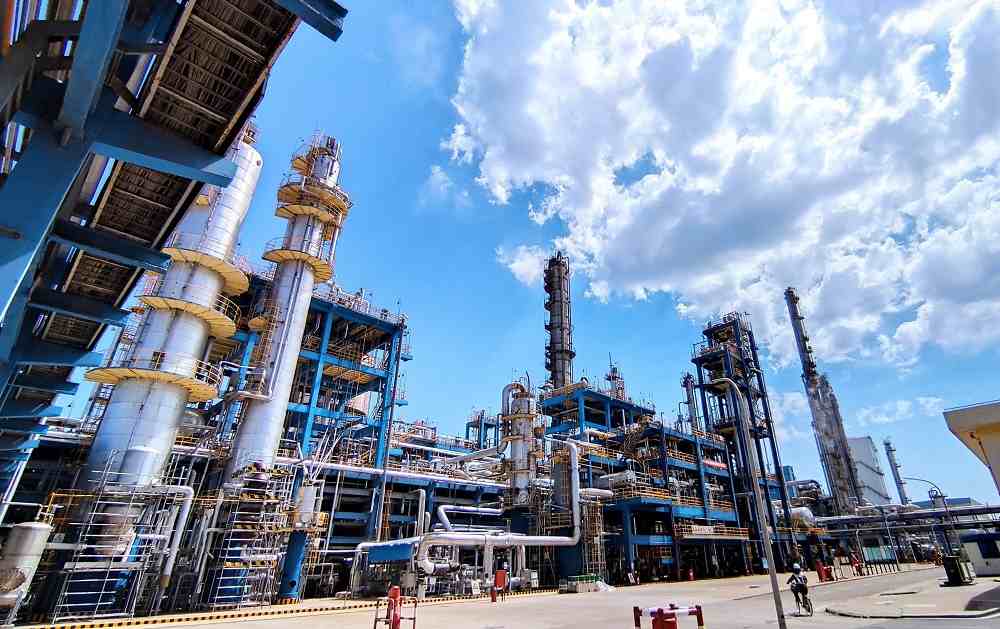
China Petroleum & Chemical Corporation initiated China’s first megaton carbon capture, utilization and storage (CCUS) project, the Sinopec Qilu-Shengli Oilfield CCUS (the “Project”). It is set to become China’s largest whole industrial chain CCUS demonstration base and application case for promoting the large-scale development of CCUS in China.
The Project, expected to be put into production by the end of 2021, marks a key milestone in the construction progress of China’s CCUS projects and is a huge demonstration of the industry’s development. It is also of great significance to enhance China’s carbon emissions reduction capabilities and build an “artificial carbon cycle” model as the country advances to reach peak carbon emissions by 2030 and carbon neutrality by 2060.
CCUS is an important technical means to cope with global climate change and control greenhouse gas emissions, capturing and purifying carbon dioxide emitted during production and utilizing it in a new production process for recycling and storage.
The megaton-scale Project launched by Sinopec consists of two parts – Sinopec Qilu’s carbon dioxide capture and Shengli Oilfield’s carbon dioxide displacement and storage. Sinopec Qilu captures the carbon dioxide and transports it to the Shengli Oilfield for further displacement and storage, achieving an integrated application of carbon capture, displacement and storage to seal the carbon dioxide underground.
The Project is estimated to reduce carbon emissions by 1 million tons per year, the equivalent of planting nearly 9 million trees and shutting down 600,000 economy cars. China’s large oil initially in place (OIIP) is suitable for carbon dioxide displacement and advancing development of the CCUS industry will establish sound support for ensuring China’s energy security and promoting low-carbon transformation of the fossil energy industry.
As an essential technological path for achieving carbon neutrality, CCUS has tremendous potential for emissions reduction and broad prospects for industrial use. Studies have shown that CCUS will neutralize China’s 1 billion tons of carbon emissions in the future, effectively promoting the purification of fossil energy, the scaled development of clean energy and low-carbon production.
Mr. Zhang Yuzhuo, Chairman of Sinopec, noted that CCUS is an important measure to effectively promote carbon emissions reduction.
“According to IEA, CCUS will contribute about 14% of carbon dioxide emissions reduction by 2050, and the market application prospects are very promising. Developing CCUS is a trend as well as a mission. Sinopec will research and establish a carbon capture, utilization and storage R&D center to advance a series of core technologies and bottleneck problems throughout the links of carbon capture, transportation, utilization and storage, as well as a carbon dioxide utilization technology innovation system of ‘technological development-project demonstration-industrialization,’ extending the clean carbon sequestration industry chain and creating an innovative hub for carbon emissions reduction technologies,” said Mr. Zhang.
Sinopec aims to build another megaton CCUS demonstration base in the next five years, realizing industrialized CCUS development and widening further prospects as China advances to achieve peak carbon and carbon neutrality.
China Petroleum & Chemical Corporation initiated China’s first megaton carbon capture, utilization and storage (CCUS) project, the Sinopec Qilu-Shengli Oilfield CCUS (the “Project”). It is set to become China’s largest whole industrial chain CCUS demonstration base and application case for promoting the large-scale development of CCUS in China.
The Project, expected to be put into production by the end of 2021, marks a key milestone in the construction progress of China’s CCUS projects and is a huge demonstration of the industry’s development. It is also of great significance to enhance China’s carbon emissions reduction capabilities and build an “artificial carbon cycle” model as the country advances to reach peak carbon emissions by 2030 and carbon neutrality by 2060.
CCUS is an important technical means to cope with global climate change and control greenhouse gas emissions, capturing and purifying carbon dioxide emitted during production and utilizing it in a new production process for recycling and storage.
The megaton-scale Project launched by Sinopec consists of two parts – Sinopec Qilu’s carbon dioxide capture and Shengli Oilfield’s carbon dioxide displacement and storage. Sinopec Qilu captures the carbon dioxide and transports it to the Shengli Oilfield for further displacement and storage, achieving an integrated application of carbon capture, displacement and storage to seal the carbon dioxide underground.
The Project is estimated to reduce carbon emissions by 1 million tons per year, the equivalent of planting nearly 9 million trees and shutting down 600,000 economy cars. China’s large oil initially in place (OIIP) is suitable for carbon dioxide displacement and advancing development of the CCUS industry will establish sound support for ensuring China’s energy security and promoting low-carbon transformation of the fossil energy industry.
As an essential technological path for achieving carbon neutrality, CCUS has tremendous potential for emissions reduction and broad prospects for industrial use. Studies have shown that CCUS will neutralize China’s 1 billion tons of carbon emissions in the future, effectively promoting the purification of fossil energy, the scaled development of clean energy and low-carbon production.
Mr. Zhang Yuzhuo, Chairman of Sinopec, noted that CCUS is an important measure to effectively promote carbon emissions reduction.
“According to IEA, CCUS will contribute about 14% of carbon dioxide emissions reduction by 2050, and the market application prospects are very promising. Developing CCUS is a trend as well as a mission. Sinopec will research and establish a carbon capture, utilization and storage R&D center to advance a series of core technologies and bottleneck problems throughout the links of carbon capture, transportation, utilization and storage, as well as a carbon dioxide utilization technology innovation system of ‘technological development-project demonstration-industrialization,’ extending the clean carbon sequestration industry chain and creating an innovative hub for carbon emissions reduction technologies,” said Mr. Zhang.
