









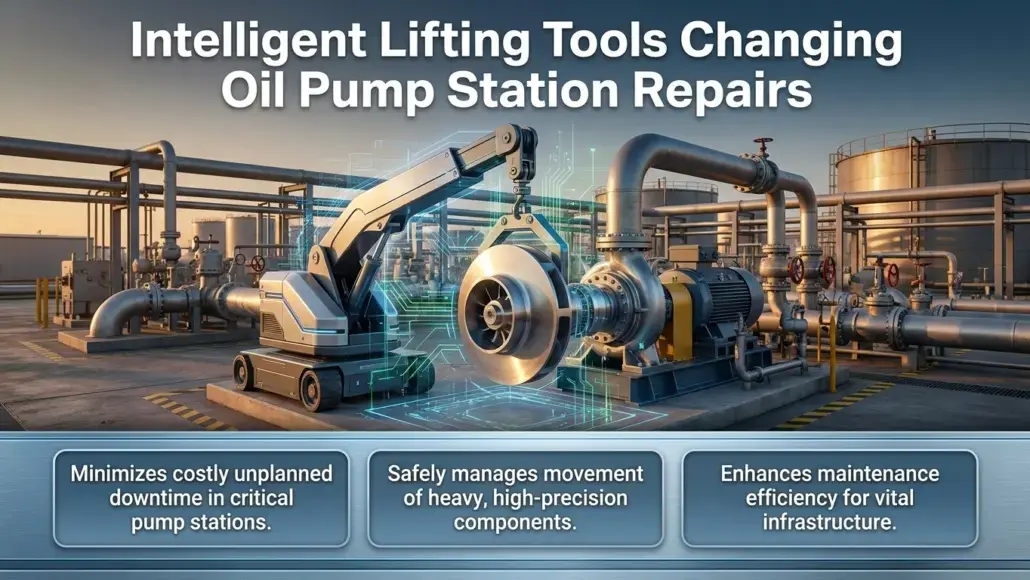
In the sprawling infrastructure of the oil and gas industry, pump stations serve as the vital hearts that keep crude oil and refined products moving across thousands of miles of pipeline. Given their critical role, any unplanned downtime at a pump station can lead to massive logistical bottlenecks and financial losses. However, maintaining and repairing these stations is a complex task, often involving the movement of heavy, high-precision components like impellers, seals, and massive electric motors within confined spaces. Traditionally, these repairs were labor-intensive and fraught with risk. Today, a new generation of intelligent lifting tools for oil pump station fix operations is revolutionizing the process. By integrating robotics, sensor technology, and automated control, these tools are making station maintenance faster, safer, and more precise than ever before.
The shift toward intelligent lifting pump station solutions is driven by the need for greater operational reliability and the increasing complexity of modern pumping equipment. As pumps become larger and more sophisticated, Oil & Gas Advancement observes that the margin for error during a repair decreases. A slight misalignment during the installation of a new pump shaft can lead to vibration issues that eventually cause a catastrophic failure. Intelligent lifting tools address this by providing automated stabilization and millimeter-level positioning, ensuring that every component is handled with the care it deserves. This technological leap is not just about moving heavy objects. It is about providing the surgical precision required to maintain the integrity of the world’s energy lifelines.
Revolutionizing Maintenance with Automated Precision
One of the primary challenges in oil pump station repairs is the limited space available for traditional lifting equipment. Many older stations were not designed with modern maintenance requirements in mind, meaning that technicians often have to work around a dense maze of pipes, valves, and electrical conduits. Intelligent lifting tools for oil pump station fix applications address this by utilizing compact, modular designs that can be assembled within the station itself. These systems often include specialized gantry cranes or portable lifting frames that are equipped with intelligent hoist units. These hoists do not simply move up and down. They are governed by sophisticated control algorithms that manage the speed and tension of the lift to prevent any sudden jolts or swings.
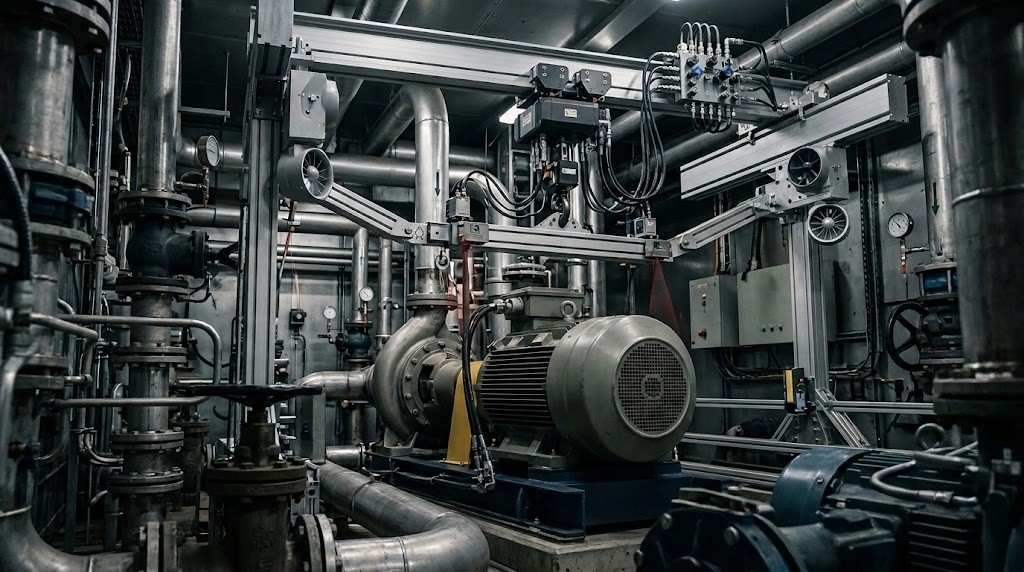
The precision of these tools is further enhanced by the use of electronic load-leveling systems. When lifting an irregular load, such as a pump casing with an off-center center of gravity, traditional lifting methods often result in the load tilting, which can damage internal seals or the foundation bolts. An intelligent lifting pump station tool uses real-time sensor data to adjust the tension in multiple lifting points simultaneously, keeping the load perfectly level throughout the entire maneuver. This level of automated precision significantly reduces the risk of equipment damage and ensures that the pump can be returned to service as quickly as possible, maintaining the station’s overall throughput and reliability.
Specialized Gantry Systems and Portable Lifting Frames
The versatility of intelligent lifting tools is best seen in the development of specialized gantry systems. Unlike permanent overhead cranes, which may not reach every corner of a pump station, these portable systems can be positioned exactly where they are needed. They are often constructed from high-strength, lightweight alloys, allowing them to be moved by a small team and set up in hours. The intelligence comes from the integrated control units that allow these gantries to communicate with other maintenance tools, creating a synchronized workflow. For instance, the lifting system can be programmed to wait until a specific bolt has been removed—detected by a smart wrench—before initiating the lift.
Portable lifting frames also feature advanced anti-sway technology. In the tight quarters of a pump station, a swaying load can easily collide with nearby infrastructure, causing significant damage. The intelligent control system monitors the movement of the load and automatically adjusts the horizontal movement of the crane to counteract any pendulum effect. This feature is particularly valuable when moving components through narrow access hatches or around overhead obstructions. By providing a stable, controlled lifting environment, these specialized tools allow maintenance crews to focus on the technical aspects of the repair rather than the logistics of moving the equipment, increasing the overall quality of the fix.
Sensory Feedback for Delicate Component Handling
The handling of high-precision pump components requires a soft touch that is difficult to achieve with manual lifting. Intelligent lifting tools for oil pump station fix operations incorporate sensory feedback mechanisms, such as strain gauges and laser distance sensors, to provide the operator with a detailed picture of the load’s status. If the system detects that a component is binding or that the resistance is higher than expected—indicating that a part is still partially attached—it can automatically pause the lift and alert the technician. This prevents the brute force accidents that can occur when a traditional crane operator fails to notice a snag.
Laser sensors are also used to provide exact distance measurements between the component being lifted and its destination. This is crucial for the installation of pump seals and bearings, where clearances are measured in microns. The intelligent lifting pump station system can guide the component into place with sub-millimeter accuracy, reducing the need for manual prying and hammering. This not only speeds up the installation process but also protects the delicate surfaces of the components, ensuring a longer service life and better pump performance once the station is back online. The integration of these sensors transforms the lifting tool from a simple winch into a high-precision maintenance instrument. This precision is analogous to the technology used for smart sensors improving crane safety in global refineries, where real-time monitoring prevents collisions in similarly dense industrial environments.
Safety Enhancements in Confined and Hazardous Spaces
Pump stations are often classified as hazardous environments due to the potential presence of explosive vapors. Furthermore, the confined nature of these facilities makes them high-risk zones for personnel during lifting operations. Intelligent lifting tools address these safety concerns through the use of remote control and tele-operation. By allowing the operator to stand at a safe distance—outside the station’s immediate work zone or even in a centralized control room—these tools remove the human element from the most dangerous parts of the repair. High-definition cameras and virtual reality interfaces provide the operator with a front-row seat to the action without the physical risk.
These tools are also designed to be inherently safe for use in explosive atmospheres. By utilizing spark-resistant materials, hermetically sealed electronics, and pneumatic or low-voltage electrical systems, intelligent lifting tools for oil pump station fix projects meet the strictest ATEX and NEC safety standards. This allows maintenance to proceed without the need for extensive hot work permits or the total shutdown of the facility’s safety systems. The result is a more streamlined repair process that prioritizes the safety of the workforce while maintaining the operational readiness of the station.
Remote Control and Tele-Operation in Explosive Atmospheres
The transition to tele-operation marks a significant shift in industrial maintenance. In a modern intelligent lifting pump station setup, the operator uses a sophisticated console that provides haptic feedback, allowing them to feel the weight and movement of the load through the controls. This physical connection, combined with real-time video feeds from multiple angles, gives the operator a level of control that surpasses traditional on-site operation. In the event of an emergency, the system can be instantly shut down from the remote console, ensuring that a potential accident is neutralized before it can escalate.
Furthermore, remote control allows for the use of virtual exclusion zones. The software controlling the lifting tool can be programmed with a digital map of the pump station, creating zones where the crane is physically unable to go. This prevents the operator from accidentally moving a load over a live electrical panel or a high-pressure line. This digital fencing is an invaluable safety feature in complex facilities where one mistake can have catastrophic consequences. By combining physical robustness with digital guardrails, intelligent lifting tools are creating a safer, more predictable environment for the men and women who maintain our energy infrastructure.
Automated Stabilization and Load Balancing Protocols
One of the most dangerous moments in a pump station repair is the initial breakout of a heavy component, where it is first lifted from its foundation. Often, the component may be stuck due to corrosion or old gaskets, and when it finally lets go, it can jump or lurch unpredictably. Intelligent lifting tools for oil pump station fix operations use automated stabilization protocols to manage this risk. The system maintains a constant, controlled tension on the lifting lines, and as the component breaks free, the sensors detect the sudden change in resistance and instantly adjust the winch to prevent any upward surge.
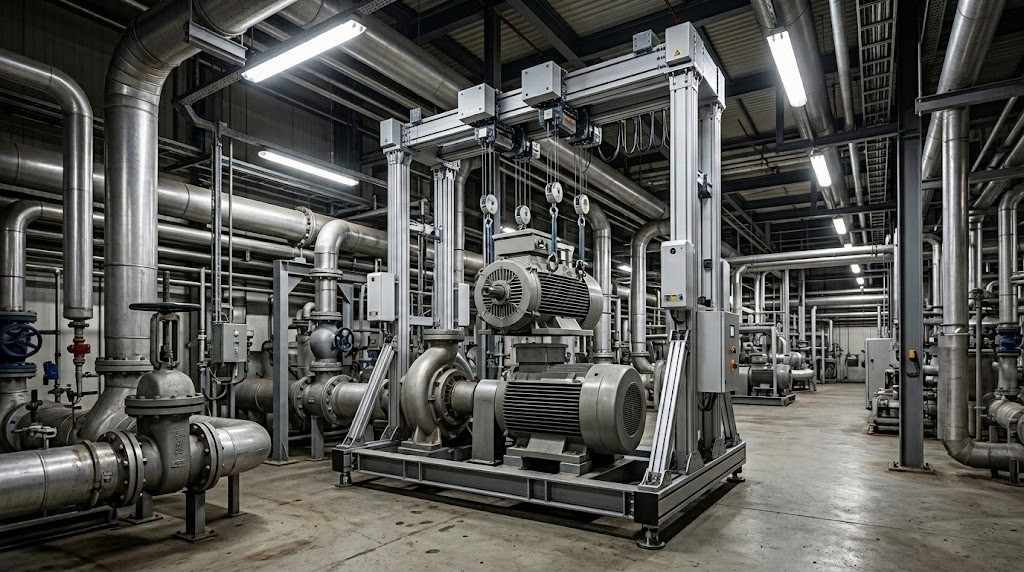
Load balancing is equally important during the transport phase of the repair. If a component is moved horizontally through the station, the weight distribution on the crane’s supports can change. The intelligent system monitors the balance of the entire lifting frame and can automatically adjust the position of counterweights or the extension of stabilizing legs to ensure that the tool remains perfectly stable. This proactive approach to load management ensures that every lift, from the smallest valve to the largest motor, is performed with the highest degree of safety and control, making the intelligent lifting pump station the new standard for midstream maintenance.
Intelligent Load Control and Stabilization in Confined Facilities
Impact on Downtime and Operational Reliability
The ultimate goal of integrating intelligent lifting tools is to reduce the time a pump station spends offline. Oil & Gas Advancement believes that by making repairs faster and more accurate, these tools directly contribute to the bottom line of the pipeline operator. A repair that once took a week can now be completed in days, allowing the station to return to full capacity and minimizing the disruption to the broader energy supply chain. Furthermore, the increased precision of the repairs means that the pumps operate more efficiently and require less frequent maintenance in the long term, further enhancing the facility’s reliability.
As we look toward the future, we can expect to see even more integration between lifting tools and the pump station’s overall management system. Future intelligent lifting tools for oil pump station fix projects may be capable of automatically downloading the maintenance history and technical specifications of a pump before the repair begins, allowing the system to pre-configure its control settings for that specific asset. The evolution of these tools is a testament to the power of digital transformation in the industrial sector, proving that even the most heavy-duty tasks can benefit from the application of intelligence and foresight.
References
- Enerpac adds Diesel Split Flow Pump capabilities to its portfolio through acquisition of Hydra-Pac technology
- Raising the Bar on Safety with Integrated Solutions
