






The energy landscape is witnessing a notable resurgence in Floating Liquefied Natural Gas (FLNG) projects, marking a significant shift in how natural gas reserves are developed and brought to market. Once considered a niche, technologically ambitious undertaking, floating LNG is now experiencing substantial floating LNG project growth, driven by a confluence of economic, technological, and strategic factors. This article explores the compelling reasons behind this renewed momentum, highlighting how FLNG projects are poised to redefine global energy supply chains and contribute to more sustainable energy solutions.
For years, the prospect of offshore liquefaction facilities, designed to produce, purify, and liquefy natural gas directly at sea, was met with both fascination and trepidation. The initial ventures into FLNG were characterized by pioneering engineering challenges, significant capital outlays, and a cautious industry outlook. However, a decade of invaluable operational experience, coupled with relentless innovation, has dramatically altered this perception. Today, the benefits of FLNG particularly its flexibility, economic efficiency, and environmental footprint are increasingly compelling, positioning these innovative facilities as a critical component in meeting the world’s burgeoning global LNG demand. The current wave of floating LNG project growth signifies not just a return, but a maturation of this transformative technology.
The Evolution and Resilience of Offshore Liquefaction
The journey of FLNG has been one of perseverance and adaptation. Early FLNG projects, while groundbreaking, served as vital learning platforms, exposing the complexities inherent in operating a full-scale gas processing and liquefaction plant in a dynamic marine environment. Issues ranged from hull stability and mooring systems to the integration of intricate topside processing units and sophisticated offloading solutions. These challenges often translated into extended project timelines and higher costs, which, at times, dampened enthusiasm for wider adoption.
Yet, the fundamental value proposition of offshore liquefaction remained undeniable: the ability to access and monetize gas reserves that are too small, too remote, or politically sensitive for traditional onshore development. These “stranded” assets, often located far from existing infrastructure, presented an untapped resource waiting for a viable solution. FLNG offered precisely that, by eliminating the need for long subsea pipelines to shore and extensive onshore facilities, thereby reducing both environmental impact and geopolitical complexities. The industry’s steadfast commitment to refining the technology and streamlining project execution has been pivotal in overcoming these initial hurdles and setting the stage for the current wave of floating LNG project growth.
Driving Factors Behind the Current FLNG Momentum
Several converging factors are contributing to the robust resurgence and accelerated floating LNG project growth seen across the industry today. These drivers collectively paint a picture of an evolving energy market increasingly reliant on agile, efficient, and environmentally conscious solutions.
Economic Competitiveness and Lower Costs
One of the most significant shifts has been the dramatic improvement in the economic viability of FLNG projects. Early designs were bespoke and often burdened with first-of-a-kind engineering costs. However, through standardization, modularization, and lessons learned from initial deployments, capital expenditure (CAPEX) for FLNG projects has become significantly more competitive. This reduction in upfront investment, coupled with quicker project execution timelines, translates into a lower levelized cost of LNG, making FLNG an attractive option for developers. Furthermore, the ability to utilize existing infrastructure or deploy smaller, purpose-built FLNG units tailored to specific field sizes further enhances cost-effectiveness, especially for marginal fields.
Flexibility, Mobility, and Speed to Market
FLNG offers unparalleled flexibility. Unlike fixed onshore plants, an FLNG facility can be built in a shipyard and then towed to its operational site, significantly compressing construction schedules and accelerating time to first LNG. This mobility also means that, theoretically, an FLNG unit can be redeployed to another gas field once reserves at the initial location are depleted, offering a unique asset utilization model. This “relocatable” aspect reduces stranded asset risk and enhances investor confidence. The faster project delivery is crucial in a dynamic global LNG demand environment, allowing developers to respond swiftly to market opportunities.
Environmental Advantages and Sustainability Goals
As the world prioritizes decarbonization, the environmental footprint of energy projects is under intense scrutiny. FLNG projects often present a more environmentally benign solution compared to their onshore counterparts. By operating offshore, they minimize land disturbance, reduce the need for extensive onshore infrastructure like roads and pipelines, and typically have a smaller visual impact. Modern FLNG designs also incorporate advanced technologies to reduce emissions, improve energy efficiency, and manage waste, aligning with broader oil and gas sustainability goals and the industry’s push for cleaner energy supply.
Geopolitical Shifts and Energy Security
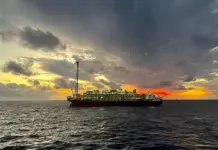
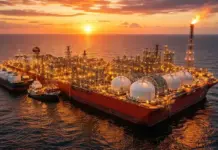
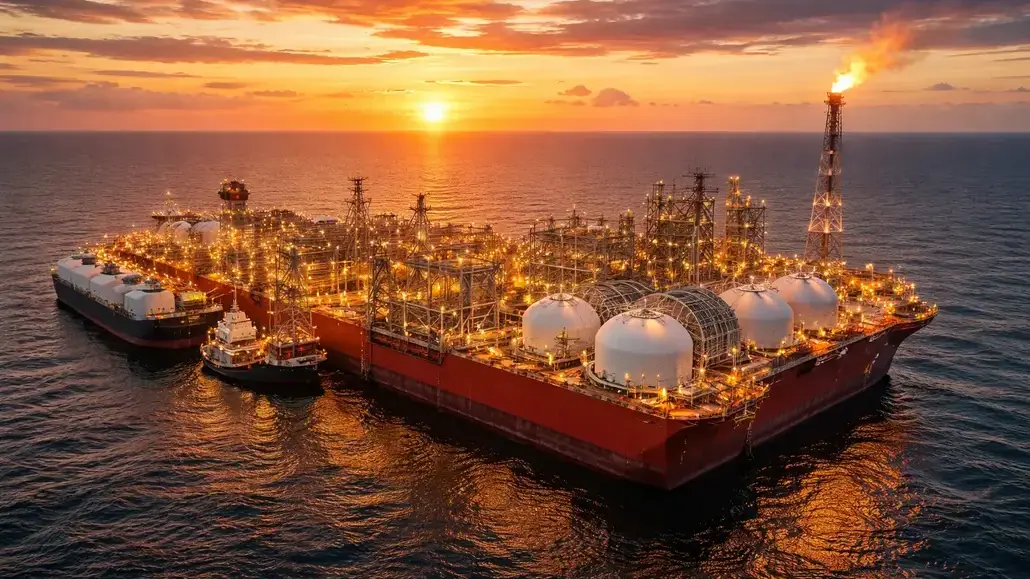
Recent geopolitical events have underscored the critical importance of energy security and diversification of supply. FLNG projects contribute significantly to this by enabling new gas supplies to reach the market from diverse geographical locations, often from countries seeking to monetize their natural resources without the extensive long-term commitments or infrastructure build-out required for onshore facilities. This enhances the resilience of global LNG market trends and reduces reliance on singular supply corridors. An artist’s impression of a state-of-the-art floating LNG facility, symbolizing the robust floating LNG project growth in the energy sector, often highlights its compact and efficient design.
Technological Advancements and Operational Reliability
Continuous innovation in areas such as gas pre-treatment, liquefaction processes, cryogenic storage, and offloading systems has dramatically improved the efficiency and reliability of floating LNG technology. Advanced automation, digital twins, and predictive maintenance are enhancing operational performance and reducing downtime. The industry has also matured in managing the complex logistical and safety aspects of offshore operations, fostering greater confidence in the long-term viability and operational excellence of FLNG projects. This robust technological foundation is a cornerstone of the sustained floating LNG project growth.
Monetizing Offshore Gas Reserves Effectively
FLNG’s primary strength lies in its ability to unlock the value of offshore gas monetization opportunities that were previously deemed uneconomical. Many offshore gas fields are too small to justify the massive investment in pipelines to shore and large onshore liquefaction plants. FLNG offers a scalable solution, allowing developers to match the capacity of the liquefaction unit to the size of the reserve, thereby optimizing capital deployment. This is particularly attractive for regions with undeveloped gas reserves but limited onshore infrastructure.
The streamlined permitting process for offshore facilities, compared to often complex and lengthy onshore approvals, also contributes to faster project development. This agility makes FLNG an attractive proposition for both international energy majors and national oil companies looking to swiftly bring their gas resources to market and contribute to the global LNG demand. The strategic placement of these FLNG projects can also help to establish new gas trading routes, further shaping global LNG market trends.
The Path Forward: Challenges and Opportunities
While the momentum for FLNG projects is strong, challenges remain. The inherent complexity of integrating sophisticated process technology onto a marine vessel requires meticulous engineering and project management. Financing for these large-scale ventures, though improving, still requires robust economic modeling and reliable off-take agreements. Furthermore, the volatility of global LNG demand and pricing can influence investment decisions.
However, the industry is increasingly adept at mitigating these risks through proven design methodologies, collaborative partnerships, and flexible contracting models. The focus on modularity and replication of successful designs is further reducing project risks and costs, paving the way for even greater floating LNG project growth in the coming years.
Future Outlook for Floating LNG Project Growth
The outlook for floating LNG is unequivocally positive. As the world transitions to a lower-carbon energy future, natural gas is widely recognized as a crucial bridge fuel, cleaner than coal and complementing intermittent renewables. The sustained global LNG demand, particularly in Asia and Europe, will continue to drive the need for new supply sources, and FLNG projects are ideally positioned to meet a significant portion of this demand.
The continued innovation in areas such as carbon capture and storage integration for FLNG, and the potential for smaller, nearshore FLNG solutions for niche markets, will further expand the technology’s applicability. As more FLNG projects come online and demonstrate consistent operational success, they will undoubtedly solidify their role as a cornerstone of modern LNG infrastructure. The trajectory offloating LNG project growth suggests a future where these offshore marvels are a common sight, contributing significantly to global energy security and environmental goals.
In conclusion, the current wave of floating LNG project growth is not merely a fleeting trend but a fundamental shift in how the energy industry approaches gas monetization. Driven by compelling economics, technological maturity, inherent flexibility, and alignment with environmental goals, FLNG projects are rising now to meet the evolving demands of the global energy market. Their ability to unlock stranded gas reserves efficiently and sustainably makes them an indispensable part of the world’s future energy landscape, ensuring a diverse and secure supply of natural gas for decades to come.
