













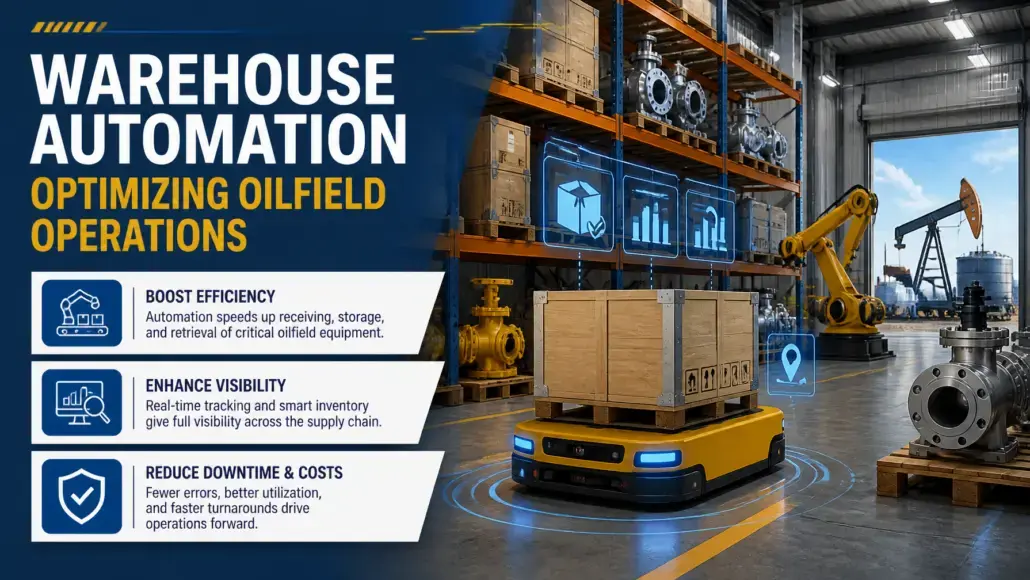
The final frontier of efficiency in the oil and gas industry is not the subterranean reservoir or the deep-water horizon. It is the warehouse. For decades, the logistics of storing and moving thousands of heavy, complex components remained a largely manual and paper-based exercise. Today, Oil & Gas Advancement observes that the rapid evolution of warehouse automation and smart logistics for oilfield operations is redefining how equipment is managed across the globe. As operators face increasing pressure to reduce costs and improve safety, the adoption of robotics and intelligent software is transforming these vast storage facilities into high-tech hubs of operational excellence.
The maturity of these technologies in 2025 and 2026 is driving a widespread rollout across the major energy hubs of the world:
- Unified orchestration systems: Logistics providers and oilfield service firms are deploying integration platforms to bridge disconnected automated systems into a single cohesive network.
- Dynamic field responsiveness: Connected infrastructure creates an adaptable supply chain capable of responding to real-time operational shifts in the field.
- The “dark warehouse” objective: Operators are targeting lights-out automation where robotics handle routine physical workflows.
- Shift in human capital: Full warehouse automation frees personnel from repetitive tasks to focus on complex, high-value operations.
The Rise of Autonomous Mobile Robots in the Oilfield
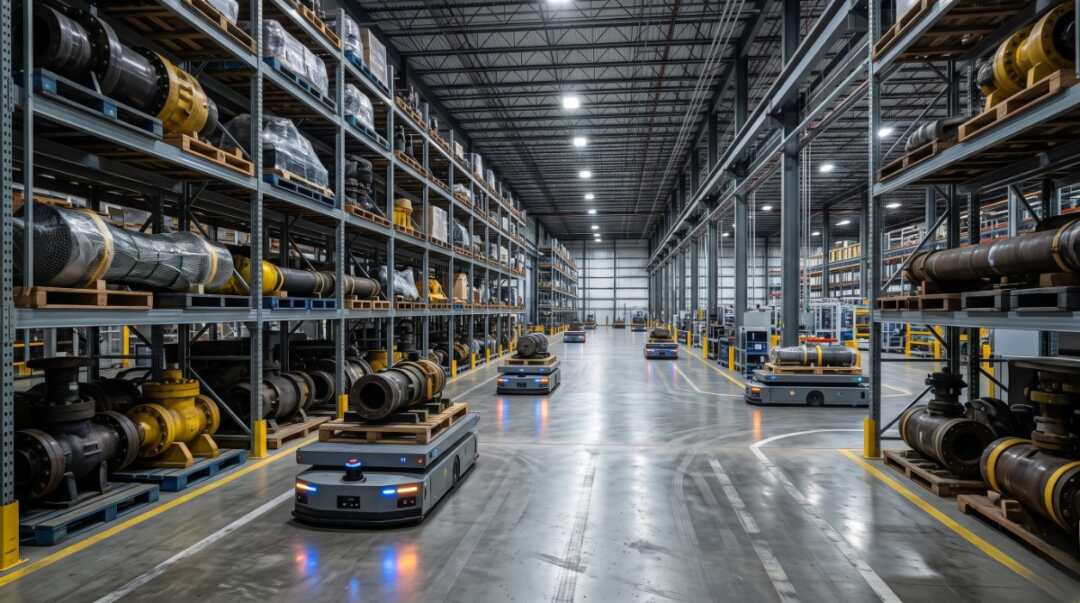
The most visible sign of warehouse automation is the presence of autonomous mobile robots. Unlike traditional conveyor belts or fixed machinery, these robots can navigate dynamic environments independently, moving goods between storage racks and picking stations with high efficiency. In an oilfield context, these robots are being designed to handle heavier loads and operate in the rugged conditions often found at remote supply bases. This versatility makes them an ideal solution for the diverse range of equipment that passes through an energy warehouse.
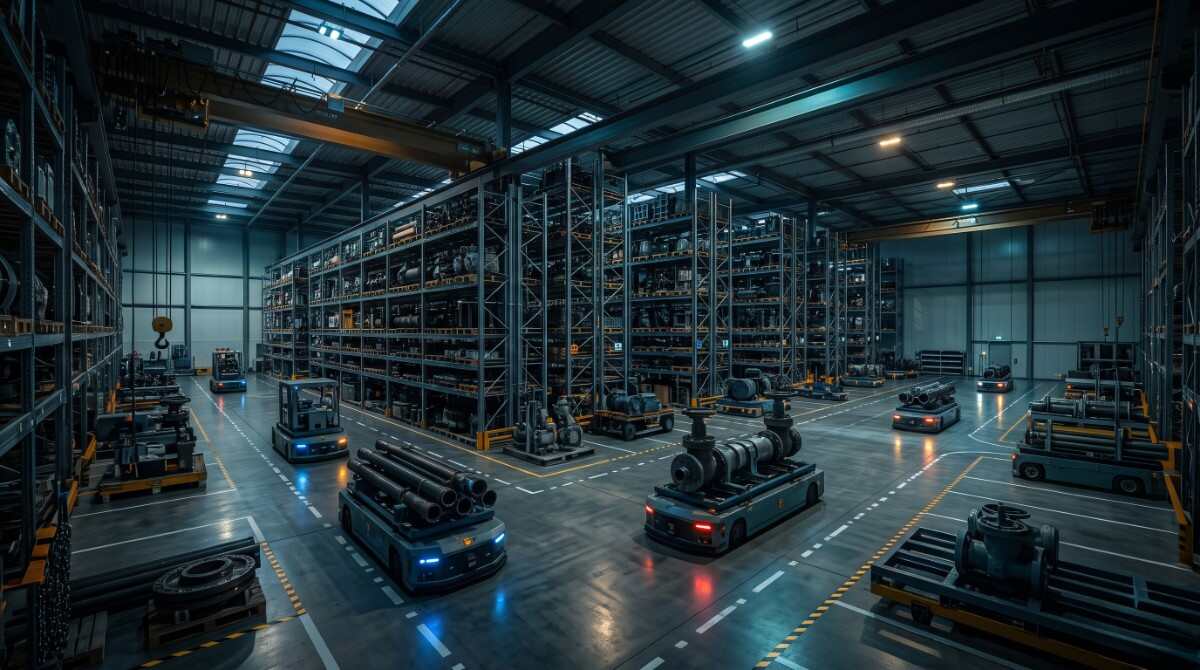
These robots are not just about speed. They are also significantly improving safety in the workplace. By taking over the heavy lifting and the high-frequency movements that often lead to strain and injury, they are creating a safer environment for human employees. Furthermore, these systems can operate around the clock, allowing for 24-hour logistics operations without the need for multiple shifts or overtime. This continuous flow of equipment is vital for supporting offshore platforms and remote drilling sites that operate on a non-stop schedule.
Major technology providers are also integrating advanced vision systems and AI into their robotic platforms. This allow the robots to recognize and handle a wider variety of parts, even those that are awkwardly shaped or poorly labeled.
Smart Logistics and the Internet of Things
Beyond the physical warehouse automation, the integration of the Internet of Things is creating a much smarter and more connected logistics network. Every piece of equipment can now be fitted with a smart tag that provides its exact location and status in real time. This connected asset approach eliminates the time-consuming process of searching for parts in a vast warehouse or wondering where a critical shipment is in the supply chain. For a procurement manager, this level of visibility is a fundamental requirement for modern risk management.
The integration of these IoT devices with cloud-based logistics platforms is allowing for a more collaborative approach to supply chain management. Operators, suppliers, and logistics providers can all access the same real-time data, reducing the friction that often leads to delays. When an order is placed, the system can automatically identify the closest available part and arrange for the most efficient transport route. This level of coordination is particularly important for managing complex multi-year projects, such as the bp Tiber Project in the Gulf of Mexico, which requires the precise delivery of thousands of individual components over several years.
Integrating Automation with the Human Workforce
The transition to automated and smart logistics is not just a technological challenge. It is also a human one. While robots and AI are taking over many routine tasks, the role of human workers is becoming more specialized and more critical. Companies are investing heavily in training programs to help their employees develop the skills needed to manage and maintain these complex systems. This includes training in data analysis, robotics maintenance, and digital supply chain management.
The focus is increasingly on a human-machine collaboration, where technology is used to augment human capabilities rather than replace them. For example, workers might use augmented reality headsets to quickly locate parts and receive picking instructions, while robots handle the physical movement of the goods. This combination of human judgment and robotic efficiency is the key to achieving the highest levels of performance in a modern oilfield warehouse.
The evolution of warehouse automation and smart logistics is a journey that is fundamentally changing how the energy industry operates. It is a transition that is being driven by the need for greater efficiency, safety, and transparency in a volatile global market. For those who embrace these technologies, the benefits are clear: a more responsive, resilient, and cost-effective logistics network that can support the energy needs of the future. As the industry continues to move toward a more digital and automated future, Oil & Gas Advancement believes that warehouse automation will become a critical hub of innovation and operational excellence.
References
- “Top Strategic Technology Trends for 2026” – Gartner
- “Top Warehouse Trends for 2026: Future of Automation” – Exotec
- “Digital Oilfield Market Size And Share Report, 2026-2033” – Grand View Research
- “SLB OneSubsea Awarded Subsea Boosting Contract for bp’s Tiber Project” – SLB
- “Warehouse Automation in 2025: Maturity and Integration” – Global Logistics Report
