









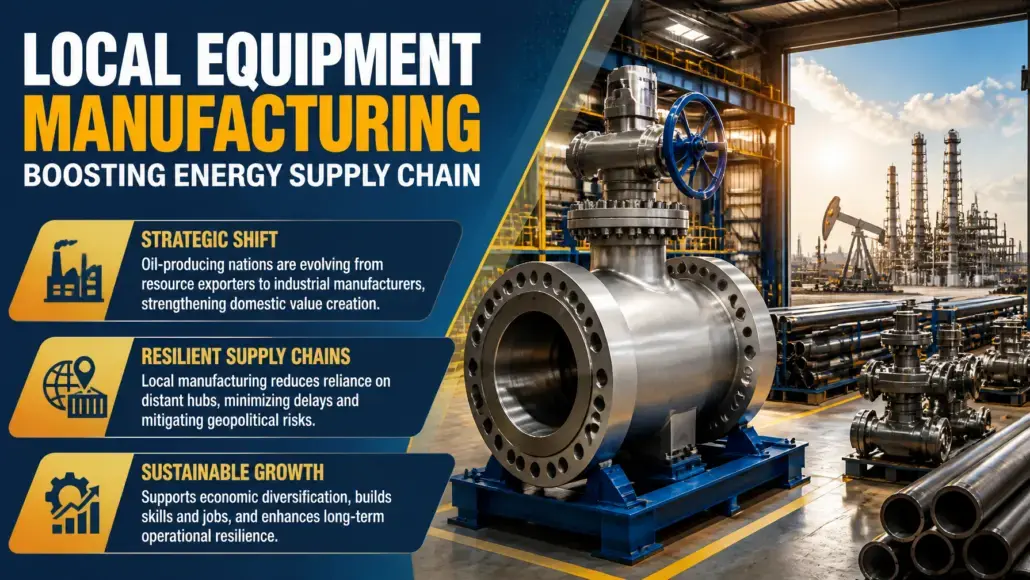
The global energy industry is undergoing a significant structural shift as major oil-producing nations move from being mere exporters of raw resources to becoming centers of industrial manufacturing. For years, the supply chain for critical oilfield equipment was dominated by a few global hubs, with components often traveling thousands of miles before reaching their destination. Today, a combination of geopolitical factors, economic diversification goals, and the need for operational resilience is driving a rapid localization of the energy supply chain. This trend is not just about moving factories. It is about building entire industrial ecosystems that can support the complex needs of modern oil and gas operations.
Oil & Gas Advancement observes that local equipment manufacturing has become a top priority for national oil companies across the Middle East and beyond. By producing high-value equipment like wellheads, valves, and drilling tools domestically, these countries are reducing their dependence on international logistics and shortening their response times to operational challenges. For an operator, having a manufacturer just a few miles from the field instead of across an ocean can mean the difference between a minor delay and a multi-week shutdown. This proximity is particularly vital in an era where global shipping lanes are increasingly subject to disruption.
The scale of this transition is evident in the progress of major localization programs. Saudi Aramco’s In-Kingdom Total Value Add program is a prime example of this success. By the start of 2025, the program reached its goal of seventy percent local content, a milestone that has fundamentally changed the industrial landscape of the region. This initiative has not only strengthened the domestic supply chain but has also attracted billions of dollars in international investment from technology giants who are now establishing permanent manufacturing bases in the Kingdom.
Strengthening Domestic Industrial Ecosystems
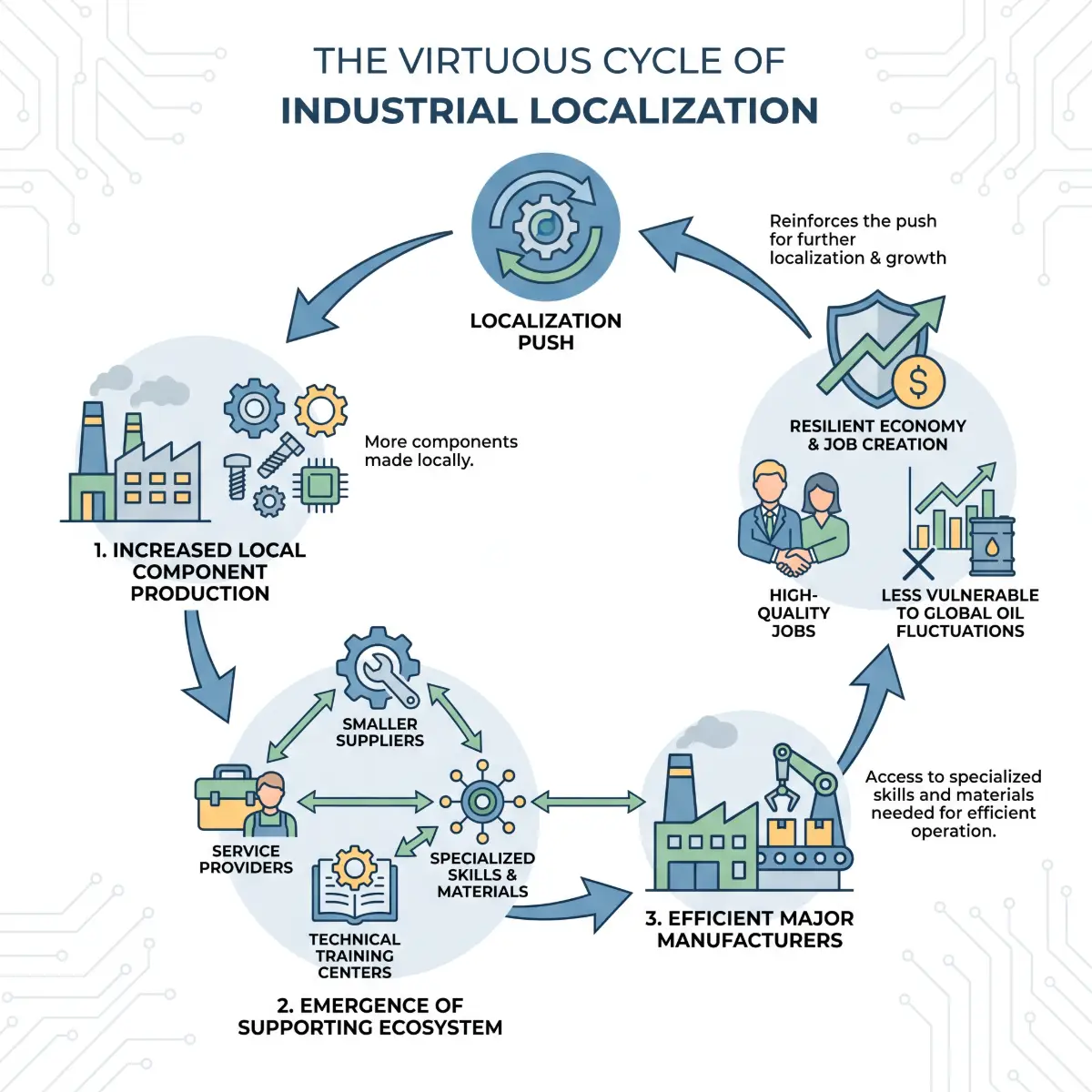
The push for localization is creating a virtuous cycle of industrial growth. As more components are made locally, a supporting network of smaller suppliers, service providers, and technical training centers also begins to emerge. This ecosystem provides the specialized skills and materials that major manufacturers need to operate efficiently. For the host nation, this means the creation of high-quality jobs and a more resilient economy that is less vulnerable to the fluctuations of the global oil market.
ADNOC in the United Arab Emirates has also seen remarkable success with its In-Country Value program. By late 2026, the company continues to expand the scope of the program, hosting major forums to connect international technology providers with local equipment manufacturing partners. These initiatives are designed to ensure that a significant portion of the capital spent on energy projects remains within the national economy. This re-circulation of wealth is a key pillar of broader national development strategies, such as the UAE’s Operation 300bn which aims to significantly increase the industrial sector’s contribution to GDP.
The role of international technology partners is crucial in this process. Companies like SLB, Baker Hughes, and Halliburton are not just selling products. They are also transferring technical knowledge and establishing local research and development centers. In March 2026, SLB OneSubsea secured a major engineering, procurement, and construction contract offshore Malaysia. This project highlights the importance of local technical capabilities in managing complex offshore developments. By building local expertise, companies can ensure that their equipment is not only made locally but also maintained and optimized by a local workforce.
Overcoming Technical and Logistical Barriers
While the benefits of localization are clear, achieving it is not without significant challenges:
- Zero tolerance for failure: Equipment must endure extreme operating conditions, making uncompromising safety and performance non-negotiable.
- Infrastructure investment required: Developing domestic manufacturing requires significant capital for local testing labs, certification bodies, and quality management systems to match international standards.
- Phased localization: Due to supply chain complexity, highly specialized components must continue to be imported from global centers of excellence over the near term.
- Prioritizing critical paths: Localization targets high-impact, critical-path components first to maximize immediate resilience.
- Targeting vulnerabilities: Supply chain mapping enables operators to focus domestic manufacturing efforts on parts with the longest lead times and the highest risk to operational uptime.
Digital tools are playing a vital role in managing this transition. Advanced manufacturing technologies, such as 3D printing and automated assembly lines, are making it easier to set up smaller, more flexible production facilities closer to the field. These micro-factories can produce spare parts on demand, reducing the need for large inventories and long-distance shipping. This move toward decentralized manufacturing is a key part of the future of the energy supply chain, allowing for a more responsive and efficient logistics network.
The Economic and Strategic Impact of Localization
The strategic importance of local equipment manufacturing extends beyond simple logistics. It also provides a level of energy security that is increasingly important in a volatile world. A country that can manufacture and maintain its own critical energy infrastructure is less susceptible to external pressures and supply chain weaponization. This strategic autonomy is a major driver for the investments being made by governments and national oil companies in their domestic industrial bases.
From an economic perspective, localization is a powerful engine for innovation. When manufacturers are located close to the end-users, they can collaborate more effectively on solving specific operational problems. This leads to the development of new products and technologies that are better suited to local conditions. For example, a local manufacturer might develop specialized materials for high-temperature wells that are common in their region. This localized innovation can then be exported to other parts of the world, creating new revenue streams for the host nation.
Integrating Local Production with Smart Logistics
The success of local equipment manufacturing is closely tied to the efficiency of the logistics network that supports it. It is not enough to make the parts locally. They must also be stored, managed, and delivered to the field with precision. This requires a seamless integration between the manufacturing floor and the warehouse. As local production volumes grow, the need for advanced logistics solutions becomes even more critical to prevent bottlenecks and ensure that the benefits of localization are fully realized.
Companies are increasingly looking at how they can apply the same digital and automation technologies to their local supply chains that they use in their global operations. This includes the use of real-time tracking, automated inventory management, and smart warehousing. By building a smart local supply chain, operators can ensure that they have the right parts at the right time, every time. This integration is essential for supporting the high-tempo operations that are characteristic of modern oil and gas fields.
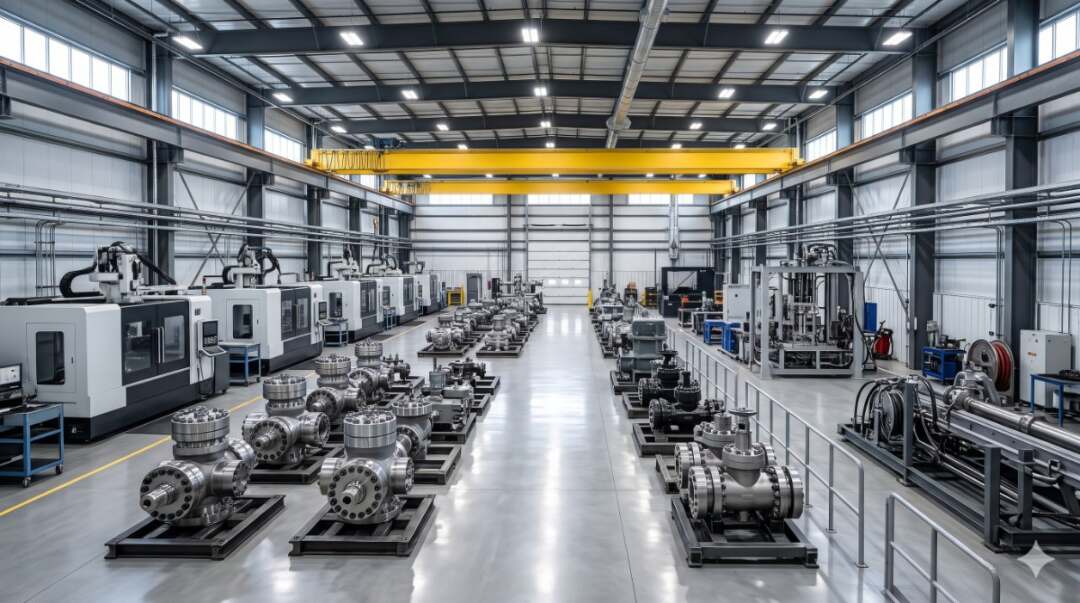
To achieve this level of efficiency, many operators are turning to warehouse automation and smart logistics for oilfield operations to manage their expanding local inventories. These systems use robotics and AI to optimize every aspect of the warehouse, from picking and packing to shipping and delivery. By automating these routine tasks, companies can reduce human error and speed up the flow of parts to the field. This ensures that the time saved by local equipment manufacturing is not lost in an inefficient logistics system, creating a truly responsive and resilient supply chain for the future.
The transformation of the oilfield supply chain through localization is a multi-decade project that is already delivering significant results. It is a journey that requires collaboration, innovation, and a long-term commitment from all stakeholders. For those who embrace this shift, the rewards are clear: a more stable, efficient, and sustainable energy industry that can meet the challenges of the twenty-first century. As the world continues to move toward a more fragmented and localized global economy, Oil & Gas Advancement notes that the ability to build and maintain a domestic industrial base will be a defining characteristic of successful energy nations.
References
- “iktva – In-Kingdom Total Value Add” – Saudi Aramco
- “National In-Country Value Program (ICV)” – MOIAT UAE
- “SLB OneSubsea wins PTTEP Sabah Oil EPC contract in Malaysia” – SLB
- “Operation 300bn” – UAE Ministry of Industry and Advanced Technology
- “Saudi Aramco iktva Program Reaches 70% Local Content” – GCC Business Watch
