










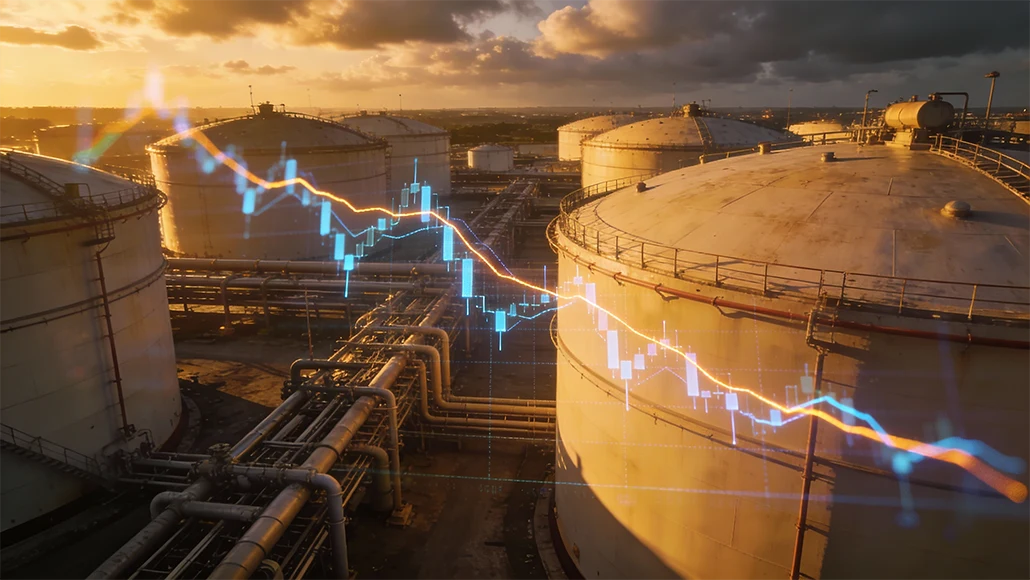
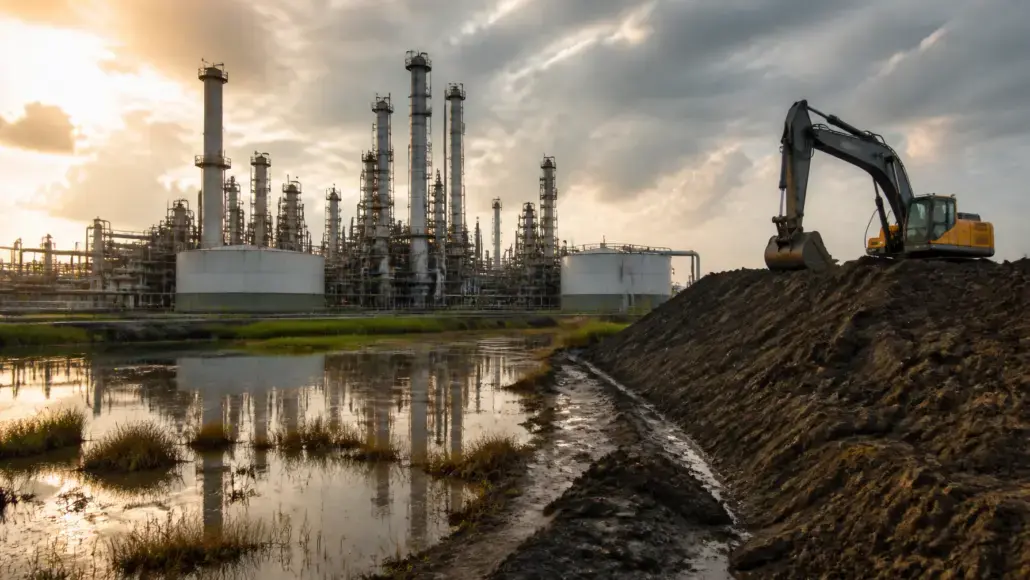
The global energy landscape is currently undergoing a paradoxical transformation. While the long-term trajectory points toward decarbonization, the immediate demand for refined petroleum products—particularly in developing economies and for specialized sectors like aviation and heavy industry—remains robust. This dynamic has placed refining infrastructure expansion at the center of a complex regulatory storm. Expanding or modifying a refinery is no longer merely an engineering feat. It is a multi-year navigational challenge through a dense thicket of environmental statutes, social mandates, and shifting political priorities. For operators and investors, understanding these hurdles is the prerequisite for any successful downstream project in the modern era.
Oil & Gas Advancement notes that at the heart of the regulatory framework for refining infrastructure expansion lies a sophisticated web of air quality standards and permitting regimes. In the United States, the primary statutory mechanism is the Clean Air Act, specifically the New Source Review (NSR) program. This pre-construction permitting process is designed to ensure that industrial growth does not significantly degrade air quality. When a facility undergoes a major modification or expansion, it triggers a rigorous evaluation process. In areas that meet national air quality standards, the Prevention of Significant Deterioration (PSD) rules apply. These rules mandate the application of the Best Available Control Technology (BACT) and require exhaustive air dispersion modeling to prove that the expansion will not cause a violation of air quality increments. Conversely, in nonattainment areas—regions that already exceed pollution limits—operators must meet the even more stringent Lowest Achievable Emission Rate (LAER) and secure emission offsets, often at ratios exceeding one-to-one, to ensure a net improvement in regional air quality.
Beyond these broad air quality programs, refiners must comply with the Petroleum Refinery Sector Rule (RSR) and various Maximum Achievable Control Technology (MACT) standards. The RSR, in particular, has introduced groundbreaking requirements that have significantly increased the operational overhead of refining infrastructure expansion. One of the most critical components is the mandate for continuous benzene fenceline monitoring. Facilities must now manage their emissions to ensure that the annual average benzene concentration at the facility boundary does not exceed a strict action level of 9 micrograms per cubic meter. This requirement has forced refiners to adopt much more aggressive leak detection and repair (LDAR) programs and to invest in high-fidelity monitoring equipment that can provide real-time data on fugitive emissions. Furthermore, the elimination of historical exemptions for startup, shutdown, and malfunction (SSM) events means that refineries are now held to continuous compliance standards, even during transient operating periods that were previously shielded from certain penalties.
Environmental Compliance and Emission Control Technologies
To meet these intensifying standards, refining infrastructure expansion projects are increasingly defined by the integration of advanced emission control technologies. The days of simply adding distillation capacity are gone; modern expansions are often de-bottlenecking projects that include massive investments in environmental abatement hardware. For instance, the installation of Ultra-Low NOx Burners (ULNB) and Selective Catalytic Reduction (SCR) systems on process heaters and boilers has become standard practice to minimize nitrogen oxide emissions. Similarly, Flare Gas Recovery Systems (FGRS) are being deployed to virtually eliminate routine flaring, capturing gas that would otherwise be burned and re-routing it into the refinery’s fuel system or back into the process. These systems not only reduce the environmental footprint but also improve the overall energy efficiency of the facility, providing a rare alignment between regulatory compliance and operational economics.
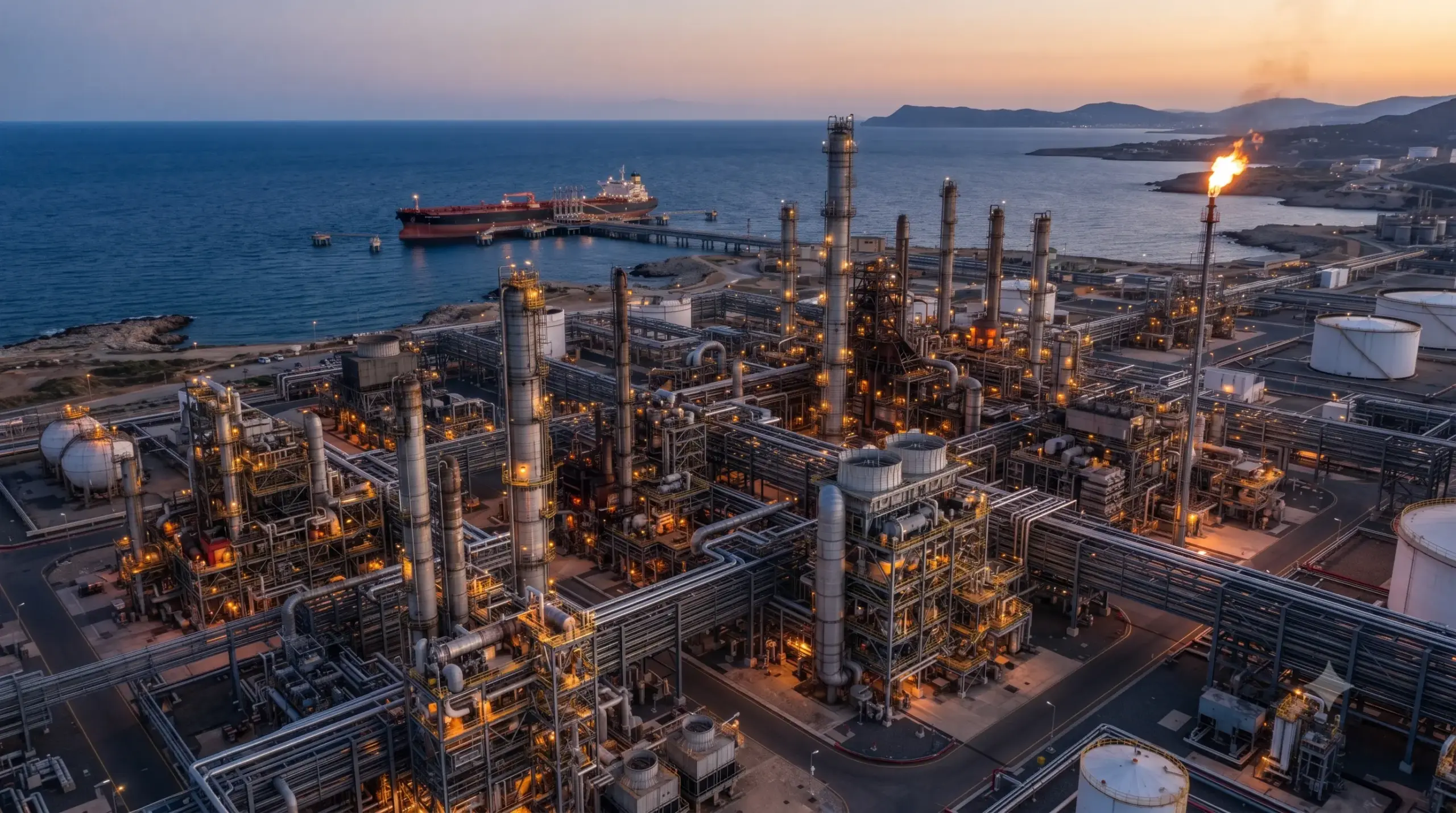
The push for carbon neutrality has also introduced greenhouse gas (GHG) reporting and reduction mandates into the refining infrastructure expansion equation. In jurisdictions like the European Union, the Industrial Emissions Directive (IED 2.0) and the Refining of Mineral Oil and Gas Best Available Techniques Reference Document (REF BREF) set the gold standard for operational excellence. Operators under the EU Emissions Trading System (EU ETS Phase 4) face rising carbon costs, which have made carbon capture, utilization, and storage (CCUS) a serious consideration for new projects. Post-combustion amine absorption systems are being explored for integration with Fluid Catalytic Cracking Units (FCCU) and Steam Methane Reformers (SMR), which are among the most carbon-intensive units in a refinery. The technical challenge of retrofitting these massive units within the existing footprint of an ageing refinery is substantial, often requiring creative engineering solutions to accommodate the necessary solvent regeneration and compression equipment.
Permitting Bottlenecks and Legal Vulnerabilities
Despite the availability of technology, the most significant risk to refining infrastructure expansion remains the permitting timeline. Securing a PSD or Title V operating permit is rarely a straightforward administrative task. It involves a complex interplay of federal, state, and local agencies, often requiring thousands of pages of technical documentation and multiple rounds of public comment. In the United States, the National Environmental Policy Act (NEPA) requires a thorough Environmental Impact Statement (EIS) for projects with federal involvement, a process that can easily take three to five years to complete. This extended duration leaves projects highly vulnerable to litigation from environmental non-governmental organizations (NGOs). Judicial stays and administrative appeals can delay a project indefinitely, leading to cost overruns that can undermine the original investment thesis. For many global refiners, the uncertainty of the permitting process is a greater deterrent than the actual cost of environmental hardware.
This legal complexity is further compounded by the rise of Environmental Justice (EJ) mandates. Regulators are increasingly using tools like the EPA’s EJScreen to evaluate the cumulative risk burden on communities living near industrial facilities. Refining infrastructure expansion projects in historically overburdened areas are now subject to much higher levels of scrutiny, including mandatory community health impact studies and enhanced civil rights challenges under Title VI of the Civil Rights Act. To navigate these challenges, refiners are having to move beyond traditional compliance and engage in deep, proactive community outreach, establishing transparent dialogue and community benefit agreements to build the social license to operate.
The Role of Digitalization in Regulatory Management
Digital technology is emerging as a vital tool for managing the compliance burden associated with refining infrastructure expansion. Next-Generation Emissions Measurement (NGEM) techniques, such as automated Optical Gas Imaging (OGI) and Tunable Diode Laser Absorption Spectroscopy (TDLAS), allow for much more precise detection of leaks than traditional manual methods. When these sensors are integrated into a facility’s Distributed Control System (DCS) or a digital twin, operators can receive instantaneous alerts about potential permit deviations, allowing them to take corrective action before a violation occurs. Predictive Emissions Monitoring Systems (PEMS) use machine learning to correlate process parameters with emission levels, providing a cost-effective alternative to continuous hardware-based monitoring in certain applications.
Moreover, the transition to blue and green hydrogen within the refinery fence is becoming a key strategy for reducing the carbon intensity of refining operations. By replacing conventional SMR-based hydrogen with Autothermal Reforming (ATR) paired with carbon capture or with water electrolysis powered by renewable energy, refiners can significantly lower their Scope 1 and Scope 2 emissions profiles. This shift not only aids in compliance with future carbon caps but also positions the refinery to produce lower-carbon fuels, such as Sustainable Aviation Fuel (SAF) and renewable diesel, which are increasingly incentivized by global fuel standards like the Renewable Energy Directive III (RED III) in Europe and the Low Carbon Fuel Standard (LCFS) in California.
Strategic Takeaways for Refinery Infrastructure Projects
Navigating the regulatory landscape of refining infrastructure expansion requires a shift from a reactive compliance mindset to a proactive, strategic approach. The following key takeaways summarize the essential considerations for modern downstream operators:
Success in refining infrastructure expansion is no longer solely dependent on engineering excellence but on the ability to manage complex, multi-year permitting cycles. Proactive engagement with regulators and community stakeholders is essential to mitigate the risk of litigation and secure the social license to operate. Operators must anticipate that environmental standards will only tighten, making over-compliance a form of future-proofing for capital-intensive assets.
The integration of digital monitoring and advanced abatement technologies is the only viable path forward for expanding refining capacity. From benzene fenceline monitoring to CCUS and blue hydrogen, the refinery of the future must be as much an environmental processing plant as it is a fuel production facility. Leveraging digital twins and AI-driven monitoring can reduce the operational burden of compliance while providing the data necessary to defend projects against legal challenges.
In conclusion, while the challenges facing refining infrastructure expansion are significant, they are not insurmountable. Oil & Gas Advancement believes that by embracing technological innovation, prioritizing community engagement, and adopting a forward-looking regulatory strategy, refiners can continue to play a critical role in the global energy system. The goal is to create infrastructure that is not only economically viable but also environmentally resilient and socially acceptable in an increasingly carbon-constrained world. The transition toward Sustainable Aviation Fuel (SAF) and the integration of carbon capture are no longer optional green additions but are now the very foundation of a refinery’s license to expand and operate. As global demand for high-quality refined products continues to evolve, those operators who master the complex dance between large-scale engineering and stringent regulatory oversight will be the ones who lead the downstream sector into a sustainable future, providing the essential energy resources the world needs while meeting the highest standards of environmental protection and social responsibility.
