





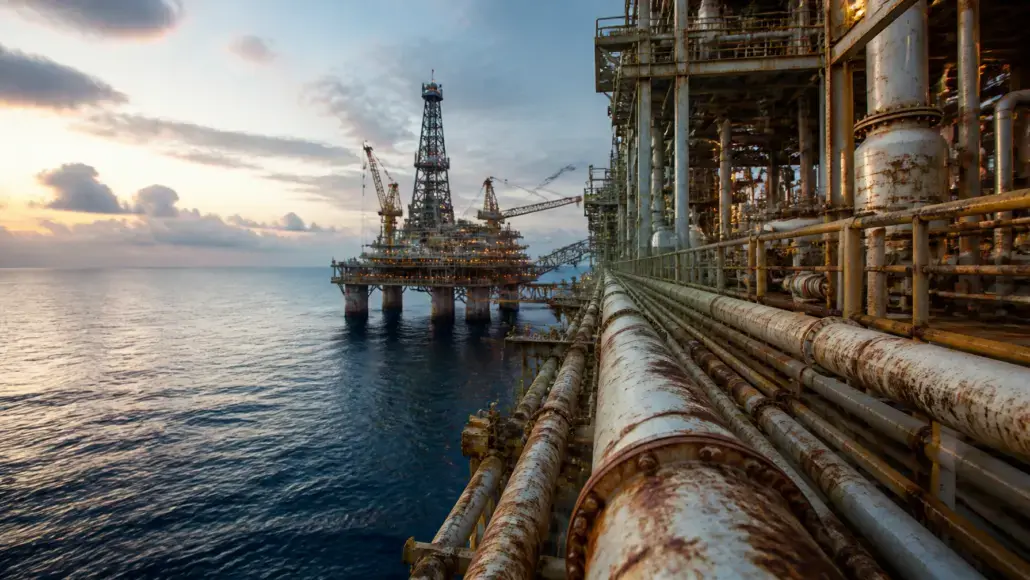
The global oil and gas industry is currently grappling with a systemic challenge that threatens both operational continuity and environmental safety: the pervasive ageing of its core physical assets. More than half of the world’s offshore platforms, onshore production facilities, and subsea pipelines have surpassed their original design lives, which typically range from 20 to 30 years. Operating these legacy assets in a high-pressure, high-temperature (HPHT) and corrosive environment requires a shift from traditional manual inspection to a high-fidelity digital technology. Oil & Gas Advancement notes that by integrating the Industrial Internet of Things (IIoT), physics-informed artificial intelligence, and advanced sensing technologies, operators can transform brownfield assets into intelligent, resilient systems that are fit for the 21st-century energy landscape.
The foundation of modernizing ageing assets lies in the deployment of continuous sensing modalities across the entire asset lifecycle. In the past, asset integrity was managed through periodic, calendar-based inspections, which often failed to capture the dynamic nature of degradation. Today, the digital technology in oil and gas infrastructure utilizes permanently installed ultrasonic testing (UT) wall thickness transducers and Electromagnetic Acoustic Transducers (EMAT) to provide real-time data on corrosion and erosion rates across critical pipe elbows and vessel shells. These sensors allow reliability engineers to move away from guesswork and toward data-driven decisions. Furthermore, high-frequency triaxial accelerometers and piezoelectric acoustic emission sensors are now standard for monitoring turbomachinery, detecting subtle anomalies like bearing race spalling or impeller imbalances long before they lead to catastrophic failure.
Advanced Sensing and Fiber Optic Innovation
One of the most transformative innovations in the digital technology in the oil and gas infrastructure is the use of fiber optic distributed sensing. By leveraging Optical Time-Domain Reflectometry (OTDR), operators can turn a single strand of fiber optic cable into thousands of virtual sensors. Distributed Acoustic Sensing (DAS) can detect minute vibrations along a pipeline, providing instant alerts for third-party intrusions or localized leaks. Simultaneously, Distributed Temperature Sensing (DTS) and Distributed Strain Sensing (DSS) monitor thermal anomalies and structural stress, allowing for the real-time tracking of geohazards like soil movement or permafrost thawing. This level of granular monitoring is particularly critical for ageing midstream assets, where the physical condition of the pipe may be unknown due to legacy documentation gaps. The integration of DAS into existing fiber networks allows for a cost-effective overlay of security and integrity monitoring without the need for extensive new trenching or infrastructure.
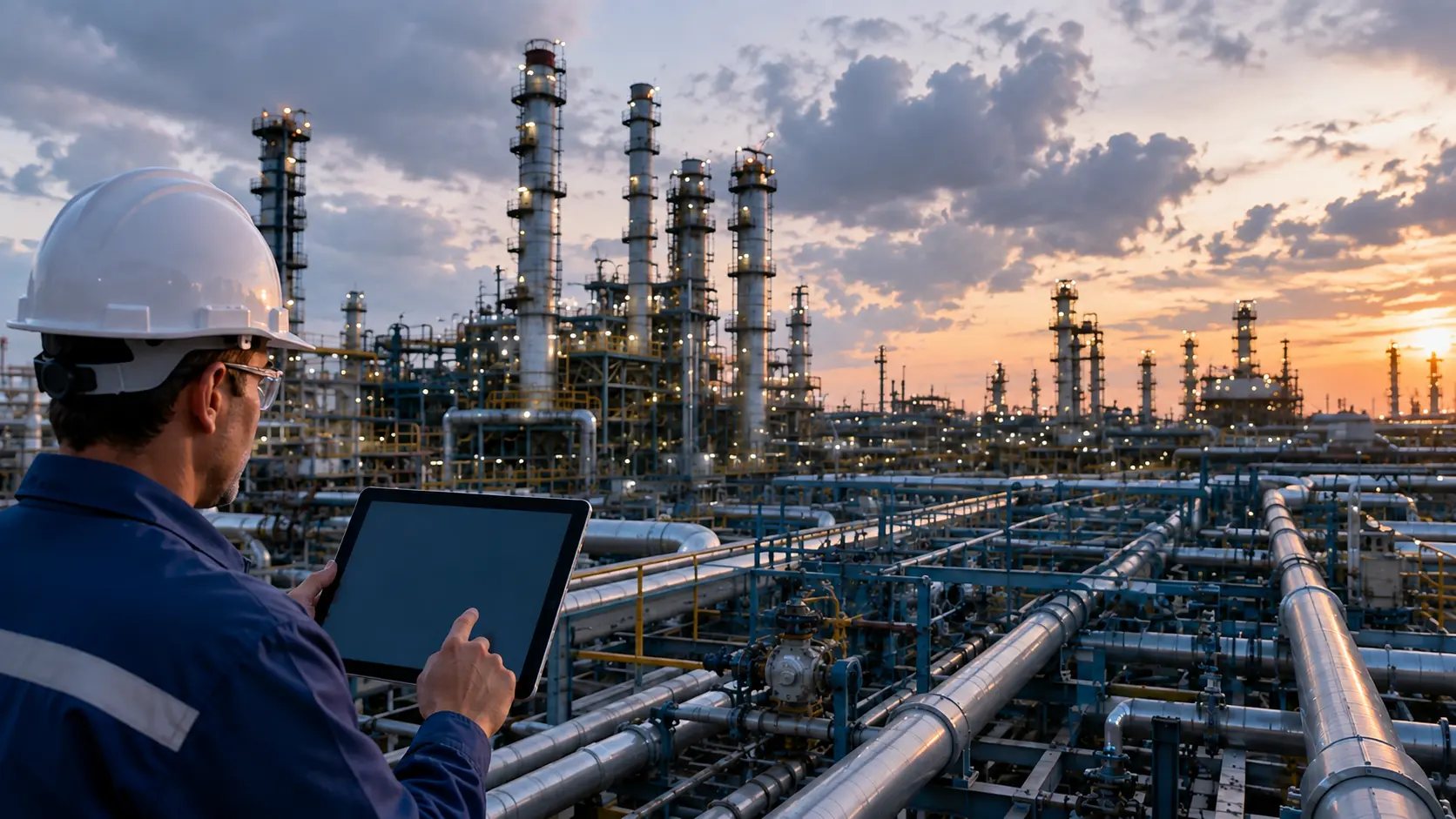
In the offshore environment, the digital technology in oil and gas infrastructure is being extended to the seabed through the use of uncrewed and autonomous systems. Autonomous Underwater Vehicles (AUVs) and Remotely Operated Vehicles (ROVs) are now equipped with multi-beam echo sounders and cathodic protection monitoring systems to inspect subsea risers and flowlines. This reduces the need for human divers and provides a more comprehensive view of subsea asset health. By feeding this data into a dynamic structural digital twin, operators can simulate the impact of wave action and hydrodynamic loading on aged jacket legs, ensuring that platforms can safely withstand 100-year storm events even after decades of service. These subsea inspections are increasingly being performed by resident ROVs that live on the seabed, further reducing the carbon footprint and cost of vessel mobilizations.
AI-Driven Predictive Maintenance and Physics-Informed Models
The true power of the digital technology in oil and gas infrastructure is realized when raw sensor data is processed by advanced artificial intelligence. Predictive maintenance (PdM) algorithms, particularly those utilizing Long Short-Term Memory (LSTM) networks and Transformers, are capable of forecasting the Remaining Useful Life (RUL) of critical components. However, pure data-driven AI can sometimes produce false positives or physically impossible predictions in unobserved operating regimes. To solve this, the industry is adopting Physics-Informed Neural Networks (PINNs). These hybrid models combine deep learning with fundamental physical laws, such as the Paris-Erdogan law for fatigue crack propagation and Faraday’s law for corrosion. By ensuring that AI predictions adhere to the laws of thermodynamics and mechanical physics, operators can rely on these systems for high-stakes safety decisions.
Modernization also requires a shift in how data is handled at the edge, particularly in remote and bandwidth-constrained environments. High-bandwidth signals, such as raw fast Fourier transform (FFT) vibration spectra, generate massive volumes of data that can overwhelm satellite links from remote offshore locations. The digital technology for oil and gas infrastructure addresses this through edge compute gateways that perform real-time pre-processing and feature extraction directly at the source. Only critical alerts, trend feature vectors, and aggregated telemetry are sent to the cloud, reducing latency and bandwidth costs. This edge-to-cloud architecture is essential for scaling digital transformation across global fleets of ageing assets, allowing for a centralized view of reliability while maintaining local responsiveness.
Digital Twins and Structural Integrity Management
The concept of the Digital Twin has moved beyond a buzzword and into a functional core of asset integrity. High-fidelity structural digital twins now integrate Finite Element Analysis (FEA) and Computational Fluid Dynamics (CFD) with live sensor streams. For an ageing refinery or an offshore platform, this means that every thermal expansion event, vibration surge, or wave impact is reflected in the virtual model. Operators can run ‘what-if’ scenarios to evaluate the impact of changing feedstocks or increased production rates on the remaining life of the equipment. This allows for a much more nuanced approach to capital allocation, where life-extension projects are prioritized based on actual structural risk rather than arbitrary age thresholds.
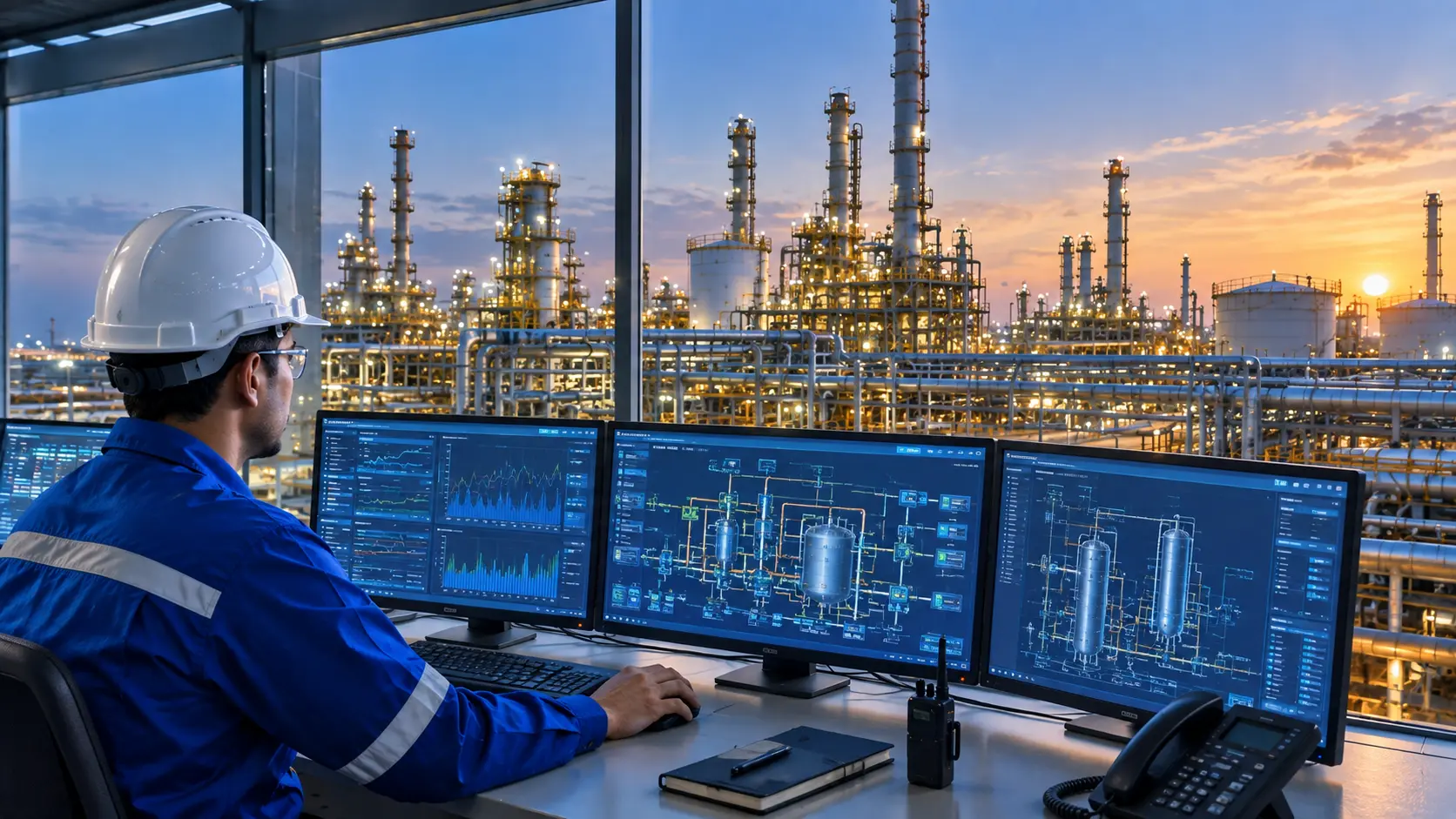
Furthermore, the digital technology for oil and gas infrastructure is enabling a more proactive approach to risk-based inspection (RBI). By automating the calculations required by standards like API 580 and 581, digital systems can dynamically adjust inspection intervals based on the real-time condition of the asset. If a sensor detects an acceleration in corrosion rate, the system can automatically schedule a NDT technician for a manual follow-up, ensuring that high-risk areas are addressed before they reach a critical state. This integration of digital intelligence with field maintenance is the hallmark of a modern, resilient energy operation.
Regulatory Compliance and Cybersecurity in the Digital Era
As infrastructure becomes more connected, regulatory compliance is evolving to keep pace with the digital reality. Environmental regulations, such as the US EPA’s NSPS OOOOb and the EU Methane Regulation, now mandate rigorous and frequent leak detection and repair (LDAR) schedules. The digital technology for oil and gas infrastructure facilitates this through automated methane monitoring using fixed Optical Gas Imaging (OGI) cameras and LiDAR-equipped drones. By providing the measurement, reporting, and verification (MRV) data required by the Oil & Gas Methane Partnership (OGMP 2.0), companies can demonstrate their commitment to decarbonization while minimizing their regulatory and financial exposure.
However, the convergence of operational technology (OT) and information technology (IT) introduces severe cybersecurity risks that must be managed with extreme care. Ageing facilities often rely on legacy SCADA systems that communicate via unencrypted, proprietary protocols that were never designed to be connected to the internet. Modernizing these assets requires the implementation of robust cybersecurity frameworks such as ISA/IEC 62443. This includes network segmentation according to the Purdue Model, the use of hardware roots of trust, and the deployment of data diodes to ensure one-way communication from critical control networks to monitoring platforms. Protecting the digital technology for oil and gas infrastructure from ransomware and unauthorized control injections is now a fundamental component of asset integrity management.
The Path Forward: Human-Centric Digital Transformation
While the digital technology for oil and gas infrastructure is advanced, the success of modernization efforts ultimately depends on the people who operate and maintain the systems. Generative AI is playing an increasing role here, with LLM-powered maintenance copilots helping field technicians navigate decades of historical records, OEM manuals, and standard operating procedures (SOPs). By querying a digital twin in natural language, a technician can instantly access the maintenance history of a 40-year-old pump and receive step-by-step guidance on its repair. This human-AI collaboration is essential for capturing the institutional knowledge of an ageing workforce while empowering a new generation of digital-native engineers.
The modernization of ageing oil and gas assets through digital technology is not merely an optional upgrade. It is a fundamental requirement for operational resilience, environmental safety, and financial viability. By transitioning from reactive to predictive maintenance using IIoT, PINNs, and high-fidelity digital twins, companies can significantly extend the life of their assets while reducing the risk of catastrophic failure. The integration of continuous sensing and digital monitoring provides a level of transparency that was previously impossible, allowing for precise capital allocation and optimized maintenance schedules that reflect the actual condition of the infrastructure.
To successfully navigate this transition, operators must address the dual challenges of legacy system integration and cybersecurity with equal vigor. Building a secure, interoperable digital technology for oil and gas infrastructure requires a long-term commitment to international standards and a willingness to overcome cultural inertia within the organization. Oil & Gas Advancement believes that as the industry moves toward a more automated and data-driven future, those who lead in digital modernization will be best positioned to thrive in an increasingly complex and regulated global energy market, ensuring that the world’s energy needs are met safely and sustainably.
