







AI Summary
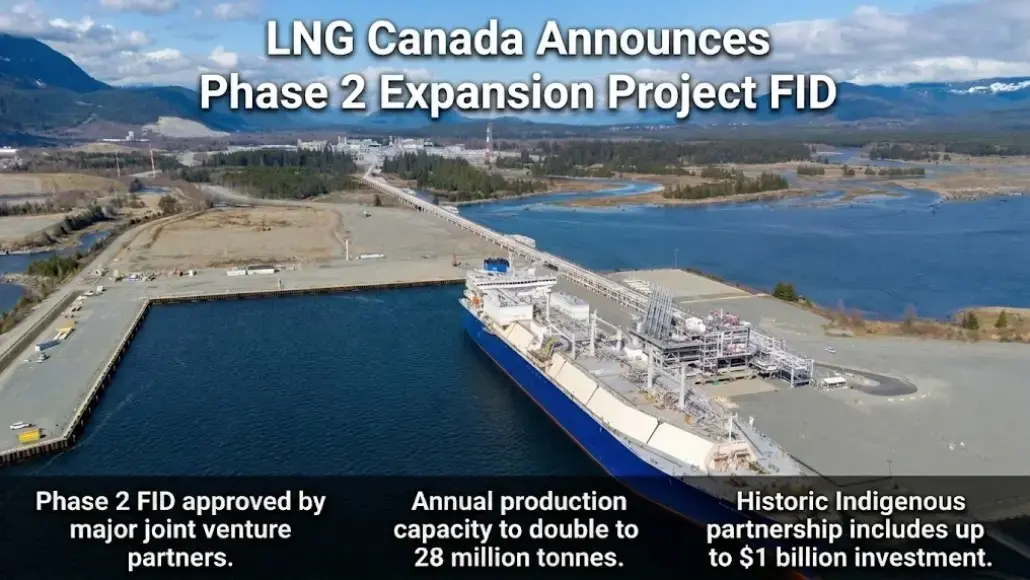
The Joint Venture Participants (JVPs) backing LNG Canada, namely Shell, PETRONAS, PetroChina, Mitsubishi Corporation, and KOGAS, have officially reached a Final Investment Decision (FID) regarding the LNG Canada Phase 2 expansion project. Situated in Kitimat, British Columbia, within the traditional territory of the Haisla Nation, this approved Phase 2 FID acts as a major milestone for the British-Columbia-based Project of National Significance. Advancing from the robust foundation laid during LNG Canada’s Phase 1, this decision represents one of the largest private sector investments in Canada.
Highlighting the magnitude of this achievement, Chris Cooper, President and CEO, LNG Canada, said, “LNG Canada Phase 2 is another nation-building investment that demonstrates Canada can build big things when governments, First Nations partners, local communities, skilled trades, contractors and investors work together with shared purpose. With FID secured, Phase 2 will double LNG Canada’s capacity from 14 to 28 million tonnes a year, putting LNG Canada on a trajectory to become one of the largest LNG facilities in the world and helping move Canada toward becoming one of the world’s top five LNG exporting nations.”
Scaling Up Infrastructure and Federal Support
To realize this massive jump in output following the Phase 2 FID, the Kitimat facility will integrate two additional LNG processing units, commonly known as trains. This critical hardware upgrade pushes total production capacity up from 14 to 28 mtpa. Since the original blueprint was designed and engineered from the outset to support a first large-scale, four-train LNG export facility in Canada, this seamless expansion includes an additional LNG storage tank, a condensate tank, a loading berth, alongside expanded utility and process systems.
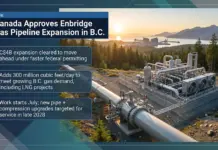
In parallel, LNG Canada has formalized commercial agreements to act as execution manager. This allows them to collaborate with Coastal GasLink to expand the capacity of the existing 670-kilometre pipeline through the construction of five new compressor stations.
Reacting to the development, Tim Hodgson, Canada’s Minister of Energy and Natural Resources, praised the effort:
“LNG Canada’s decision to move forward with Phase 2 is a massive vote of confidence in Canada, and proof that not only does Canada have what the world wants – but we can get big projects built to deliver on that.”
Landmark Indigenous Partnerships and Economic Impact
A core component of the Phase 2 FID involves the execution of a historic equity option agreement previously announced on 14th July 2026. This pact centers around MNT Investments LP, a limited partnership formed by the economic development organizations of five Indigenous groups neighboring LNG Canada’s operations: Gitga’at Nation, Gitxaała Nation, Haisla Nation, Kitselas First Nation and Kitsumkalum First Nation. These communities will inject an investment of up to $1 billion (CAD) into a special purpose entity designated to purchase the future LNG storage tank necessary for Phase 2.
As a result, this landmark deal constitutes one of the largest Indigenous ownership positions in major Canadian infrastructure. From a macroeconomic perspective, modeling compiled by LNG Canada together with the Governments of B.C. and Canada predicts staggering returns. The expansion is anticipated to generate more than $50 billion in government revenues over the life of the project. These financial benefits span direct spend, taxes, royalties and other government revenues generated through direct and indirect economic activity associated with Phase 2.
