












The petrochemical industry is currently standing at the threshold of a major transformation, one that is being catalyzed by the rapid maturation of advanced recycling technologies. As the world grapples with the dual challenges of plastic pollution and the need to reduce carbon emissions, the traditional linear model of petrochemical production—converting fossil-based feedstocks into plastics that are used once and discarded—is being replaced by a circular alternative. In 2026, Oil & Gas Advancement notes that the focus has shifted toward creating sustainable petrochemicals that maintain high performance while being derived from recycled materials.
Defining the Scope of Advanced Recycling in Petrochemicals
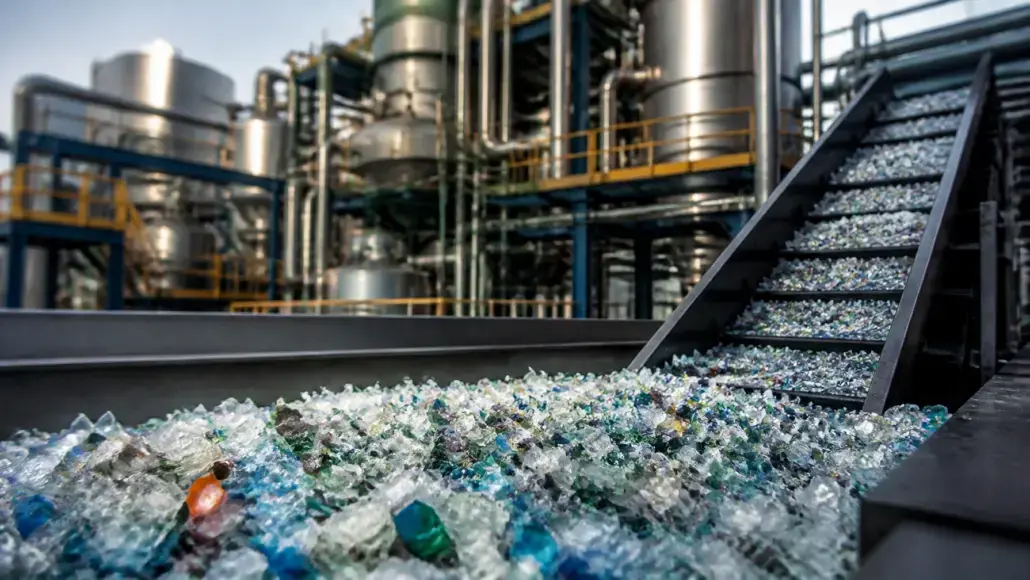
Advanced recycling, often referred to as chemical recycling, encompasses a variety of processes that break down plastic waste at the molecular level. Unlike mechanical recycling, which involves melting and reforming plastic—often leading to a loss of quality—advanced recycling technologies convert waste into its primary building blocks, such as monomers or synthetic crude oil. This allows for the production of new plastics that are indistinguishable from those made from virgin fossil resources. The most prominent technologies in this field include pyrolysis, gasification, and depolymerization, each suited to different types of plastic waste.
Pyrolysis, which involves heating plastics in the absence of oxygen to produce a liquid hydrocarbon (pyrolysis oil), is particularly effective for mixed and contaminated plastics that cannot be mechanically recycled. Gasification, on the other hand, breaks down organic materials into syngas, which can then be used to synthesize a wide range of chemicals. Depolymerization is a more specific process that returns certain polymers, like PET or nylon, back to their original monomers. By integrating these advanced recycling technologies into the petrochemical value chain, the industry can create a closed-loop system for carbon, significantly reducing the environmental footprint of plastics and chemicals.
Decoupling Production from Virgin Fossil Feedstocks
The primary objective of implementing advanced recycling technologies is to reduce the industry’s reliance on virgin crude oil and natural gas. In 2026, we are seeing a growing number of petrochemical complexes being designed or retrofitted to accept recycled feedstocks as a primary input. This transition is crucial for the long-term sustainability of the sector, as it allows companies to decouple their growth from the extraction of finite fossil resources. The use of recycled feedstocks not only conserves natural resources but also reduces the energy intensity of production, as the molecules have already been synthesized.
Furthermore, the production of sustainable petrochemicals via advanced recycling helps to mitigate the impact of price volatility in global oil and gas markets. By securing a reliable stream of plastic waste as a feedstock, petrochemical companies can build a more resilient and localized supply chain. This shift is being supported by large-scale investments from major industry players, who are partnering with waste management firms and technology startups to secure the necessary infrastructure and feedstock volumes. The integration of circular principles into the core of petrochemical production is no longer just an environmental goal; it is a strategic business necessity.
Ensuring High-Performance and Safety Standards
One of the key advantages of advanced recycling technologies is their ability to produce materials that meet the most stringent quality and safety standards. Because these technologies break plastics down to the molecular level, impurities and additives can be effectively removed during the process. This is particularly important for high-performance applications in sectors like healthcare, food packaging, and automotive manufacturing, where the purity of the material is paramount. Polymers produced from chemically recycled feedstocks are identical to virgin materials, ensuring they have the same mechanical properties, clarity, and safety profiles.
This consistency is essential for maintaining consumer trust and ensuring that sustainable products can compete on a level playing field with traditional alternatives. Brand owners, facing increasing pressure from both regulators and consumers to incorporate recycled content into their products, are looking to the petrochemical industry to provide these high-quality materials. By leveraging advanced recycling technologies, the industry can deliver sustainable petrochemicals that do not require manufacturers to compromise on performance or safety. This is a critical step in making the circular economy a reality for high-value applications.
Overcoming Technical and Economic Barriers to Scaling
Despite the significant progress made, the widespread adoption of advanced recycling technologies still faces several hurdles. The cost of chemical recycling is currently higher than traditional mechanical recycling or the production of virgin plastics from cheap fossil fuels. Achieving economies of scale is therefore essential for making these technologies cost-competitive. This requires not only large-scale industrial facilities but also the development of efficient collection and sorting systems for plastic waste. The logistics of gathering enough high-quality waste to feed a large-scale chemical recycling plant are complex and require unprecedented cooperation across the value chain.
Technically, the diversity of plastic types and the presence of complex additives pose challenges for consistent process performance. Ongoing research and development are focused on improving catalyst efficiency, enhancing the tolerance of reactors to contaminants, and optimizing the integration of recycled feedstocks into existing steam crackers. In 2026, the industry is increasingly turning to digital tools and AI to manage these complexities, using predictive modeling to optimize feedstock blends and process conditions. Overcoming these barriers will require sustained investment and a clear regulatory framework that recognizes the value of advanced recycling in the circular transition.
The Role of Policy and Consumer Demand
Government policy is a major driver of investment in advanced recycling technologies. Many countries have introduced mandates for recycled content in packaging, as well as extended producer responsibility (EPR) schemes that hold manufacturers accountable for the end-of-life management of their products. These policies create a guaranteed market for sustainable petrochemicals and provide the long-term certainty that companies need to invest in multi-billion-dollar recycling projects. Furthermore, the inclusion of chemical recycling in national circular economy roadmaps is helping to clarify its role alongside mechanical recycling.
Consumer demand is also playing a significant role. Today’s consumers are more aware than ever of the environmental impact of their purchases and are increasingly choosing brands that demonstrate a commitment to sustainability. This has led to a surge in demand for products with a lower carbon footprint and higher recycled content. Petrochemical companies that can provide these sustainable solutions are well-positioned to capture market share and enhance their brand reputation. The transition to advanced recycling technologies is therefore driven by a powerful combination of top-down regulation and bottom-up consumer preference.
Future Outlook: A Circular Petrochemical Ecosystem
Looking forward, the integration of advanced recycling technologies is expected to lead to the creation of a truly circular petrochemical ecosystem. In this future, plastic waste will be viewed as a valuable resource rather than a disposal problem. Petrochemical sites will transform into circular hubs where waste is collected, processed, and returned to the market as high-value products. The boundary between waste management and chemical production will continue to blur, leading to more integrated and efficient industrial clusters.
The success of this transition will depend on the industry’s ability to innovate and collaborate. Oil & Gas Advancement believes that by continuing to refine advanced recycling technologies and building the necessary infrastructure, the petrochemical sector can play a leading role in the global transition to a sustainable, low-carbon economy. The next generation of sustainable petrochemicals is not just a possibility. It is already being built, molecule by molecule, through the power of advanced recycling.
