


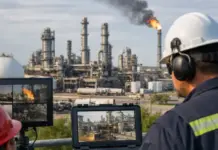









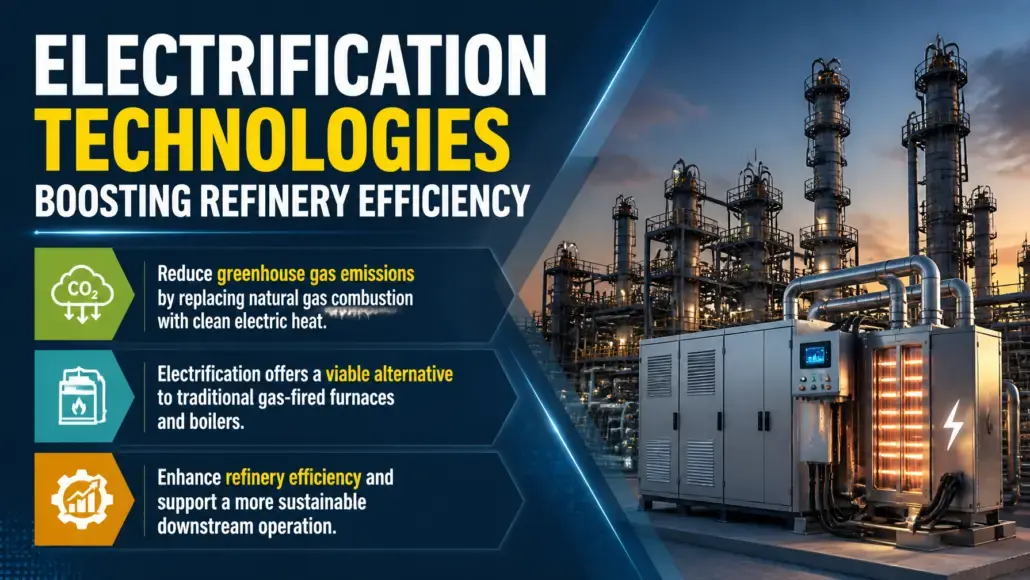
The combustion of natural gas to provide process heat accounts for a significant portion of the total greenhouse gas emissions in the downstream sector. For decades, gas-fired furnaces and boilers have been the standard for providing the high temperatures required for crude distillation, cracking, and reforming. However, the rapid advancement of refinery industrial electrification technologies is now offering a viable alternative. Oil & Gas Advancement notes that by shifting from combustion-based heating to electricity-powered systems, refiners can significantly reduce their Scope 1 emissions, provided that the electricity is sourced from renewable or low-carbon origins.
This transition is driven by a combination of technological maturity and intensifying economic pressure. Carbon pricing mechanisms in various jurisdictions are making the use of fossil fuels for heating increasingly expensive. At the same time, the decreasing cost of solar and wind power is making industrial-scale electrification more attractive. In 2025, the global market for industrial electrification was valued at $85.4 billion, and it is projected to grow to over $178 billion by 2034. This trajectory reflects a fundamental change in how the energy industry views its own power consumption and carbon footprint.
High-Temperature Electric Heating and Plasma Technology
One of the primary challenges in electrifying a refinery is achieving the extreme temperatures necessary for certain chemical reactions. Traditional resistive heating is often insufficient for processes like steam methane reforming or heavy oil cracking, which require temperatures exceeding 800 degrees Celsius. To overcome this hurdle, engineers are deploying advanced plasma and induction heating systems. Plasma torches can generate temperatures in the thousands of degrees, making them suitable for the most demanding refinery applications.
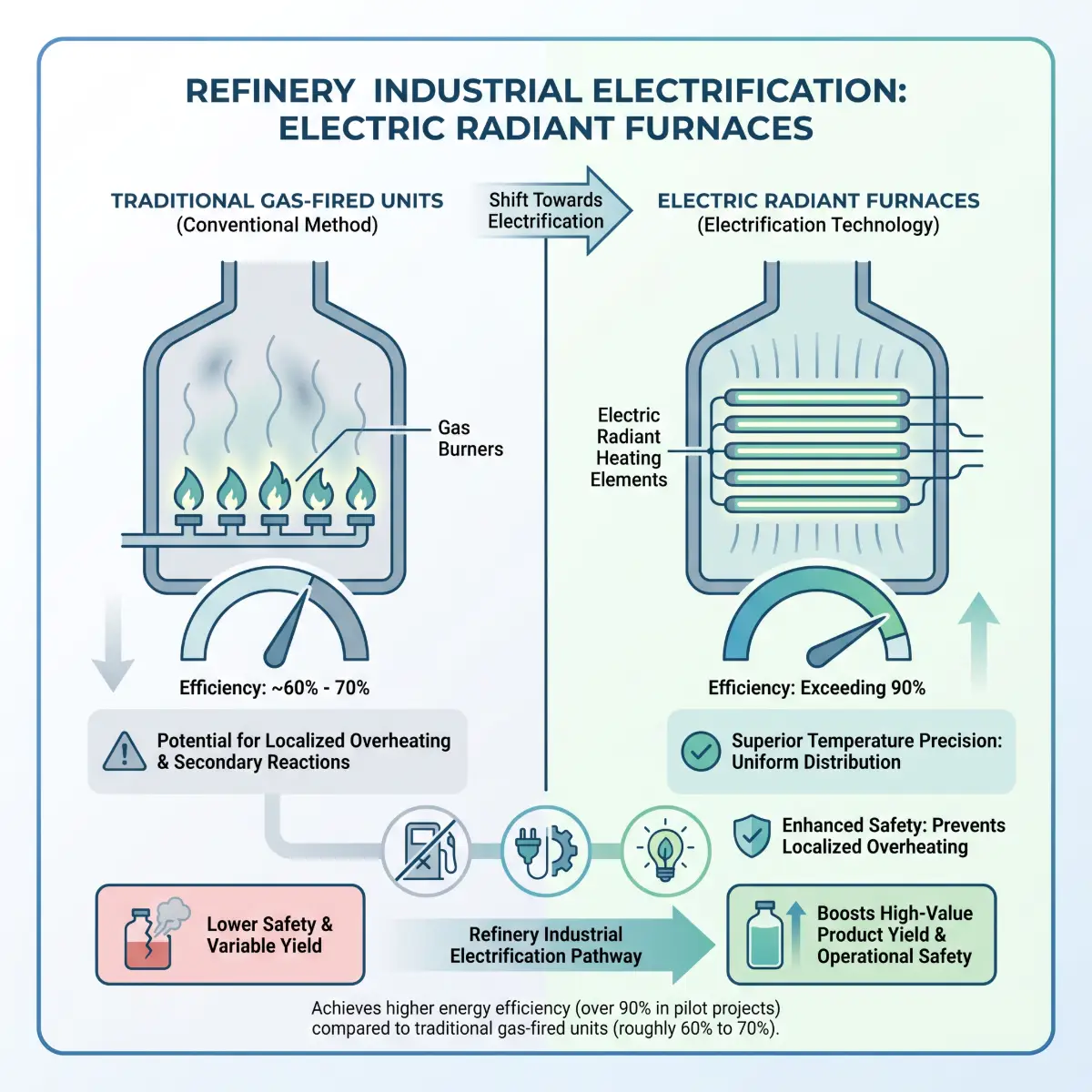
Refinery industrial electrification technologies also include the use of electric furnaces that utilize radiant heating elements:
- Superior Temperature Precision: Provides much higher precision than gas burners, ensuring a more uniform temperature distribution throughout the reactor.
- Enhanced Safety and Product Yield: Prevents localized overheating and secondary reactions, which boosts the yield of high-value products while improving operational safety.
- Significantly Higher Energy Efficiency: Achieves efficiency levels exceeding 90% in pilot projects, compared to roughly 60% to 70% for traditional gas-fired units.
Furthermore, the integration of magnetic induction heating is proving effective for localized heating of pipes and vessels. Induction systems use electromagnetic fields to generate heat directly within the metal, eliminating the need for external heat transfer surfaces. This results in faster startup times and more responsive control of the refining process. These localized solutions are often the first step for refiners looking to test electrification before committing to the full-scale replacement of major furnace blocks.
Role of Industrial Heat Pumps in Low-Grade Heat Recovery
While high-temperature processes receive much of the attention, a significant amount of energy in a refinery is spent on low to medium-temperature heating. Industrial heat pumps are emerging as a critical component of refinery industrial electrification technologies for these applications. Heat pumps work by upgrading low-grade waste heat from cooling water or process streams to higher temperatures that can be reused elsewhere in the plant. This recycling of energy drastically reduces the need for fresh steam generation.
In early 2026, research into high-temperature heat pumps reached a major milestone, with new units capable of producing process heat at temperatures up to 200 degrees Celsius. This range is sufficient for many distillation and preheating tasks that were previously reliant on gas-fired boilers. By utilizing heat pumps, refiners can achieve a coefficient of performance (COP) of 3.0 or higher, meaning that for every unit of electricity consumed, three units of useful heat are delivered. This efficiency makes heat pumps one of the most cost-effective ways to decarbonize the downstream sector.
The deployment of these systems also contributes to a more integrated and stable refinery energy grid. By using electricity as the primary energy carrier, refiners can more easily participate in demand-response programs. During periods of high renewable energy availability, the refinery can ramp up its electrification systems and store energy in the form of heat or chemical products. This flexibility is increasingly valuable as the global power grid becomes more reliant on intermittent wind and solar resources.
Global Company Progress in Refinery Electrification
The transition to electric heating is being led by major global energy firms that have committed to net-zero operational targets. These companies are investing in multi-year demonstration projects to validate the performance and reliability of large-scale electric heating systems.
- TotalEnergies: In March 2025, TotalEnergies signed a significant agreement with RWE for the supply of 30,000 tons per year of green hydrogen to its Leuna refinery in Germany. This project is part of a broader electrification strategy that includes the deployment of electric boilers and the integration of renewable power into the refinery’s utility network.
- Shell: Through its involvement in the electrification of its Energy and Chemicals Park Rotterdam, Shell is testing various electric heating technologies for its downstream assets. The company is particularly focused on using large-scale heat pumps to recover waste heat and reduce its reliance on natural gas.
- BASF: Although primarily a chemicals company, BASF’s work on the world’s first large-scale electrically heated steam cracker at its Ludwigshafen site is highly relevant to the refining industry. In late 2025, the project reported successful testing of the electric heating elements, proving that gigawatt-scale electrification of high-temperature processes is feasible.
- Dow: Similar to BASF, Dow is partnering with Shell to develop an e-cracking technology that uses 100 percent renewable electricity. The project aims to reduce the CO2 emissions of the cracking process by 90 percent, with commercial-scale deployment expected to begin in late 2026.
- Equinor: The company is exploring the electrification of its Mongstad refinery in Norway. Given Norway’s abundant supply of low-cost hydroelectric power, Equinor is well-positioned to lead the industry in the full-scale electrification of downstream operations.
Grid Integration and Energy Storage Challenges
Scaling refinery industrial electrification technologies requires a robust and reliable connection to the high-voltage power grid. A modern refinery can require several hundred megawatts of power, which can put a significant strain on local infrastructure. In 2026, many refiners are working closely with grid operators to upgrade substations and transmission lines to handle the increased load. In some cases, operators are even investing in their own dedicated renewable energy projects to ensure a secure and cost-effective power supply.
Energy storage is another critical factor. To maintain continuous operations during periods of low renewable generation, refineries must have access to large-scale storage solutions. Thermal energy storage, which involves storing heat in molten salts or specialized bricks, is being tested as a way to decouple electricity consumption from heat demand. This allows the refinery to buy cheap electricity when it is available and use the stored heat when prices are high or renewable supply is low.
The integration of long-duration battery storage is also being considered for maintaining the stability of the onsite power grid. These batteries can provide backup power during grid disturbances and help manage the peak loads associated with starting large electric motors and heaters. As battery costs continue to fall throughout 2026, the business case for onsite energy storage in the downstream sector is becoming much stronger.
Economic and Environmental Impacts on the Downstream Sector
The primary benefit of electrification is the near-total elimination of direct CO2 emissions from the heating process. For a large refinery, this can amount to several million tons of carbon reduction per year. This improvement not only helps the environment but also protects the refiner from the rising cost of carbon credits and potential border adjustment taxes on high-carbon products.
From an economic perspective, refinery industrial electrification technologies offer lower maintenance costs compared to gas-fired systems. Electric heaters have fewer moving parts and do not suffer from the fouling and corrosion issues associated with combustion gases. This leads to higher equipment availability and fewer unplanned shutdowns, which improves the overall profitability of the facility. Additionally, the improved temperature control provided by electric systems can lead to better product quality and higher yields of high-margin chemicals and fuels.
As refineries become more electrified, they also become more efficient in their water usage. Conventional steam systems require large volumes of high-purity water and generate significant amounts of wastewater. By shifting to electric heating, refiners can reduce their reliance on steam, which simplifies the plant’s water balance. This trend is closely linked to other sustainability initiatives, such as modernizing refinery water management through ZLD systems to achieve zero-liquid discharge.
The Road Ahead for the Electric Refinery
The transition to a fully electrified refinery will take decades, as it requires the replacement of billions of dollars’ worth of existing infrastructure. However, the momentum is clearly building. The combination of high-temperature electric heating, industrial heat pumps, and renewable energy integration is creating a new model for the downstream industry that is both cleaner and more efficient.
Future developments are likely to focus on the hybridization of heating systems. Refiners may use electric heaters as their primary source of energy while keeping gas-fired units as a backup to ensure operational continuity. This approach allows for maximum carbon reduction while minimizing the risk of a total power failure. As the technology matures and the global power grid becomes greener, the electric refinery will become the standard for the next generation of energy production.
References
- TotalEnergies: “TotalEnergies Leuna Green Hydrogen Agreement”
- Dataintelo: “Industrial Electrification Market Research Report 2034”
- Heat Pumping Technologies: “2026 Heat Pump Growth and Electrification Record”
- BASF: “Electrically Heated Steam Cracker Pilot Success”
- Shell: “Dow and Shell E-Cracking Technology Update”
