





















The challenge of extracting remaining reserves from mature basins has led to a resurgence in biological recovery methods. As traditional thermal and chemical recovery processes face increasing scrutiny regarding their energy intensity, microbial enhanced oil recovery is emerging as a more sustainable alternative. This technology leverages the metabolic activities of specialized bacteria to improve oil mobility in reservoirs that have otherwise reached their economic limit.
Recent market assessments in early 2026 indicate that the global valuation for microbial recovery systems has surpassed 1.2 trillion dollars. This growth reflects a broader industry trend toward low-impact, high-efficiency interventions. Unlike chemical flooding which requires large volumes of expensive polymers or surfactants, biological systems can often be sustained by injecting relatively inexpensive nutrients to stimulate existing subsurface populations.

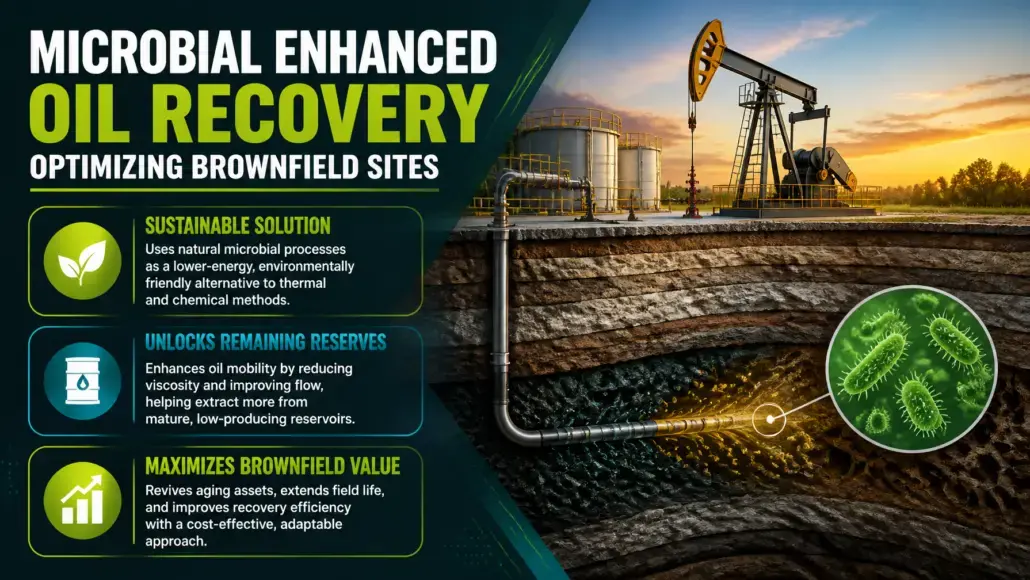
The fundamental principle of microbial enhanced oil recovery involves the production of biosurfactants and gases directly at the oil-water interface within the reservoir rock. These biological products reduce the interfacial tension between the oil and the surrounding brine. Oil and Gas Advancement notes that by making the oil less likely to cling to the rock surfaces, it becomes much easier for existing production systems to sweep the resource toward the wellbore.
Understanding the Mechanism of Microbial Intervention
Success in microbial enhanced oil recovery depends on creating the right environment for specific microbes to thrive:
- Indigenous Microbial Stimulation: Injects essential nutrients, such as nitrogen, phosphorus, or simple sugars, to activate dormant native microbes, offering a cost-effective method to trigger recovery.
- Exogenous Microbial Flooding: Introduces lab-hardened, specialized microbial strains designed to endure extreme reservoir conditions (high temperature, pressure, and salinity) when native populations are insufficient, enabling them to colonize and generate the metabolic byproducts needed for enhanced recovery.
The Rise of Bio-Surfactants in Tertiary Recovery
Biosurfactants are perhaps the most valuable tool in the microbial toolkit. These molecules are naturally produced by bacteria such as Pseudomonas or Bacillus species and are often more effective than their synthetic counterparts. Because they are biological in origin, they are fully biodegradable and present significantly lower environmental risks if they are ever released during production or processing.
The ability of these microbes to alter the wettability of the reservoir rock is another critical factor. Many brownfield reservoirs have become oil-wet over decades of production, meaning the oil sticks firmly to the rock surface. Microbial activity can shift the rock toward a water-wet state, where a thin film of water separates the oil from the mineral surface. This shift dramatically improves the efficiency of waterflooding operations.
Halliburton has integrated advanced secondary and enhanced recovery solutions that often complement microbial strategies. Their focus on reservoir optimization includes tools for monitoring the chemical and biological health of the well. By understanding the baseline conditions of the reservoir fluid, engineers can better predict how a microbial population will respond to a nutrient injection program.
Addressing Technical Challenges in Deep Reservoirs
Implementing microbial systems for microbial enhanced oil recovery is not without its technical hurdles:
- Hostile Reservoir Conditions: Extreme temperatures (exceeding 80°C) and high pressures (above 3,000 psi) severely constrain microbial survival, driving ongoing research to engineer resilient thermophilic and barophilic strains capable of remaining active at depth.
- Bio-Plugging and Injectivity Management: Overly aggressive microbial growth near the wellbore risks clogging reservoir pore spaces and reducing injectivity, prompting operators to implement controlled, pulsed nutrient injections to prevent near-well biomass accumulation.
Suncor Energy and other major operators have been exploring these systems as part of their broader brownfield optimization strategies. Their interest lies in the potential for these technologies to reduce the overall carbon footprint of production. Because microbial systems operate at reservoir temperatures and do not require high-energy heating, they align well with corporate sustainability targets for 2026 and beyond.
Strategic Deployment and Monitoring for 2026
Modern microbial enhanced oil recovery programs are increasingly data-driven. Operators now use genomic sequencing to monitor the health and composition of the reservoir microbiome in real-time. By analyzing the DNA present in produced water, engineers can determine which microbial species are active and whether they are producing the desired metabolites. This feedback loop allows for the fine-tuning of nutrient recipes to maintain peak performance.
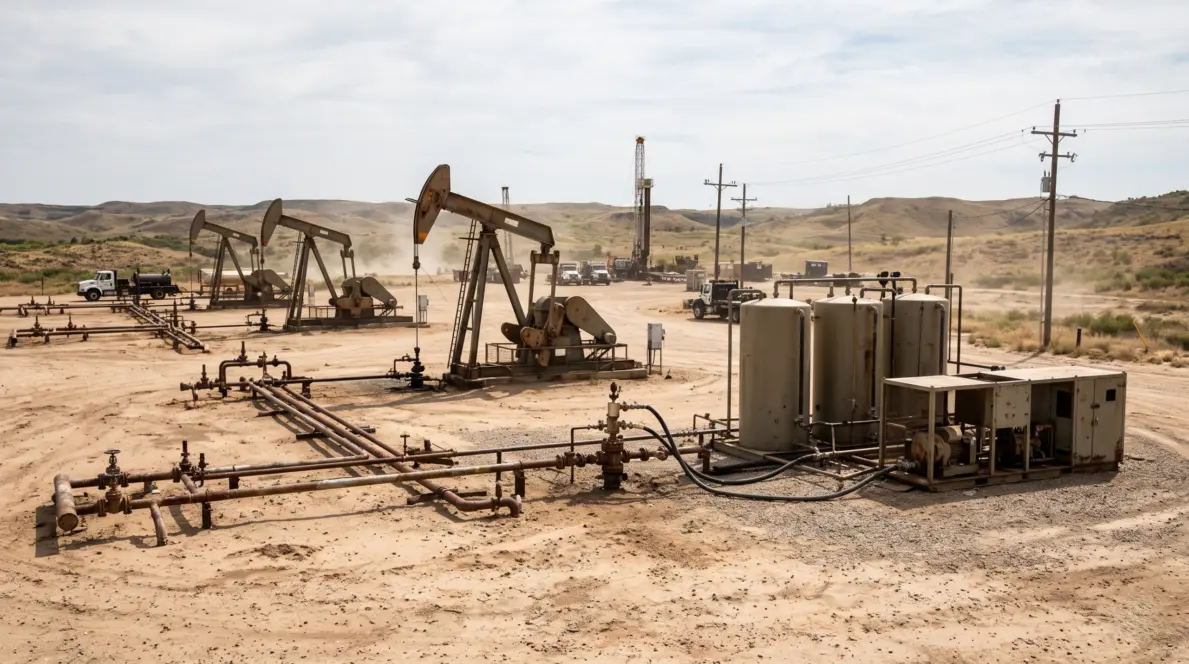
The integration of microbial systems with other recovery techniques is also gaining traction. For example, using microbes alongside a CO2 injection program can provide a multi-layered approach to recovery. While the CO2 handles the bulk displacement, the microbes can work on the finer scale to release oil trapped in the tightest parts of the formation.
Digital twins are becoming essential for managing these complex biological and physical interactions. These digital models allow operators to simulate the growth of microbial colonies and predict their impact on reservoir pressure and flow rates before a single barrel of nutrient is injected. This predictive capability is vital for reducing the risk of expensive field trials.
Economic and Environmental Implications
The low capital expenditure required for microbial systems makes them particularly attractive for small to mid-sized operators managing mature assets. In many cases, existing water injection infrastructure can be repurposed for nutrient delivery with minimal modification. This makes microbial recovery one of the few tertiary recovery options that can be implemented profitably even during periods of price volatility.
From an environmental perspective, the shift toward biological EOR represents a significant step forward. The reduction in chemical usage and the elimination of high-energy thermal processes help to lower the life-cycle carbon intensity of the produced oil. As regulatory pressure on traditional EOR methods increases in regions like the North Sea and North America, microbial solutions are likely to see even wider adoption.
Market analysts project that the microbial recovery sector will continue to expand at a steady pace through the end of the decade. The increasing availability of specialized microbial strains and more sophisticated nutrient delivery systems is making the technology accessible to a wider range of reservoir types. Oil and Gas Advancement believes that once considered a niche or experimental method, microbial EOR is now becoming a staple of late-life reservoir management.
References
- “Top 20 Companies in Global Microbial Enhanced Oil Recovery Market” – Spherical Insights
- “Microbial Enhanced Oil Recovery Key Player Insights” – Market Research Future
- “Microbial Enhanced Oil Recovery Market Size and Industry Report” – Fortune Business Insights
- “Enhanced Oil Recovery Product Portfolio” – Halliburton
- “Factbook 2025” – TotalEnergies
