







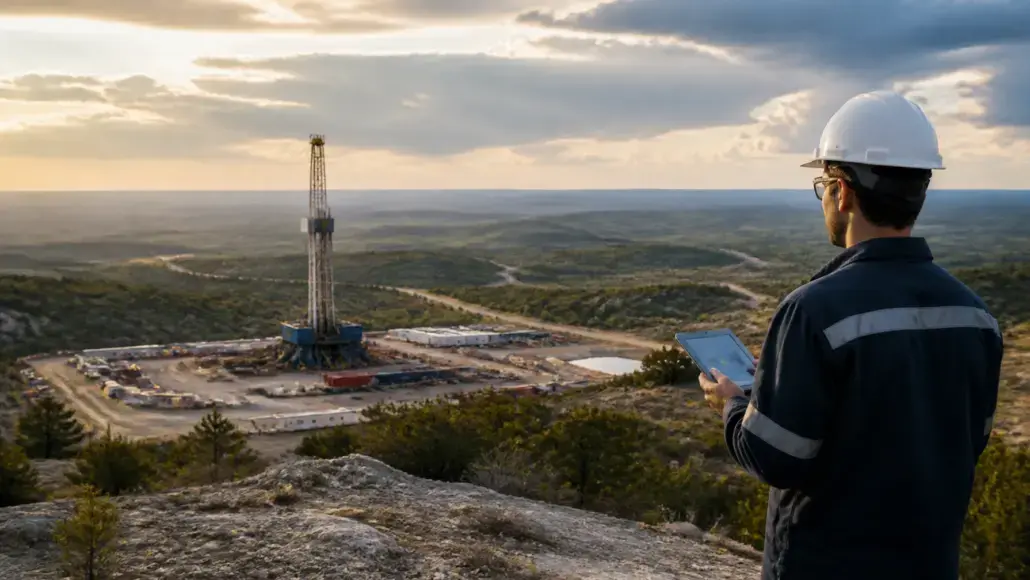
The global energy sector is currently navigating a period of profound digital transformation, where the boundaries between the physical and virtual worlds are becoming increasingly blurred. In the specialized field of unconventional gas production, the rise of digital twin reservoir modeling represents one of the most significant advancements in recent history. A digital twin is not merely a static 3D map. It is a dynamic, high-fidelity virtual replica of a physical reservoir that evolves in real-time as new data is acquired. By leveraging this technology, operators can simulate thousands of different production scenarios, predicting how fluids will flow through complex fracture networks and identifying the optimal strategies for maximizing shale gas recovery. This shift toward simulation-first operations is fundamentally changing the economics of shale, turning uncertainty into a managed variable.
Historically, reservoir modeling was a time-consuming process that often relied on sparse data and generalized geological assumptions. Models were updated infrequently and were often disconnected from the actual day-to-day operations at the wellsite. Today, the integration of high-performance computing, artificial intelligence, and real-time sensing has allowed for the creation of truly living models. These digital twins ingest data from drilling sensors, fiber-optic arrays, and production meters, allowing the virtual reservoir to mirror the behavior of the real-world asset with incredible precision. For the modern shale operator, Oil & Gas Advancement notes that digital twin reservoir modeling is the key to unlocking the full potential of complex formations like the Permian, Marcellus, and Vaca Muerta.
The Architectural Foundation of a Reservoir Digital Twin
The creation of a digital twin begins with the integration of diverse data sets into a unified multi-physics environment. This includes seismic data for structural mapping, petrophysical logs for rock properties, and geomechanical data for stress orientation. The model then uses advanced numerical solvers to simulate the flow of gas and water through the rock matrix and the man-made fractures. Unlike traditional models, a digital twin can handle the multi-scale nature of shale—from the nano-pores in the organic matter to the kilometer-long horizontal wellbores. This ability to bridge the gap between microscopic physics and macroscopic production is what makes digital twins so powerful for optimizing shale recovery.
Real-Time Data Assimilation and Dynamic Updating
The defining characteristic of a digital twin is its connection to the physical asset via the Internet of Things (IoT). As the well is drilled and fractured, sensors send a continuous stream of data back to the model. Using a process known as data assimilation, the digital twin automatically adjusts its parameters to match the observed behavior. If the pressure drop during a frac stage is different than expected, the model updates its estimation of the rock’s permeability or the fracture’s geometry. This dynamic updating ensures that the model remains relevant throughout the entire lifecycle of the well, providing a single version of the truth for engineers and decision-makers.
Predictive Analytics for Fluid Flow and Production Forecasting
One of the primary uses of digital twin reservoir modeling is the prediction of fluid flow and long-term production forecasting. Shale reservoirs are notorious for their steep decline rates, where production can drop by 70% or more in the first year. By simulating the complex interaction between the gas molecules and the rock surfaces—a process known as adsorption—the digital twin can provide more accurate forecasts of the well’s ultimate recovery. This allows operators to better manage their capital budgets and provides investors with a clearer picture of the asset’s value. Furthermore, the model can predict the onset of water loading, where liquid accumulates in the wellbore and hinders gas flow, allowing for the timely installation of artificial lift systems.
Optimizing Hydraulic Fracturing Through Simulation
Hydraulic fracturing is the most capital-intensive part of shale development, and its success depends entirely on how well the fractures interact with the rock. Digital twin reservoir modeling allows engineers to test-drive various frac designs in the virtual world before a single gallon of water is pumped. By simulating different cluster spacings, fluid volumes, and proppant concentrations, the model can identify the design that maximizes the contact area with the reservoir while minimizing the risk of interference with neighboring wells. This virtual optimization can lead to millions of dollars in cost savings and significantly higher production rates.
Managing Frac Hits and Parent-Child Interactions
As shale basins become more crowded, the interaction between new child wells and older parent wells has become a major challenge. When a new well is fractured, the high-pressure fluid can travel through existing fractures and damage the production of the older well, a phenomenon known as a frac hit. A digital twin can simulate these complex interactions, allowing operators to design protective measures, such as re-pressuring the parent well or adjusting the frac parameters of the child well. By managing these parent-child interactions through high-fidelity simulation, the industry can maintain the overall productivity of a field even as it reaches high levels of development density.
Enhanced Recovery Strategies and Refracturing
Digital twins also play a vital role in the design of enhanced oil and gas recovery (EGR) strategies, such as gas injection or huff-and-puff operations. Because these processes are sensitive to the exact geometry of the fracture network, a high-fidelity model is essential for success. The digital twin can identify which parts of the reservoir have not been adequately drained, suggesting candidates for refracturing (re-frac). By applying modern stimulation techniques to these mature assets, operators can extend the lifecycle of their wells and capture additional reserves that would otherwise be left in the ground. This focus on asset optimization is a key part of the industry’s shift toward value over volume.
The Role of AI and Machine Learning in Digital Twins
Artificial Intelligence (AI) is the engine that allows digital twins to process massive amounts of data and identify complex patterns. Machine learning algorithms can be trained on the data from thousands of previous wells to identify the signatures of high-performing reservoirs. When integrated into a digital twin, these algorithms can provide real-time recommendations to the field crew, such as suggesting an immediate change in the pumping rate to avoid a potential screen-out. This convergence of physical modeling and AI-driven analytics represents the cutting edge of digital twin reservoir modeling, creating a system that is both scientifically rigorous and operationally agile.
Visualization and Collaborative Decision-Making
A major benefit of digital twin technology is the ability to visualize complex subsurface data in a way that is easily understood by non-experts. Using Virtual Reality (VR) and Augmented Reality (AR), engineers and geologists can walk through the virtual reservoir, examining the fracture networks and fluid flow paths in three dimensions. This immersive experience fosters better collaboration between different disciplines—such as drilling, completions, and production—ensuring that everyone is working toward the same goal. The ability to share the digital twin via cloud-based platforms also allows for global collaboration, where experts from around the world can contribute to the optimization of a single asset.
Challenges in Data Quality and Computational Cost
Despite the clear advantages, the implementation of digital twins is not without its challenges. The accuracy of the model is entirely dependent on the quality of the input data, and noisy or missing sensor data can lead to erroneous conclusions. Ensuring high levels of data integrity and establishing robust data governance protocols is therefore essential. Furthermore, the computational cost of running high-fidelity simulations in real-time can be significant, requiring investments in specialized hardware and cloud computing resources. However, as the cost of computing continues to fall and the sophistication of numerical solvers increases, these hurdles are becoming easier to overcome.
The Virtual Future of the Shale Industry
In conclusion, digital twin reservoir modeling is transforming the shale industry from a discipline of brute force to one of surgical precision. Oil & Gas Advancement believes that by creating a bridge between the physical reality of the wellbore and the virtual possibilities of simulation, this technology is unlocking new levels of efficiency and sustainability in energy production. The move toward digital twins is not just a technological upgrade; it is a fundamental shift in the way the industry perceives and interacts with the subsurface. As we look toward a future defined by lower margins and higher environmental standards, the ability to optimize every asset through the power of digital twins will be the key to long-term success. This is the promise of the digital revolution in the oilfield: a future where the virtual and the physical come together to ensure a stable, efficient, and responsible energy supply for the world. Through the lens of digital twin reservoir modeling, we see a shale industry that is smarter, safer, and more productive than ever before.
