













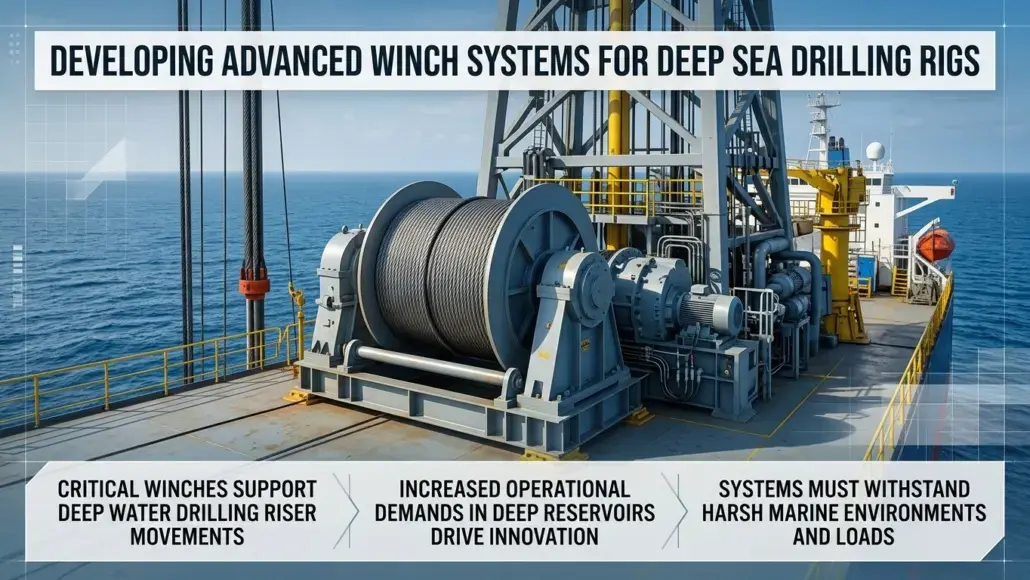
In the high-stakes world of offshore energy, the winch system is the unsung hero of the drilling rig. Often hidden within the complex architecture of a deep-sea vessel, these systems are responsible for the critical vertical movement of drill strings, casing, and riser pipes that descend thousands of feet into the earth’s crust. As the industry pushes toward ever-deeper reservoirs and harsher marine environments, the demands placed on these mechanical systems have grown exponentially. The emergence of next-gen technology has led to the development of advanced winch systems drilling operators now rely on to maintain precision and safety in conditions that would have crippled legacy equipment. These systems are no longer just simple drums and cables. They are highly sophisticated, digitally controlled powerhouses that define the efficiency of modern offshore drilling.
The evolution of winch technology is driven by the need for greater power density, improved control, and a reduction in the physical footprint on the deck. In deep-sea drilling, space and weight are at a premium, and every additional ton of machinery must be justified by a significant gain in performance. Next-generation winches address these challenges through modular designs, advanced material science, and the integration of high-performance electric and hydraulic drives. Oil & Gas Advancement notes that by focusing on the synergy between mechanical strength and digital intelligence, the industry is creating a new standard for offshore lifting, ensuring that deep-sea rigs can operate with a level of reliability that minimizes both environmental risk and operational cost.
Power Density and Modular Design
The primary goal for any next-generation winch system is to deliver maximum torque and lifting capacity within the smallest possible volume. This concept, known as power density, is crucial for deep-sea drilling rigs where deck space is shared with a myriad of other critical systems. Advanced winch systems drilling technology utilizes compact, high-efficiency motors—often permanent magnet electric motors or high-pressure hydraulic units—to provide the necessary force. These power units are coupled with multi-stage planetary gearboxes that offer incredible mechanical advantage, allowing a relatively small winch to handle loads that once required massive, sprawling machinery.
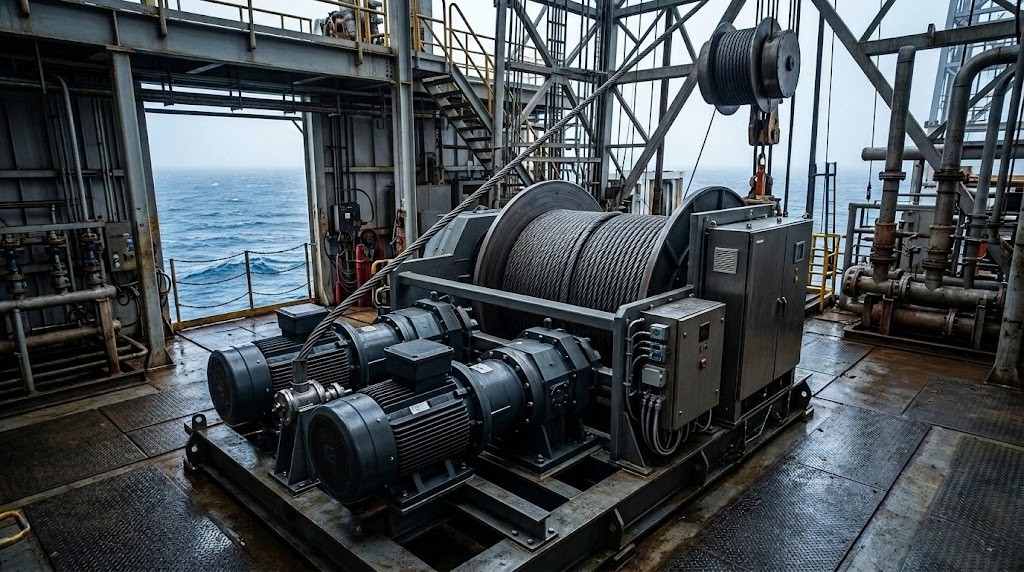
Complementing this power density is the move toward modular design. In the past, a failure in a critical winch component could sideline a rig for weeks while a specialized repair crew was dispatched. Modern winches are designed with plug-and-play modules for the motors, gearboxes, and control electronics. This modularity allows the onboard maintenance crew to swap out a malfunctioning unit in hours rather than days, significantly reducing the cost of unplanned downtime. Furthermore, modular systems are easier to upgrade; as newer, more efficient motor technologies become available, they can be integrated into the existing winch frame without the need for a total system replacement.
Electric vs. Hydraulic Drives in Modern Rigs
One of the most debated topics in winch engineering is the choice between electric and hydraulic drives. For decades, hydraulics were the gold standard due to their robustness and ability to provide high torque at low speeds. However, the latest advanced winch systems drilling configurations are increasingly favoring electric drives. Electric motors offer superior precision, quieter operation, and are easier to integrate into digital control networks. Perhaps most importantly, they allow for regenerative braking, where the energy generated during a load lowering sequence is captured and fed back into the rig’s power grid, improving overall energy efficiency and reducing the environmental footprint of the operation.
Despite the rise of electric drives, hydraulics still have a place in the deep-sea ecosystem, particularly in applications where extreme environmental protection is required. Modern hydraulic winches have evolved to use biodegradable fluids and closed-loop systems that prevent leaks, addressing the environmental concerns of the past. As we look toward the future of hydraulic lifting in global oil logistics, the integration of these high-performance fluid systems will be critical for maintaining power density in increasingly remote and environmentally sensitive locations. Ultimately, the choice often depends on the specific requirements of the rig and the depth of the project. A hybrid approach, utilizing electric drives for the main drawworks and hydraulics for auxiliary lifting tasks, is becoming common, providing the best of both worlds in terms of precision and brute force.
Modular Components for Rapid Field Maintenance
The logistical challenge of maintaining a drilling rig in the middle of the ocean cannot be overstated. Every minute of downtime translates into thousands of dollars in lost revenue. Therefore, next-gen winches prioritize serviceability. By standardizing components across different winch models on a single rig, operators can maintain a smaller inventory of spare parts. This standardization is a key element of advanced winch systems drilling strategies, ensuring that the rig is always prepared for the unexpected.
Innovative maintenance features also include built-in diagnostic sensors that monitor the health of the gearbox and motor in real time. These sensors can detect the early signs of wear, such as increased vibration or temperature spikes, allowing for proactive maintenance before a failure occurs. This predictive approach to field maintenance ensures that the winch system remains a reliable link in the drilling chain, providing the peace of mind that is essential for high-pressure deep-sea operations. The focus is on creating a system that is as resilient as the environment in which it operates.
Intelligent Control and Load Management
Beyond physical strength, the defining characteristic of a next-generation winch is its intelligence. The integration of advanced sensors and real-time processing allows for a level of load management that was previously impossible. Advanced winch systems drilling platforms use these sensors to monitor cable tension, speed, and positioning with extreme accuracy. This data is fed into a central control unit that can automatically adjust the winch’s behavior to maintain optimal performance. For example, if the system detects an unexpected spike in tension—which could indicate that the drill bit has become stuck—it can instantly pause or reverse the motion to prevent a catastrophic cable break.
This intelligent control also extends to the way the winch interacts with other rig systems. By communicating with the vessel’s dynamic positioning (DP) and motion compensation systems, the winch can anticipate the movement of the rig and adjust the load accordingly. This integrated approach ensures that the forces acting on the drill string are always within safe limits, even in heavy seas. The result is a smoother, more controlled drilling process that reduces wear and tear on all components, from the winch drum to the drill bit itself.
Active Heave Compensation (AHC) for Precise Bit Control
In deep-sea drilling, the motion of the ocean is the greatest enemy of precision. As the rig rises and falls with the waves, this vertical movement is transmitted through the winch line to the drill bit at the bottom of the ocean. Without intervention, this heave would cause the bit to smash into the rock or pull away from the drilling surface, leading to inefficient drilling and potential equipment failure. Active Heave Compensation (AHC) is the next-gen solution to this problem. The winch system uses real-time data from the rig’s motion sensors to move the drum in direct opposition to the waves, effectively decoupling the load from the vessel’s motion.
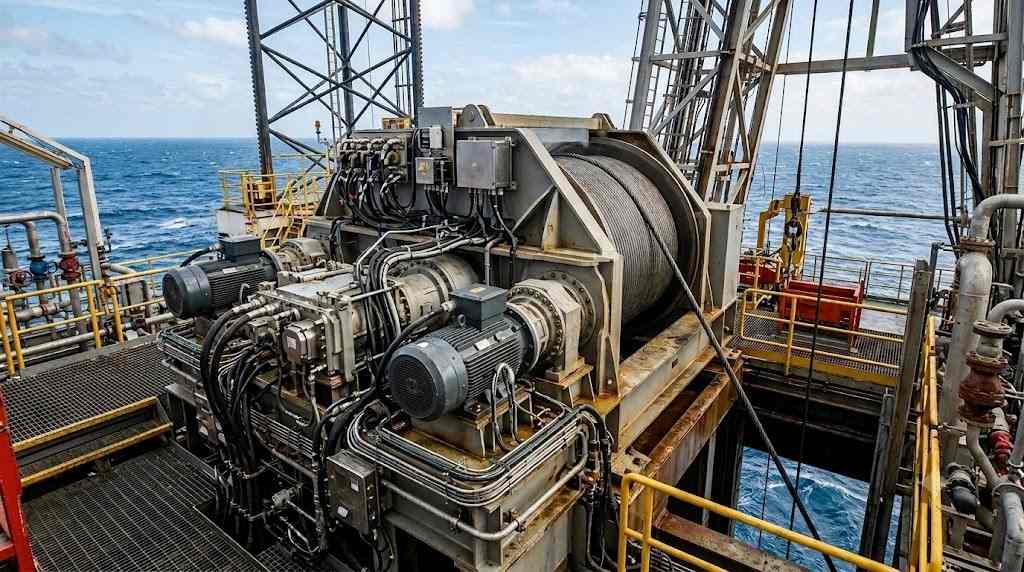
Advanced winch systems drilling with AHC can maintain the weight-on-bit (WOB) with incredible stability, regardless of the sea state. This allows drilling to continue in weather conditions that would have forced older rigs to disconnect and wait for the storm to pass. The increased operational window provided by AHC is a major economic driver, as it allows for faster project completion and more consistent drilling performance. By mastering the motion of the sea, next-generation winches are enabling the exploration of deep-water frontiers that were once considered unworkable.
Integrated Tension Sensing and Automated Braking
Safety in heavy lifting is fundamentally about control, and nowhere is this more critical than in the braking system. Next-gen winches feature redundant, multi-layered braking systems that include both mechanical and electronic components. Integrated tension sensors provide a continuous stream of data to the braking controller, ensuring that the system is always ready to intervene. In the event of a power loss or a control system failure, the brakes are designed to fail-safe, automatically engaging to hold the load securely in place.
Automated braking protocols also play a role in everyday operations. The system can be programmed to slow the load down as it approaches the rig floor or the seabed, preventing accidental impacts. This controlled deceleration is a hallmark of advanced winch systems drilling, reducing the physical stress on the cable and the rig’s structure. By automating these delicate maneuvers, the system reduces the cognitive load on the operator, allowing them to focus on the broader drilling strategy while the winch handles the minutiae of load safety.
High-Capacity Winch Solutions for Demanding Offshore Environments
Enhancing Safety and Longevity in Deep Sea Environments
The long-term durability of a winch system is determined by its ability to withstand the corrosive and high-pressure environment of the deep sea. Next-gen winches utilize advanced coatings and corrosion-resistant alloys to protect critical components from the salt air and water. Furthermore, the use of synthetic lubricants and high-performance seals ensures that the internal workings remain pristine, even after years of continuous operation. This focus on longevity is not just about reducing maintenance costs; it’s about ensuring that the equipment remains safe for its entire service life.
The integration of digital twins—virtual replicas of the winch system—allows for the continuous monitoring of structural integrity. By feeding real-world data from the winch’s sensors into the virtual model, engineers can predict how the system will age and when structural components might need reinforcement. This marriage of physical robustness and digital foresight is the ultimate goal of next-generation winch engineering. Oil & Gas Advancement believes that by creating systems that are both stronger and smarter, the oil and gas industry is securing the future of deep-sea exploration, ensuring that we can reach the energy resources of the future with confidence and safety.
References
- MacGregor to deliver Anchor Handling Towing Winch Package for SINOPACIFIC Engineering & Contracting Co Ltd
