




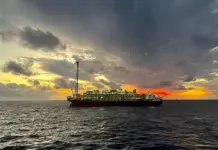





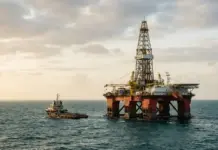
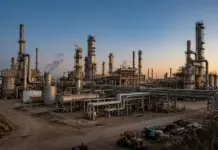
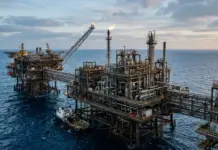
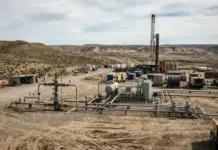


The Aguirre Offshore GasPort project will consist of a floating storage regasification unit (FSRU), a fixed jetty and a subsea pipeline located off the southern coast of Puerto Rico, outside of the Jobos Bay Reserve, the second biggest estuarine area in Puerto Rico.
The project will be built, owned and operated by Excelerate Energy in co-operation with Puerto Rico Electric Power Authority’s (PREPA). It will be situated near the towns of Salinas and Guayama, four miles off the southern coast of Puerto Rico.
With a baseload capacity of 500MMscf/d, the facility will provide regasification services and deliver gas to PREPA’s Central Aguirre Power Plant under a long-term agreement. It will use Excelerate Energy’s 150,900m³ floating storage and regasification vessels.
The project will enable PREPA to convert its power plant into a dual-fuel generation facility that will utilise diesel and natural gas for the combined-cycle units, and fuel oil and natural gas for the thermoelectric plant.
“Construction is scheduled to begin in the first quarter of 2016 and is expected to be completed in the second quarter of 2017.”
The Federal Energy Regulatory Commission (FERC) granted permission for the construction of the Aguirre Offshore GasPort facility in July 2015. Construction is scheduled to begin in the first quarter of 2016 and is expected to be completed in the second quarter of 2017.
Aguirre Offshore GasPort design
The Offshore GasPort is planned to be a floating LNG terminal with the ability to transport, store and convert LNG back into natural gas onboard through a process known as regasification. The infrastructure will encompass a floating storage and regasification unit (FSRU), minimal infrastructure to moor the vessel, and a subsea pipeline to deliver the gas onshore.
A four-mile (6.5km) long subsea pipeline will connect the Aguirre Power Plant to the Offshore GasPort. The FSRU will be moored semi-permanently.
Custom-made LNG carriers will be employed to transport and vapourise LNG via specifically designed offshore and near-shore receiving facilities.
The floating terminal will have a storage capacity of 3.2Bcf and a baseload throughput capacity of 500Mmcf/day (based on 1,500MW). The facility will, however, initially deliver 250Mmcf/day, which will be increased with the growth in demand.
Subsea pipeline details
Starting at the Offshore GasPort connection located to the south of Cayos de Barca and Cayos Caribes, the subsea pipeline will pass through the Boca del Infierno pass and the Jobos Bay from south to north, and terminate at the Aguirre power plant.
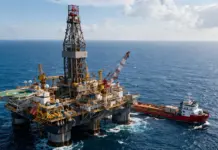
Browse FLNG Project, Australia
The project involves the development of the Brecknock, Calliance and Torosa fields using Shell’s floating liquefied natural gas (FLNG) technology.
The pipeline will have an outside diameter of 18in (46cm) and a maximum operating pressure of 1,450lb per square inch (9,997 kilopascals). Horizontal directional drilling (HDD) will be used to install the pipeline in the Boca del Infierno pass.
Aguirre Offshore GasPort construction
A spud-leg anchoring system will be used for securing the Offshore GasPort to minimise the impact on the seafloor.
Tubular steel structures (jackets), pile structures, steel decks and topside equipment will be used for constructing the offshore berthing platform. Prefabricated modular designs will be used rather than onsite construction.
A total of 13 structures will be placed on the seafloor with nine structural jackets for the GasPort’s platform and berthing dolphins along with four triquad pile structures for the relatively smaller mooring dolphins.
Contractors involved
Excelerate Energy awarded the contract for the front end engineering design (FEED), including onshore and offshore designs, to Technica.
Project benefits of Aguirre Offshore GasPort.
The Aguirre power plant is one of PREPA’s biggest facilities incurring the highest fuel cost. By supplying natural gas to the plant, the Offshore GasPort will help in not only reducing the fuel cost but also improving the air quality and ensuring cheaper electricity for all.
Reducing fuel oil consumption will also curtail the barge traffic in the environmentally delicate Jobos Bay area.