





















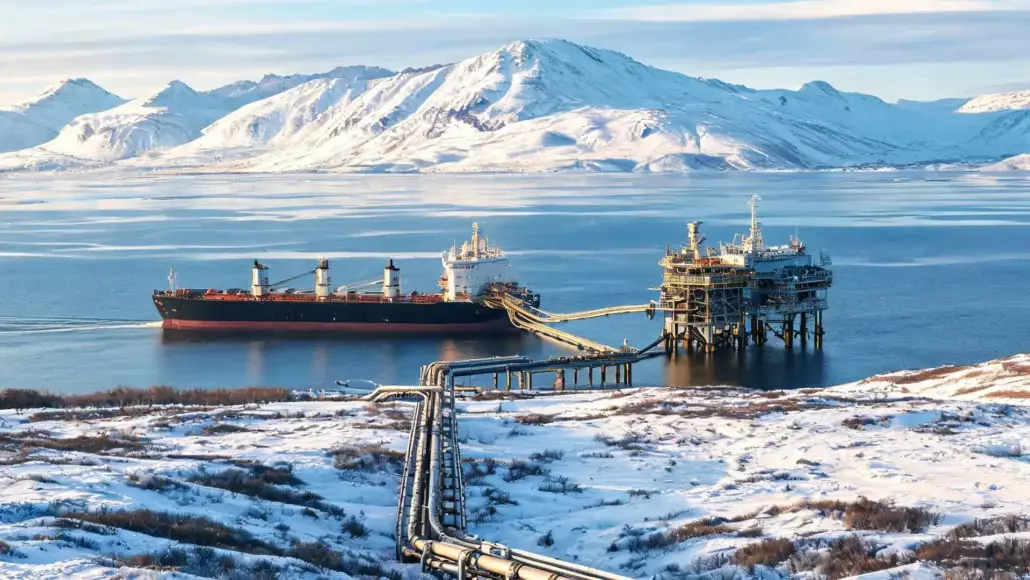
Santos Ltd. and Repsol SA have officially commenced commercial oil production from the Pikka project in Alaska, marking a major development for the state’s energy sector and signaling renewed momentum for crude output in the region. Initial production from the site is expected to reach approximately 20,000 barrels of oil per day, while long-term plans indicate that output could eventually increase fourfold. Further expansion initiatives are also under consideration, potentially raising production volumes even further. The Pikka project, which stems from a discovery made 13 years ago, has become a focal point for renewed industry investment and growing interest in untapped opportunities across Alaska.
Following years of development work tied to the $3 billion venture, company executives described the first commercial oil flows as a significant milestone. Bruce Dingeman, the Santos executive vice president overseeing the company’s Alaska operations, reflected on the achievement. However, Dingeman stressed that the launch of production is only the beginning of broader ambitions tied to the Pikka project. Santos owns a 51% stake in the project, while Repsol holds the remaining 49%. Beyond the 29 wells already drilled, the companies continue working to further develop the site. Santos has additionally outlined wider plans aimed at expanding activity on Alaska’s North Slope through the use of established infrastructure, proven production areas, and additional leases.
Industry observers also anticipate that regulatory adjustments could accelerate future developments. Recently announced Trump administration proposals intended to streamline permitting processes within the National Petroleum Reserve-Alaska are expected to support faster project approvals. The Pikka project is notable as the first greenfield oil development on Alaska state lands in nearly two decades. When the field was first identified in 2013, it was widely viewed as a transformational discovery located roughly two hours west of Prudhoe Bay, long considered the center of Alaska’s oil industry. Oil from Pikka forms part of the Nanushuk formation, a resource-rich underground formation that has encouraged companies to expand exploration efforts farther west across the state.
The project began development on state land before President Donald Trump’s second term, though production is beginning at a time when global crude markets are under pressure from the Iran war, which has reduced worldwide supplies by millions of barrels per day. The project also aligns with Trump’s broader strategy to strengthen American energy production, particularly in Alaska. US Interior Secretary Doug Burgum, described the launch of production as “a triple win” that supports affordable energy, unlocks Alaska’s potential, and reshapes energy geopolitics in the Western hemisphere.
“Whenever we can add affordable, secure, reliable sources of energy coming from America, it’s great for jobs and great for utilization of existing American infrastructure,” said Burgum, who also heads Trump’s National Energy Dominance Council.
Because the Nanushuk formation is located near decades-old oil and gas infrastructure on Alaska’s North Slope, operators are able to move production to market more efficiently.
“The Nanushuk is a new-generation play in an established basin that is creating value not just for Santos but for a lot of the industry players,” Dingeman said. As a new play inside an established basin, developers can take advantage of existing infrastructure. Industry interest surrounding the Nanushuk formation also contributed to a record-setting March lease auction within the 23-million-acre National Petroleum Reserve-Alaska, where Exxon Mobil Corp., Santos, Armstrong Oil & Gas and other explorers collectively bid around $164 million for acreage. The Pikka project is ultimately expected to produce approximately 400 million barrels of oil, with supplies transported through the Trans Alaska Pipeline System.
