







A new phase of energy cooperation between South Korea and Canada is set to strengthen ties in the energy and critical minerals sectors as ongoing conflict in Iran and disruptions in the Strait of Hormuz continue to alter global supply chains. The two countries reached the agreement on 2nd June 2026 during a Korea-Canada forum on energy, resources and supply-chain cooperation held in Ottawa. The event was jointly hosted by South Korea’s Ministry of Trade, Industry and Resources and Canada’s Ministry of Energy and Natural Resources.
The forum took place during Presidential Chief of Staff Kang Hoon-sik’s visit to Canada as a special envoy for strategic economic cooperation, marking his second trip to the country following a visit in late January 2026. Highlighting the significance of enhanced energy cooperation, Seoul’s industry ministry noted that “the energy and resource supply-chain environment is being reshaped by prolonged instability in the Middle East and intensifying competition over critical mineral supply chains.”
The ministry added, “In this context, Korea and Canada, which are geopolitically stable and share common values, are being regarded as each other’s best strategic partners.”
According to the ministry, South Korea will raise imports of Canadian crude oil from 4.88 million barrels in 2025 to as much as 16 million barrels in 2026, representing an increase of about 3.3 times. Authorities are also examining the possibility of increasing annual imports to 20 million barrels.
“In this case, Korea would emerge as Canada’s third-largest destination for crude oil exports after the United States and China,” the ministry said.
It further stated, “The two countries agreed to further strengthen such mutually beneficial cooperation, given that this also presents an opportunity for Canada which has supplied more than 90 percent of its crude oil production to the US to diversify its export routes to Asia, the world’s largest crude oil consumption region (by volume).”
The expansion of energy cooperation comes as South Korea seeks to diversify energy procurement and reduce dependence on routes passing through the Strait of Hormuz.
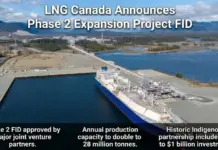
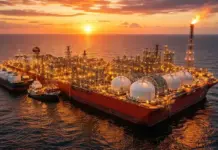
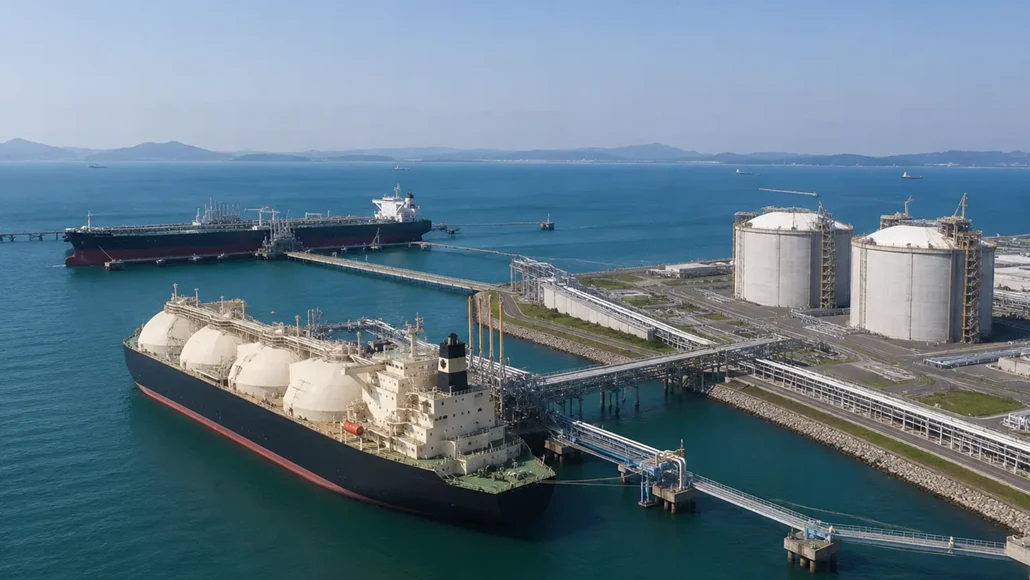
The LNG sector also featured prominently in the discussions. South Korea aims to secure 3.4 million metric tons of Canadian LNG annually, valued at 6.41 billion Canadian dollars ($4.6 billion), through increased investment in Canadian projects involving natural gas liquefaction plants and export infrastructure. The ministry said those volumes could be achieved if Seoul participates in the second phase of the LNG project in Kitimat, British Columbia, where a final investment decision is expected by the third quarter of this year.
Officials said continued energy cooperation in LNG could increase the share of Canadian LNG in South Korea’s imports from 1.7 percent in 2025 to 3 percent in 2031.
