






















Iraq is accelerating efforts to increase its Ceyhan oil export capacity, with plans to triple crude shipments through Kurdistan to the Turkish Mediterranean port of Ceyhan within the next three months. The move comes as OPEC’s second-largest producer faces severe challenges stemming from the closure of the Strait of Hormuz, a disruption that has affected Iraq more heavily than most oil-producing nations in the Middle East. In response to the crisis, the Iraqi government has approved a strategy to significantly raise crude flows to Ceyhan and onward to international markets through the Mediterranean, providing an alternative outlet as the blockage has curtailed the majority of the country’s traditional oil exports.
The impact of the regional crisis has been particularly severe for Iraq, whose economy remains overwhelmingly reliant on petroleum revenues. With oil shipments constrained and revenues declining sharply, the country is experiencing mounting economic pressure. Petroleum sales continue to account for 90% of revenues for state budget, highlighting the extent of Iraq’s dependence on the sector. While other Middle Eastern producers also rely heavily on hydrocarbon exports, Iraq remains the most exposed to disruptions affecting oil trade. The effective closure of the Strait of Hormuz has forced the country to reduce oil production substantially because exports from Basra must pass through the critical maritime route.
Production from Iraq’s southern oil fields has fallen dramatically since the outbreak of the U.S. and Israeli war on Iran. Average crude output has declined to 1.3 million barrels per day (bpd), compared with 4.3 million bpd before the conflict began, representing a 70% drop. Unlike Saudi Arabia and the United Arab Emirates (UAE), Iraq lacks viable alternatives that can bypass the Strait of Hormuz. As a result, Baghdad has been compelled to cut production while storage facilities and tankers in the Gulf reached capacity.
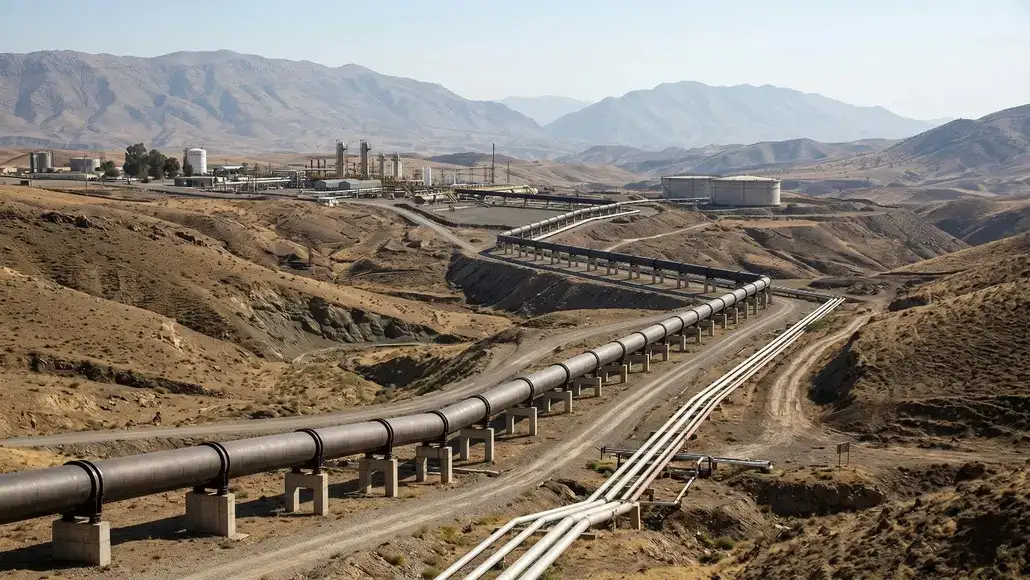
To mitigate these constraints, Iraq has revived the northern export corridor, enabling crude from the Kirkuk fields to move directly to Turkey’s Mediterranean port of Ceyhan. This renewed Ceyhan oil export route has become increasingly important as the southern pathway through the Strait of Hormuz has remained effectively unavailable for months. Initially, authorities intended to increase pipeline deliveries to 500,000 bpd. However, the government has now raised its ambitions and aims to boost Ceyhan oil export volumes to as much as 770,000 bpd within two and a half months, strengthening the role of the Ceyhan oil export route in sustaining Iraq’s access to international markets.
