




The global oil and gas industry operates within one of the most demanding physical and regulatory environments on Earth. From the ultra-deep waters of the offshore basins to the vast, remote stretches of cross-country pipelines, the physical integrity of assets is the primary determinant of safety, environmental protection, and long-term profitability. Effective oil infrastructure risk management is not merely a compliance task. It is a systematic, multi-layered discipline designed to prevent catastrophic failures, environmental releases, and operational disruptions. Oil & Gas Advancement highlights that as infrastructure ages and environmental standards tighten, the industry is transitioning from reactive and calendar-based maintenance to a data-driven paradigm of asset integrity management (AIM) powered by advanced sensing and artificial intelligence.
At the core of oil infrastructure risk management is the identification and mitigation of insidious structural degradation mechanisms. Pipelines and processing facilities are subject to a range of threats, including internal and external corrosion, stress corrosion cracking (SCC), and microbiologically influenced corrosion (MIC). MIC, in particular, is a significant concern in stagnant or low-flow sections of a network, where sulfate-reducing bacteria can rapidly degrade steel in anaerobic environments. To combat these threats, operators employ a variety of non-destructive testing (NDT) techniques. The most critical of these is in-line inspection (ILI), which utilizes ‘smart pigs’ to travel through active pipelines. These devices are equipped with Magnetic Flux Leakage (MFL) sensors to detect metal loss, Ultrasonic Testing (UT) transducers to measure precise wall thickness, and Electromagnetic Acoustic Transducers (EMAT) to identify cracks and coating disbondment, providing a high-resolution map of the pipe’s condition without interrupting production.
Asset Integrity and Structural Health Monitoring
Beyond periodic inspections, oil infrastructure risk management increasingly relies on continuous structural health monitoring. Distributed optical fiber sensing has emerged as a game-changing technology in this field. By installing fiber optic cables along a pipeline or integrated into offshore structures, operators can leverage Distributed Acoustic Sensing (DAS) to detect the minute sound of a pinhole leak or the vibration caused by an unauthorized excavator. Simultaneously, Distributed Temperature Sensing (DTS) can identify the thermal signature of a fluid release, while Distributed Strain Sensing (DSS) tracks soil movement, ground subsidence, or pipe bending. This real-time visibility allows for immediate intervention, significantly reducing the volume of potential spills and preventing minor issues from escalating into major disasters.
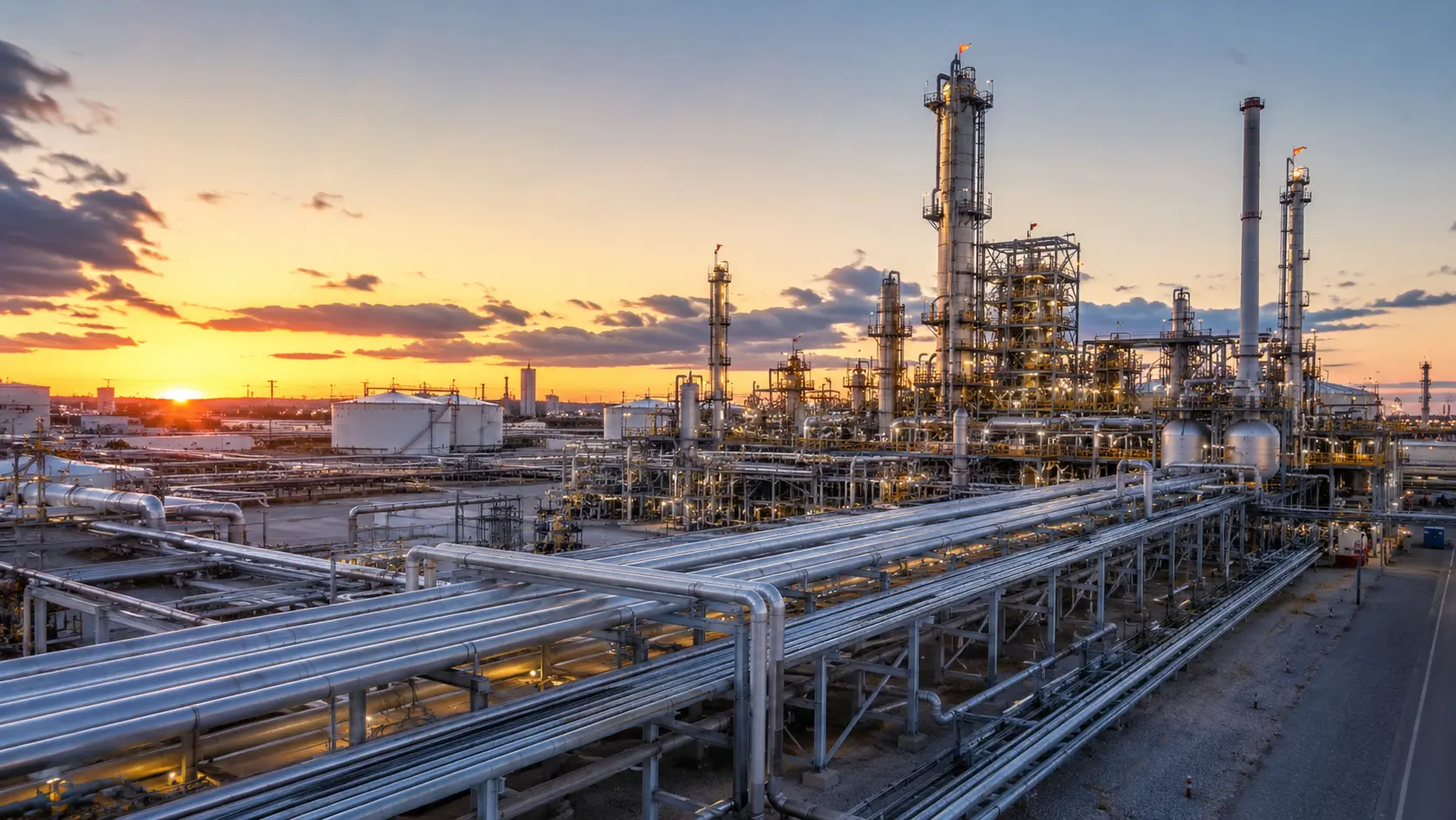
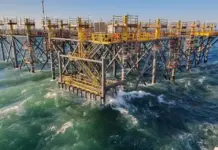
In the offshore sector, oil infrastructure risk management involves managing the extreme loads imposed by the marine environment. Structural foundations must be protected against seabed scour and fatigue induced by wave action and currents. Impressed Current Cathodic Protection (ICCP) and sacrificial anodes are used to prevent saltwater corrosion, while Digital Twins are deployed to model the dynamic response of platforms to storm events. By feeding real-time sensor data from accelerometers and strain gauges into these digital models, engineers can perform dynamic fatigue assessments, ensuring that ageing platforms remain safe for continued operation or determining the precise timing for life-extension projects or decommissioning.
The Shift to Predictive and Prescriptive Maintenance
The most significant trend in oil infrastructure risk management is the transition toward predictive maintenance. Traditionally, maintenance was performed on a fixed calendar basis, which often led to the over-servicing of healthy equipment or, more critically, missing the subtle signs of impending failure in others. Today, industrial artificial intelligence and machine learning are being used to analyze vast streams of SCADA (Supervisory Control and Data Acquisition) data, identifying patterns that precede a failure. For example, a slight increase in vibration or a subtle shift in the temperature profile of a critical pump can be flagged by an AI model weeks before a breakdown occurs, allowing for a planned intervention rather than a reactive crisis.
Going a step further, the industry is moving toward prescriptive maintenance, where AI not only predicts a failure but also recommends the specific corrective action. Physics-Informed Neural Networks (PINNs) are particularly valuable here, as they combine data-driven insights with the mechanical laws of materials science. By understanding the physics of how a specific alloy degrades under high-pressure and high-temperature (HPHT) conditions, these models can estimate the Remaining Useful Life (RUL) of an asset with unprecedented accuracy. This level of precision is essential for managing the financial risks associated with capital-intensive oil infrastructure, ensuring that every dollar spent on maintenance is targeted for maximum risk reduction.
Process Safety and Human Factors in Risk Management
Effective oil infrastructure risk management also encompasses the critical field of process safety. This involves the prevention of unintended releases of hazardous materials that could lead to fires, explosions, or toxic exposure. Operators utilize Layer of Protection Analysis (LOPA) to ensure that multiple independent safety barriers—both physical and procedural—are in place to prevent an incident. This includes pressure relief systems, emergency shutdown (ESD) valves, and automated flare systems. Furthermore, the human factor is increasingly recognized as a vital component of infrastructure risk. Training maintenance crews to recognize early warning signs and fostering a chronic unease regarding safety are essential for maintaining a high-integrity operation.
The integration of digitalization also extends to the management of work permits and field maintenance logs. By utilizing mobile devices and AR-assisted glasses, field technicians can access real-time asset data and historical maintenance records directly at the point of work. This reduces the risk of human error during complex repair tasks and ensures that all maintenance activities are accurately recorded in the Enterprise Asset Management (EAM) system. This digital audit trail is invaluable for defending a facility’s safety record during regulatory audits and for identifying systemic issues across a global fleet of assets.
Cyber-Physical Security and Regulatory Oversight
As oil infrastructure risk management becomes more digitalized, a new class of threats has emerged: cyber-physical risks. The convergence of operational technology (OT) and information technology (IT) means that a cyberattack on a SCADA network can have direct physical consequences, such as a pipeline rupture, an unauthorized valve operation, or a facility shutdown. Protecting these systems requires a Zero Trust security architecture and strict adherence to international standards like ISA/IEC 62443. Operators must implement hardware-based encryption, network segmentation (following the Purdue Model), and continuous monitoring to detect unauthorized control commands or signal spoofing, ensuring that the digital tools meant to protect the infrastructure do not become its greatest vulnerability.
Regulatory oversight also plays a vital role in shaping risk management strategies. In the United States, the Department of Transportation’s Pipeline and Hazardous Materials Safety Administration (PHMSA) enforces strict mandates for pipelines operating in High Consequence Areas (HCAs). Compliance with ASME B31.8S (Managing System Integrity of Gas Pipelines) and API 1160 (Managing System Integrity for Hazardous Liquid Pipelines) is mandatory, requiring comprehensive integrity management plans that include regular risk assessments, ILI runs, and mitigation strategies. Internationally, the ISO 55000 family of standards provides a framework for holistic asset management, aligning operational risk with long-term corporate goals. These regulations ensure that all operators, regardless of their size, adhere to a baseline of safety and environmental protection.
Building Operational Resilience in a Changing World
Ultimately, oil infrastructure risk management is about building operational resilience in the face of physical, technological, and geopolitical change. This involves not only technical solutions but also a strong safety culture and effective geohazard mitigation. In regions prone to landslides, soil liquefaction, or permafrost thawing, specialized engineering—such as insulated pipe supports, ground-stabilization techniques, or strain-based design—is required to protect the integrity of the network. Furthermore, proactive community engagement is essential for preventing third-party mechanical damage, which remains a leading cause of pipeline incidents globally.
Managing infrastructure risks in oil operations requires a multi-faceted approach that integrates advanced sensing, AI-driven analytics, and robust regulatory compliance. The transition to predictive maintenance and the use of Digital Twins allow operators to manage ageing assets with a level of precision that was previously impossible. However, the rise of cyber-physical threats and the increasing severity of environmental standards mean that there is no room for complacency. The goal is to move beyond simple compliance and toward a model of operational excellence where risk is continuously monitored and mitigated.
The future of oil infrastructure risk management lies in the seamless integration of human expertise and digital intelligence. Oil & Gas Advancement believes that by leveraging the power of AI to analyze complex data sets while maintaining a relentless focus on physical integrity and process safety, the industry can ensure the continued safe and reliable delivery of energy resources. In a world that demands both energy security and environmental responsibility, excellence in infrastructure risk management is the only path forward, providing the foundation for a sustainable and resilient energy sector.
