


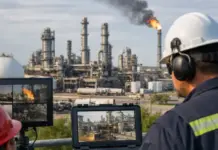












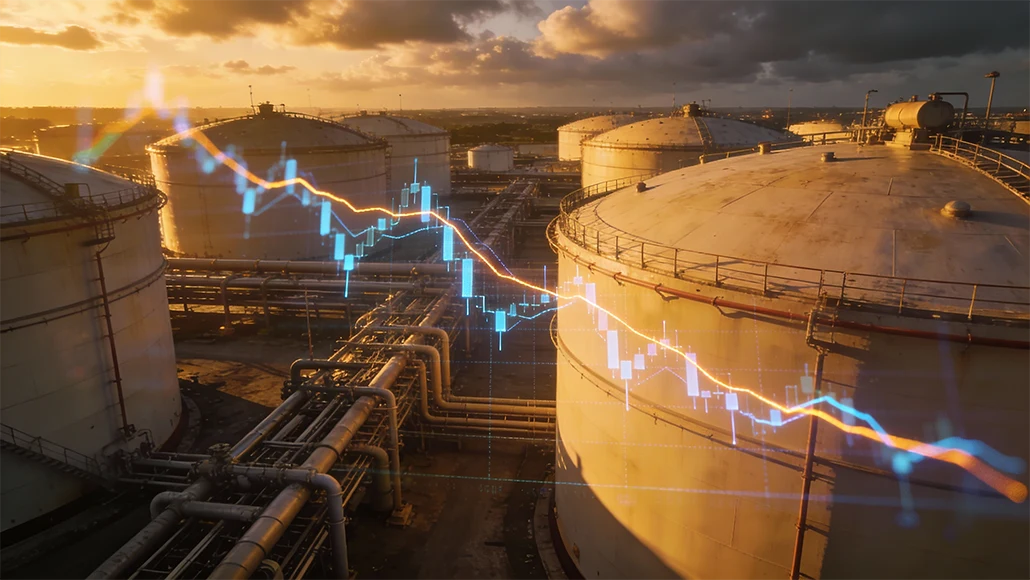
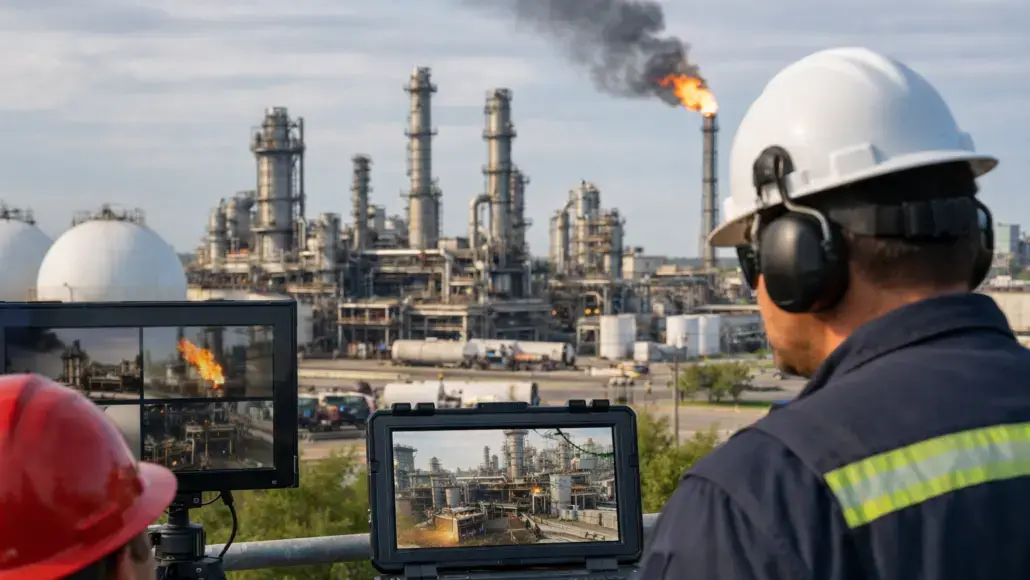
There has never been the option for refineries to choose between having visibility and ensuring safety. All areas such as the process units, the tank farms and the loading areas require continuous monitoring, but many of these same areas involve a real risk of fire or explosion due to the presence of flammable liquids or gases. For many years the practical solution has been to carry out regular manual inspections: a person walks around the site and gives a report on what they observe. This method works, but it also means that people are having to enter risky areas more frequently than is necessary, and each of those visits involves some danger regardless of how carefully they are managed.
The balance is beginning to change since camera and sensor technology developed for use in classified environments is now enabling refineries to keep constant watch over an area without the need for a person to be physically present at that location.
Why These Zones Complicate Standard Monitoring
Standard security and process cameras cannot usually be fitted into Zone 1, Zone 21 or Class I, Division 2 areas without making substantial modifications, because normal camera housings are not constructed in such a way as to prevent ignition should anything inside spark or overheat. As a result, many refineries have either had to carry out physical inspections of these areas on a periodic basis or have had to accept actual gaps in coverage. Since the locations in question are precisely those where an early warning is most important, neither of these alternatives is satisfactory.
Purpose-Built Cameras for Classified Zones
Equipment designed for such environments deals with that issue. Explosion protected cameras, available in stainless steel casings and certified to ATEX, IECEx and Class I/II Division 2 standards, are capable of operating continuously within a hazardous area without becoming a source of ignition themselves. When combined with low-light imaging and video analytics, they enable staff in the control room to keep a constant watch on storage tanks and loading racks, identifying any unusual activity a long way ahead of it being picked up during a routine walk-through.
Cutting Down on Manual Site Rounds
The need for people to go into these areas is not removed by the use of continuous footage, but rather the frequency with which such visits are required is reduced. Instead of having staff visit in accordance with a set schedule just to check that everything looks okay, they only carry out personal visits when the cameras or sensors actually indicate a problem, for example if a valve seems to be leaking. Since there are fewer routine entries into these areas, there are also fewer opportunities for exposure, and this allows more experienced staff to spend more time on more important inspection tasks.
Fitting Into a Broader Risk Strategy
Camera coverage is most effective when it forms part of a broader strategy rather than being used on its own. Our coverage of oil infrastructure risk management strategies examines how operators are integrating process safety barriers, structural health monitoring and predictive maintenance into one programme instead of considering each of them as a separate item. Cameras that are designed for use in classified areas fit easily within this approach, providing an additional element of continuous supervision to the plans which already include measures for equipment integrity and emergency response.
Faster Response When Seconds Matter
Speed matters as much as visibility once something does go wrong. Industry guidance drawing on OSHA best practices notes that first responders often have less than four minutes to reach an employee in distress after an incident occurs, a window that shrinks further if nobody notices the problem until the next scheduled round. Continuous, remote monitoring closes that gap by surfacing an issue the moment it appears on screen, instead of waiting for the next physical check to catch it.
Staying Watchful Without the Added Exposure
Refineries will always have to keep a close watch on their most risky areas, but there no longer needs to be a requirement to send people in as frequently as in the past. By using cameras together with sensors and having a well-defined response procedure, control rooms can maintain the same degree of supervision while keeping the workers at a greater distance from the hazard. As this technology develops, the balance between vigilance and exposure is expected to continue shifting in favour of those on site.
