





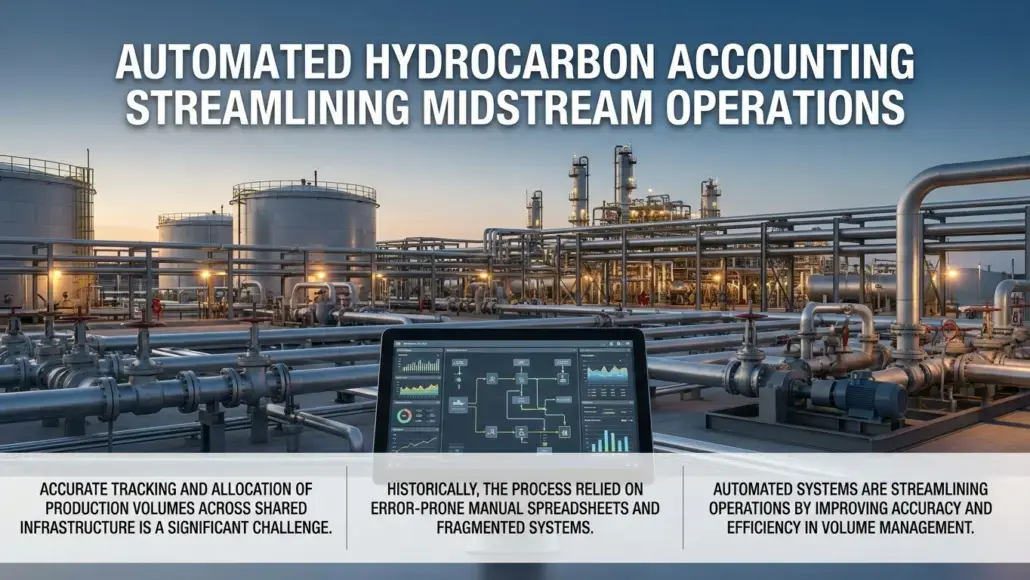
The midstream sector of the oil and gas industry is the vital link between extraction and the end consumer, managing the complex flow of energy across thousands of miles of pipelines and storage facilities. One of the most significant challenges in this segment is the accurate tracking and allocation of production volumes, especially when multiple operators share the same infrastructure. Historically, this process was managed through manual spreadsheets and fragmented systems, which were prone to errors and delayed reporting. However, the rise of automated hydrocarbon accounting is transforming these operations by providing a unified and transparent platform for production volume allocation and financial settlement.
Oil & Gas Advancement observes that by automating the collection of data from flow meters, tank gauges, and laboratory reports, midstream companies can now achieve near real time visibility into the volume and quality of the hydrocarbons moving through their networks. This transition to automated systems is a critical part of midstream financial tech, as it directly impacts the accuracy of invoicing, royalty payments, and tax filings. The goal is to create a single version of the truth that all stakeholders, including producers, pipeline operators, and regulators, can rely on for their financial and operational decisions.
The market for these solutions is growing rapidly as companies seek to improve their efficiency and compliance. This growth is being driven by the increasing complexity of global supply chains and the need for more robust hydrocarbon audit logs to meet stringent regulatory requirements. As the industry continues to digitalize, the ability to automate complex accounting tasks is becoming a major competitive differentiator for midstream operators. This financial transparency is further enhanced when midstream data flows directly into cloud native ERP systems, creating a seamless connection between production accounting and global supply chain logistics.
Enhancing Accuracy in Production Volume Allocation
Production volume allocation is the process of determining how much of a shared stream of hydrocarbons belongs to each individual producer or well. This is a complex task because the physical characteristics of the fluids, such as API gravity and sulfur content, can change as they are blended in a pipeline. Automated hydrocarbon accounting systems use sophisticated mathematical models to perform these allocations based on the most recent quality data and flow measurements. This ensures that every producer is fairly compensated for the actual value of their production rather than an estimated average.
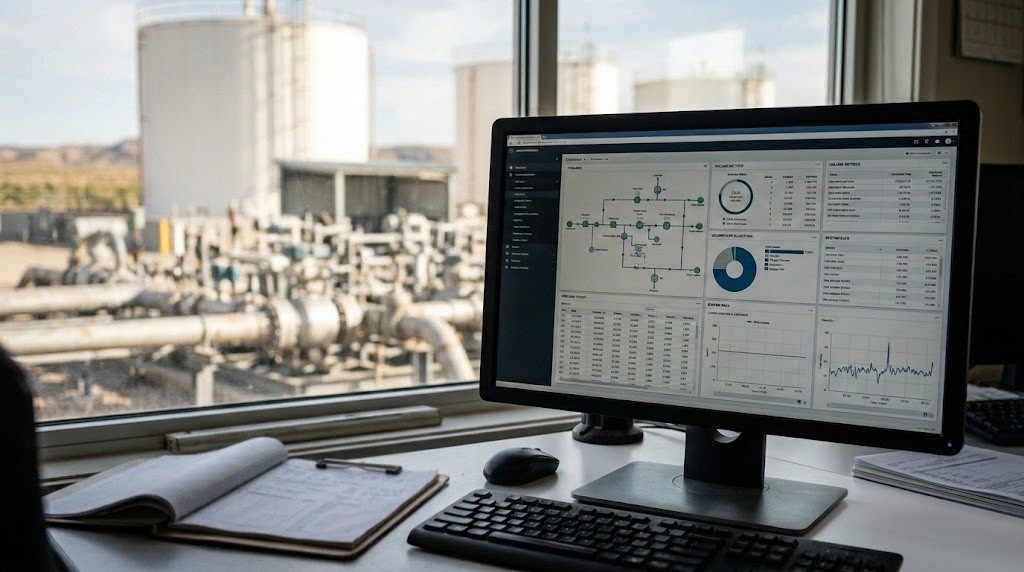
The use of automation also allows for more frequent and detailed allocations. Instead of performing a monthly reconciliation, many systems can now provide daily or even hourly allocation reports. This level of granularity is invaluable for producers who need to monitor the performance of their assets in real time and for pipeline operators who need to manage their capacity and balancing requirements more effectively. The transparency provided by shared pipeline accounting systems helps to reduce disputes between stakeholders and builds trust across the value chain.
The importance of accuracy in these operations cannot be overstated. Even a small error in volume measurement or quality analysis can lead to significant financial discrepancies when applied to the massive scales of modern energy projects. By implementing automated oil volume verification processes, companies can detect and correct measurement anomalies before they propagate through the accounting system. This proactive approach to data quality is a fundamental requirement for maintaining the integrity of the financial settlement process.
The Role of Midstream Financial Tech
Midstream financial tech encompasses a wide range of digital tools designed to improve the efficiency and security of financial operations in the energy sector. Automated hydrocarbon accounting is a cornerstone of this field, as it provides the foundational data for revenue management and contract compliance. Modern systems are increasingly integrated with enterprise resource planning software and blockchain platforms to create more secure and automated workflows. This integration allows for the automatic generation of invoices and the immediate settlement of payments once the volume and quality of the hydrocarbons have been verified.
The shift toward these technologies is part of a broader trend of digital transformation in the industry. In the midstream sector, this investment is focused on creating more resilient and transparent operations that can adapt to the changing needs of the market. The ability to provide fast and accurate financial reporting is essential for maintaining investor confidence and securing the capital needed for new infrastructure projects.
Another key aspect of midstream financial tech is the use of advanced analytics to optimize the performance of the pipeline network. By combining accounting data with operational metrics, companies can identify bottlenecks and inefficiencies in their systems. This allows them to make more informed decisions about maintenance schedules, capacity expansions, and commercial strategies. The goal is to maximize the throughput of the network while minimizing the operational and financial risks associated with moving large volumes of hazardous materials.
Improving Compliance with Hydrocarbon Audit Logs
Regulatory compliance is a major consideration for any company operating in the oil and gas industry. Governments and environmental agencies require detailed reporting on the volumes of hydrocarbons produced, transported, and sold. Automated hydrocarbon accounting systems simplify this process by maintaining comprehensive hydrocarbon audit logs that track every change to the data from the point of measurement to the final report. These logs provide a clear and defensible trail of information that can be easily reviewed by auditors and regulators.
The automation of these reports also reduces the risk of human error and data manipulation, which is a significant concern for regulators. By ensuring that the data is collected and processed in a consistent and transparent manner, companies can demonstrate their commitment to ethical and compliant operations. This is particularly important in regions with complex royalty and tax structures, where accurate reporting is essential for maintaining the operator’s license to operate.
As the industry faces increasing scrutiny over its environmental and social performance, the role of transparent reporting is becoming even more critical. Many companies are now using their hydrocarbon accounting systems to track carbon emissions and other environmental metrics associated with their operations. This integrated approach to reporting helps them to meet their sustainability goals and provide more complete information to their stakeholders. The move toward more holistic and automated reporting is a key part of the industry’s response to the challenges of the energy transition.
Overcoming Integration Challenges
Implementing automated hydrocarbon accounting is a significant undertaking that requires the integration of diverse data sources and systems. Midstream operators often have to deal with legacy equipment and fragmented software that was not designed to work together. The challenge is to create a unified data architecture that can handle the massive volumes of information generated by modern sensors and meters. This requires a combination of robust hardware, flexible software, and a clear data governance strategy.
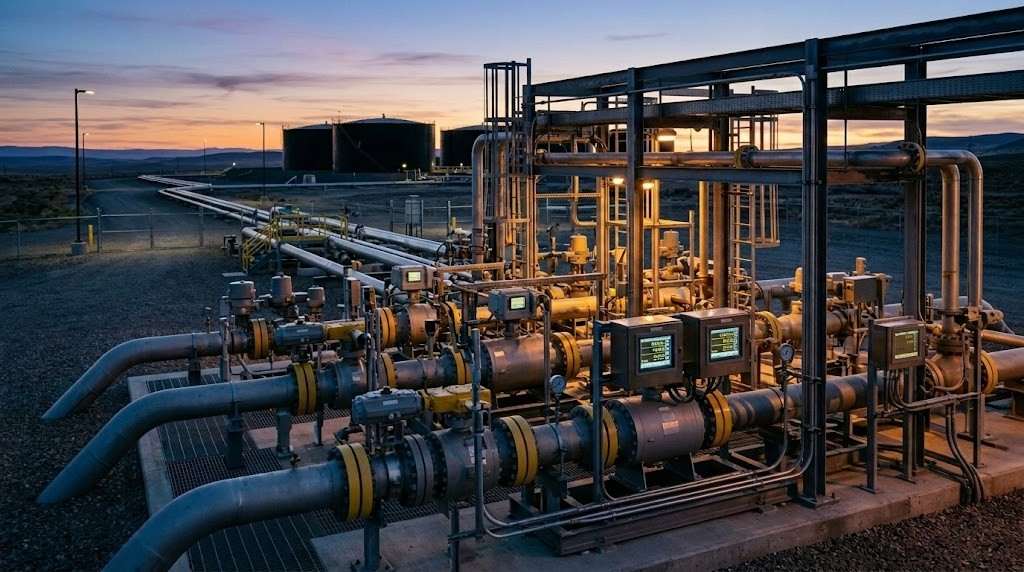
One of the most important factors in a successful implementation is the quality of the initial data. If the meters are not calibrated correctly or the sensors are not providing accurate readings, even the most advanced accounting system will produce unreliable results. This is why many companies are investing in more accurate measurement technologies and more rigorous maintenance programs as part of their automation strategy. The goal is to ensure that the entire data lifecycle, from the wellhead to the balance sheet, is based on high quality information.
Another challenge is the need for cultural change within the organization. Moving from manual processes to automated systems requires employees to develop new skills and adapt to new ways of working. This transition can be difficult for some staff who are used to the old methods of operation. Successful companies are those that invest in training and communication to ensure that their employees understand the benefits of the new systems and are empowered to use them effectively.
Global Technology Leaders Modernizing Midstream Hydrocarbon Accounting and Custody Transfer
The digital transformation of midstream volumetric management highlighted in the article is being realized through large-scale deployments by international industrial software and automation providers. Specialized energy software developer Quorum Software integrated zdSCADA into its FLOWCAL architecture to unify field SCADA polling engines with automated flow measurement, exception handling, and contract allocation.
In physical metrology and custody transfer, ABB established a nationwide partnership to deploy high-precision ultrasonic meters paired with Spirit IT flow computers to secure defensible measurement logs across North American gas pipelines, while Emerson advanced full-spectrum midstream integration by acquiring Aspen Technology to merge physical pipeline instrumentation with enterprise reconciliation software.
Simultaneously, Kongsberg Digital deepened its deployment of K-Spice and LedaFlow simulation software with operators like Equinor to model complex multiphase pipeline streams in real time, and Rockwell Automation scaled its Sensia Avalon platform to bridge edge flow meters directly into cloud-based accounting systems. Together, these official commercial milestones prove that the midstream industry is rapidly eliminating manual spreadsheets in favor of automated, audit-proof allocation architectures that secure revenue settlement and regulatory compliance across shared infrastructure.
The Future of Shared Pipeline Accounting
The future of shared pipeline accounting will be defined by the increasing use of artificial intelligence and distributed ledger technology. AI algorithms can be used to predict flow patterns and identify potential issues in the network before they occur, allowing for more proactive management of the pipeline. Blockchain technology offers a more secure and transparent way to manage the shared records of the pipeline, ensuring that all parties have access to the same information and that the records cannot be altered without consensus.
As the energy market continues to evolve, we can also expect to see more integrated and collaborative models of operation. Midstream companies may increasingly share their accounting platforms with their customers and partners, creating a more seamless and efficient ecosystem. This would allow for faster and more accurate settlement of transactions and a more responsive supply chain. The move toward a more connected and automated midstream sector is essential for meeting the growing demand for energy while maintaining the highest standards of efficiency and safety.
The growth of the oil and gas automation market is a clear sign of this trend. Oil & Gas Advancement believes that by automated hydrocarbon accounting will remain a critical part of this evolution, providing the financial backbone for a more modern and transparent energy industry. The companies that lead the way in adopting these technologies will be the ones that are best positioned to thrive in the complex and competitive energy landscape of the future.
References
- Quorum Software
- ABB
- Emerson
- Kongsberg Digital
- Rockwell Automation
