


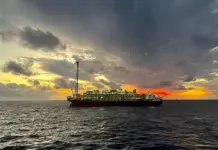


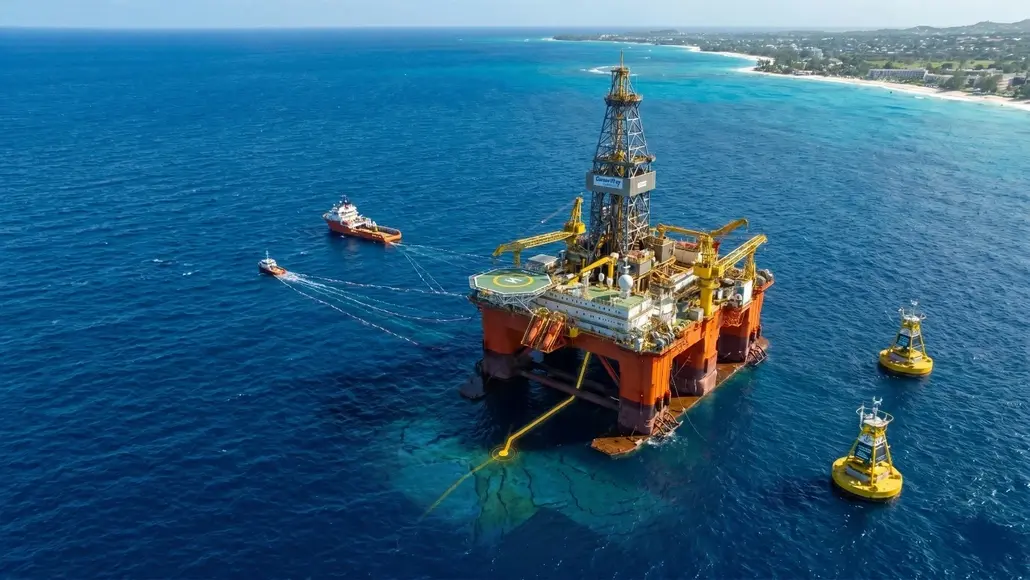
The Barbados government has launched a new offshore licensing drive, making 19 ultra-deepwater blocks available to international energy companies while introducing stricter climate and environmental requirements for prospective bidders. According to Energy, Business Development and Commerce Minister Kerrie Symmonds, the 2026 Offshore Petroleum Direct Negotiations marks the start of a three-month period during which companies may submit proposals to explore for oil and natural gas in Barbados’ offshore waters. The pre-qualification phase will remain open until 1st September 2026.
During that period, the Mia Mottley government will evaluate applicants seeking to participate in exploration activities across the island’s ultra-deepwater acreage. Symmonds said the offshore licensing drive reflects the government’s intention to ensure that future offshore oil and gas development remains consistent with Barbados’ renewable energy ambitions and climate-related commitments.
Explaining the standards expected of participating companies, Symmonds emphasized that environmental performance and climate awareness will play a significant role in the selection process.
He further noted the growing importance of methane management, saying: “The question of methane now and the technology associated with it is far more advanced than it was back in 2022. We understand quite clearly now that methane is perhaps the most potent of the greenhouse gases. It is a terrible asphyxiant for the environment. It is the main driver of the warming of our climate, and the truth is that it traps about 80 times more heat than carbon dioxide.”
As part of the current offshore licensing drive, the government has reduced the number of available blocks from the 22 offered during the 2022 bid round to 19.
The remaining acreage is being retained for potential future development by Barbados’ own national energy interests.
He added that the initiative forms part of a broader multi-energy strategy designed to balance renewable energy growth, energy security and economic resilience. Based on preliminary seismic surveys, the government believes significant offshore hydrocarbon resources may exist within Barbados’ waters.
Director of Natural Resources Jamar White said extensive seismic surveys and technical evaluations have pointed to substantial offshore potential.
“We potentially have upwards of 13 billion barrels of oil in place, potentially 40-plus trillion cubic feet of natural gas,” White said while outlining the requirements companies must satisfy after 1st September 2026.
He further elaborated, saying, “The pre-qualification criteria are subdivided into five key areas. It will assess the legal capacity of the companies, the technical capacity of the companies, the financial capabilities, and, and what we’ve done this year, we’ve expanded the health, safety and environment component to include a critical component related to climate, this criteria outlines then the standards which companies must meet and the type of environmental record that they would have in order to be able to engage in negotiations.”
White added that local content will represent the final assessment category and said those measures will help to basically address and assess any concerns that we would have and ensure that only the best, most qualified and companies with top tier records are able to advance to the negotiation stage.
These pre-qualification procedures will be followed by discussions with approved companies regarding areas of interest. Firms that successfully meet the requirements under the offshore licensing drive will receive a qualification notice confirming that the Government of Barbados considers them suitable to operate in the ultra-deepwater environment.
The government aims to conclude negotiations within three months, after which environmental impact assessments (EIAs) and baseline environmental studies will be required before exploration activities can commence.
