









In the intricate dance of global energy, the question of supply adequacy and market stability is a constant, evolving puzzle. For decades, the energy world has grappled with peak oil theories, geopolitical tensions affecting traditional oil-producing regions, and the relentless march of global energy demand. Then, a little over a decade ago, a silent revolution began brewing in the heartland of North America, promising to rewrite the rules of crude oil supply. This revolution was underpinned by the ingenious application of shale technology, unlocking vast, previously inaccessible reserves of oil and gas. The initial impact was nothing short of transformative, ushering in an unprecedented era of U.S. energy independence and fundamentally recalibrating the global energy market outlook. The pertinent question now reverberating through boardrooms and policy circles alike is whether the advancements in shale technology can once again ignite a global oil boom, mimicking or even surpassing the transformative impact of its first wave. In this article, Oil & Gas Advancement delves into the potential for such a resurgence, examining the technological frontiers, economic viability, geopolitical ramifications, and environmental considerations that will define the trajectory of shale in the coming decades, pondering if we are on the cusp of another significant shale technology global oil boom.
The Seismic Shift: Recalling the First Shale Revolution
The genesis of the first shale revolution lies in the synergy of two pivotal technologies: hydraulic fracturing and horizontal drilling. While both had existed in nascent forms for decades, their combined, optimized application transformed dense, impermeable shale rock into prolific hydrocarbon reservoirs. This breakthrough liberated colossal volumes of oil and gas primarily from formations across the United States, turning what was once a net importer into a leading global producer. The sheer scale of this transformation was staggering. U.S. oil production growth soared, leading to a substantial increase in global crude oil supply and consequently, a significant downward pressure on oil prices in the mid-2010s. This period offered a glimpse into shale’s disruptive power, forcing traditional producers, particularly OPEC, to re-evaluate their long-standing strategies and market control. It effectively created a global oil boom that few had anticipated, reshaping energy geopolitics and investment flows worldwide.
Technological Prowess: The Engine of Shale’s Evolution
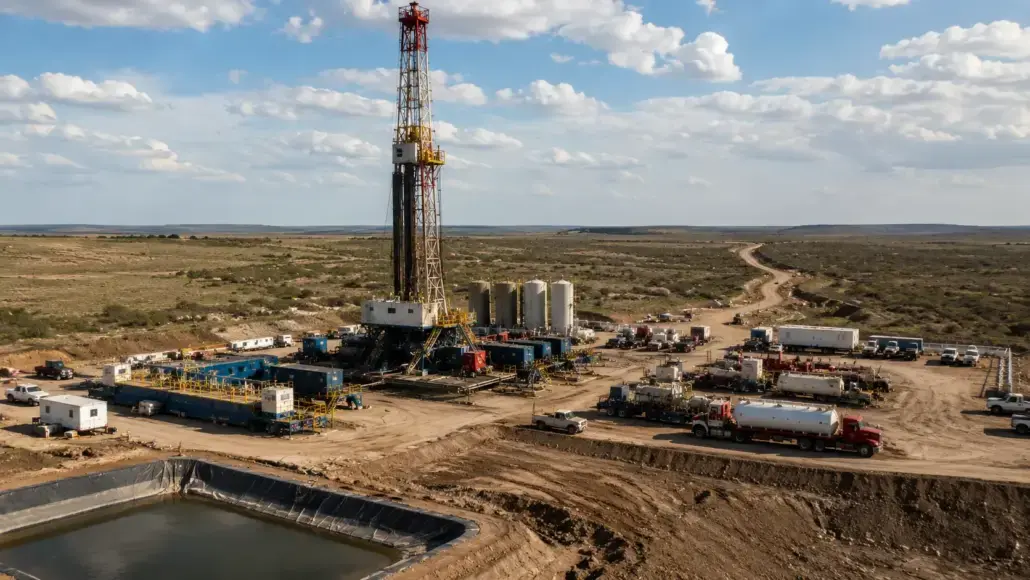
The rapid ascent of shale oil production was not a static achievement but a testament to relentless innovation. The initial techniques, while revolutionary, have been continually refined and enhanced. Modern shale plays benefit from advances that were unimaginable even a decade ago. Longer laterals, extending thousands of feet horizontally through reservoir rock, maximize wellbore exposure to hydrocarbons. Multi-well pad drilling allows for multiple wells to be drilled from a single surface location, drastically reducing the environmental footprint and operational costs.
Beyond the physical drilling, the completion phase has seen remarkable progress. Sophisticated proppants, designed to keep fractures open, along with advanced fracturing fluid compositions, enhance recovery rates. Furthermore, digitalization, big data analytics, and artificial intelligence are increasingly being deployed to optimize every stage of the exploration and production process, from seismic interpretation and well placement to real-time drilling adjustments and predictive maintenance. These technological leaps contribute directly to improved efficiency, lower breakeven costs, and enhanced ultimate recovery, making new upstream oil investment more attractive even in a volatile oil price forecast environment. Such continuous innovation is a cornerstone for any future shale technology global oil boom.
The Current Landscape and Economic Realities
Today, the core of global shale oil production remains concentrated in prolific U.S. basins such as the Permian, Eagle Ford, and Bakken. While these plays have matured considerably, they continue to be laboratories for innovation, pushing the boundaries of what’s economically feasible. However, the industry faces the inherent challenge of decline rates. Shale wells typically exhibit steep initial decline curves, requiring continuous drilling and development to maintain production levels. This necessitates substantial, ongoing capital allocation.
The economic viability of shale is intrinsically linked to the global oil price forecast. Unlike conventional mega-projects with decades-long development cycles, shale projects can be brought online relatively quickly, offering producers flexibility to respond to market signals. This agility, however, also means that investment flows ebb and flow with crude oil supply and demand dynamics. Periods of lower prices lead to capital discipline, consolidation, and a focus on efficiency over aggressive growth, whereas higher prices can quickly reignite drilling activity. Understanding these investment cycles is crucial when assessing the potential for another large-scale global oil boom driven by shale technology.
Shale Technology’s Role in Future Global Oil Production Growth
The pivotal question of whether a new shale technology global oil boom is on the horizon hinges on several interconnected factors. Firstly, the pace of technological innovation must continue unabated, driving further cost reductions and efficiency gains. Secondly, the geological potential beyond current prolific basins needs to be unlocked. While the U.S. remains the undisputed leader, significant shale resources exist globally, from Argentina’s Vaca Muerta to China’s Sichuan Basin and Russia’s Bazhenov Formation. However, developing these resources outside the U.S. faces unique challenges, including geological complexity, regulatory hurdles, infrastructure limitations, and often a lack of local expertise and service industry maturity.
Despite these challenges, the global appetite for energy remains robust, supporting the fundamental need for diversified crude oil supply. Should international players successfully replicate the U.S. shale model, even partially, it could significantly augment global oil production growth. The transfer of knowledge, technology, and capital across borders is a slow but steady process. Thus, while another U.S.-centric shale technology global oil boom might appear less dramatic than the first, the potential for a more globalized shale expansion, albeit staggered, is a tangible prospect that could cumulatively lead to a new era of abundant supply.
OPEC Strategy in the Era of Shale
The advent of shale fundamentally altered the power dynamics within the global energy market, particularly for OPEC (Organization of the Petroleum Exporting Countries) and its allies. Historically, OPEC held significant sway over global crude oil supply, acting as a swing producer to balance the market. The surge in shale oil production challenged this authority, creating a new, agile competitor that could respond quickly to price signals.
OPEC’s initial response involved attempts to stifle shale growth by maintaining high production levels and suppressing prices. This strategy, while impactful for a time, proved unsustainable for many members. The subsequent formation of OPEC+ introduced a new paradigm of cooperation with non-OPEC producers, most notably Russia, to manage supply more cohesively. The ongoing dance between OPEC+ production cuts and the responsiveness of shale oil production remains a central feature of the energy market outlook. Any substantial shale technology global oil boom would undoubtedly compel OPEC to revisit and potentially reconfigure its strategy to maintain market stability and preserve its members’ revenue streams, underscoring the enduring influence of shale on global energy geopolitics.
Environmental Imperatives and the Energy Transition
Alongside the economic and geopolitical considerations, the environmental footprint of shale technology demands critical attention. Concerns surrounding water usage for hydraulic fracturing, potential groundwater contamination, methane emissions (a potent greenhouse gas), and land disturbance have led to heightened scrutiny and regulatory pressures. The industry has responded with innovations aimed at mitigating these impacts, including water recycling technologies, advanced leak detection, and reduced flaring.
As the world increasingly pivots towards a low-carbon future, the role of oil and gas, including shale, is undergoing re-evaluation. The energy transition calls for a significant shift towards renewable energy sources. However, the transition is not instantaneous, and fossil fuels, particularly natural gas and oil, are expected to play a crucial role as bridge fuels for decades to come, especially given the continuous global energy demand. For shale to contribute to a sustained global oil boom, it must demonstrate a credible pathway towards more sustainable production, integrating environmental, social, and governance (ESG) principles into its core operations. This includes continuous efforts to reduce emissions, minimize water intensity, and enhance community engagement. Upstream oil investment is increasingly being screened through an ESG lens, pushing operators towards greener practices.
Conclusion: Navigating the Complexities of a Potential Resurgence
The question of whether shale technology will trigger another global oil boom is not a simple yes or no. The technological prowess that birthed the first revolution continues to evolve, promising further efficiencies and cost reductions. The sheer scale of unconventional resources globally suggests immense untapped potential beyond the familiar U.S. basins. However, this potential is tempered by economic realities, geopolitical complexities, and increasingly stringent environmental mandates.
A future global oil boom driven by shale technology might look different from the first – perhaps less concentrated, more diversified geographically, and certainly more conscious of its environmental impact. It will necessitate a continuous flow of upstream oil investment, a favorable oil price forecast, and a global policy environment that acknowledges the ongoing, albeit evolving, role of hydrocarbons in meeting global energy demand. Oil & Gas Advancement notes that shale’s enduring legacy is its ability to disrupt and redefine the energy landscape. While the path ahead is fraught with challenges, the ingenuity that underpins shale technology suggests that its capacity to reshape crude oil supply and influence the global energy market outlook is far from exhausted, making another chapter in the shale technology global oil boom story entirely plausible, albeit one written with a more nuanced hand.
