











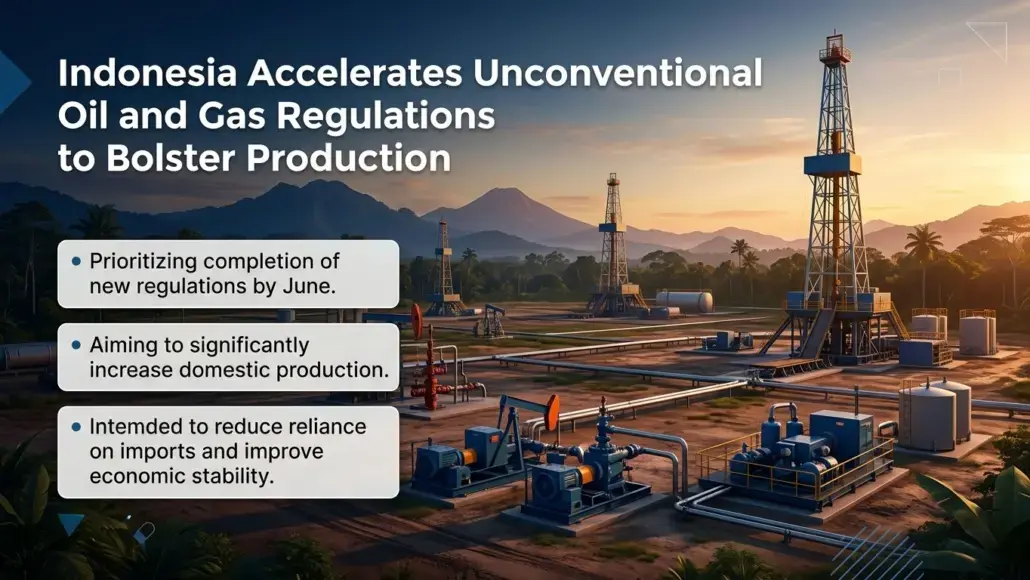
The Energy and Mineral Resources (ESDM) Ministry is expediting the development of regulations for unconventional oil and gas resources, targeting completion by the end of June 2026 with implementation slated for early July 2026. This strategic move regarding unconventional oil and gas is designed to enhance domestic production and provide a buffer against the economic pressures associated with a declining national currency.
According to the Deputy Minister of ESDM, Yuliot, the upstream oil and gas regulator, SKK Migas, has formally requested the regulatory framework to be finalized within this timeframe. This regulatory push comes at a particularly sensitive period for the nation’s currency, which has experienced notable depreciation against the US dollar.
Indonesia’s reliance on energy imports makes it particularly vulnerable to global currency fluctuations and supply chain disruptions. National energy data reveals that the country consumes approximately 1.52 million barrels of oil daily, while domestic production stands at a considerably lower 610,000 barrels per day. This deficit necessitates substantial imports of crude oil.
The situation is equally challenging for Liquified Petroleum Gas (LPG). Projections for the full year of 2026 indicate a national LPG demand of 10 million tons, with an estimated 7.8 million tons requiring importation. The government views unlocking unconventional oil and gas reserves as a crucial step in reversing this dependency.
“If domestic production increases, it means we will also reduce imports and will be less affected by currency changes or fluctuations,” Yuliot explained, underscoring the dual benefit of the new measures for both energy security and economic stability.
While a ministerial decree concerning unconventional energy resources is already in place, the ministry has identified that the existing framework is not sufficiently effective in attracting large-scale investment. Director General of Oil and Gas, Laode Sulaeman, confirmed that targeted revisions are underway to simplify operational procedures and strengthen institutional support for the state-owned energy company, PT Pertamina.
“There are several things we need to revise to strengthen support for Pertamina,” Sulaeman stated, highlighting the focus on bolstering the national energy provider’s capabilities through these new oil and gas regulations.
