



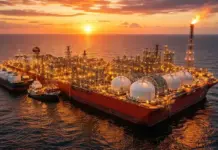
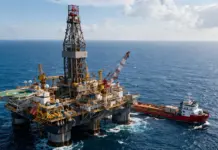





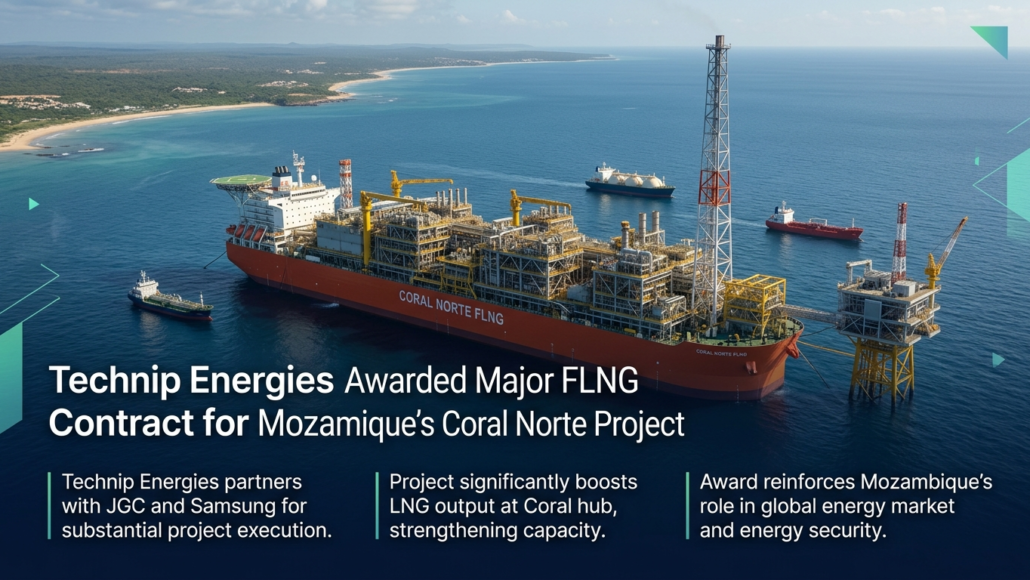
Technip Energies, in collaboration with its partners JGC and Samsung Heavy Industries, has been awarded a significant Engineering, Procurement, Construction, Installation & Commissioning (EPCIC) contract by Mozambique Rovuma Venture (MRV) for the Coral Norte Floating Liquefied Natural Gas (FLNG) project. This major award, combined with previously announced agreements, marks a substantial development for the company.
The Coral Norte FLNG project, situated offshore Mozambique, is being developed by Eni and its partners, including CNPC, ENH, XRG, and KOGAS. This initiative is designed to achieve an annual production of approximately 3.6 million tons of LNG. Upon completion, it will effectively double the existing capacity of the Coral hub to 7 million tons per annum. This expansion is poised to elevate Mozambique into the ranks of Africa’s top three LNG producing nations, further solidifying its influence in the international energy sector.
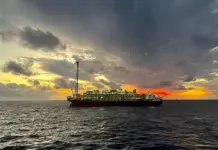
The Coral Norte FLNG project is conceived as an enhanced replication of the Coral Sul FLNG, which was the initial development within Mozambique’s Area 4 offshore gas block. This strategic replication approach capitalizes on the shared characteristics of the feed gas composition and the deepwater environment. The objective is to enhance execution certainty and optimize operational performance, drawing valuable insights and lessons learned from the preceding development. By standardizing the project delivery model, Technip Energies and its consortium partners are paving a de-risked pathway for scaling operations and ensuring greater predictability throughout all project phases. This significant contract award builds upon prior agreements and underscores the ongoing progress of Technip Energies’ involvement in the Coral Norte FLNG project.
Arnaud Pieton, Chief Executive Officer of Technip Energies, said, “The Coral Norte project reflects the confidence of ENI and its partners in our FLNG execution capabilities and in the performance in operations of the Coral South FLNG. By leveraging our ‘design one, build many’ approach, we are demonstrating how a standardized model can accelerate large-scale offshore project delivery.”
