












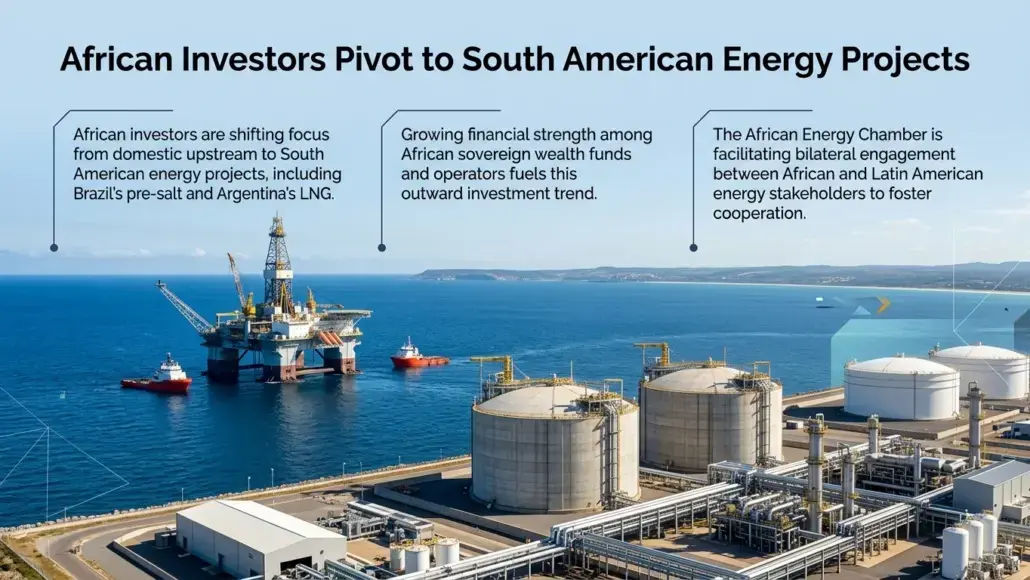
African energy investors are demonstrating a significant shift in strategic allocation, increasingly directing capital towards major oil, gas, and infrastructure developments in South America. Key target areas include Brazil’s prolific pre-salt offshore sector and Argentina’s rapidly expanding liquefied natural gas (LNG) and pipeline network. This trend signifies a move beyond traditional domestic upstream opportunities.
According to the African Energy Chamber (AEC), this evolving investment landscape is underpinned by growing balance sheet strength observed among African sovereign wealth funds, state-backed investment vehicles, and independent energy operators. This financial robustness is fostering a broader embrace of outward-focused investment strategies across the continent’s energy sector. The AEC projects that Africa’s upstream sector will achieve approximately 11.4 million barrels of oil equivalent per day (MMboed) in production by 2026, complemented by roughly $41 billion in upstream capital expenditure. This level of activity is cultivating a larger pool of experienced investors and operators actively seeking international growth avenues.
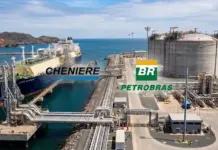
Brazil’s deepwater pre-salt developments are recognized globally as among the most competitive offshore oil projects. Concurrently, Argentina’s Vaca Muerta shale play is progressing into a new phase characterized by a strong emphasis on LNG exports, gas monetization initiatives, and crucial infrastructure expansion. The AEC highlights specific opportunities within Brazil, including its offshore gas infrastructure, floating production, storage, and offloading (FPSO) developments, and the subsea supply chain. In Argentina, the focus is on planned pipeline expansions and gas processing projects.
African investors are entering the South American market equipped with valuable experience garnered from offshore and LNG developments in countries such as Congo, Nigeria, Cameroon, and Mozambique. Their expertise particularly shines in areas like floating LNG technology and gas commercialization strategies.
The African Energy Chamber has been actively involved in developing bilateral engagement frameworks designed to connect Latin American stakeholders with African governments, national oil companies, and private-sector energy firms. These initiatives aim to foster deeper cooperation and understanding between the regions. Notably, the AEC has been involved in cooperation efforts that include Petróleos de Venezuela (PDVSA) and Venezuela’s Ministry of Hydrocarbons, alongside Brazilian energy stakeholders, focusing on upstream investment and infrastructure development.
Both Africa and South America continue to place a high priority on energy sovereignty, the implementation of robust local content policies, and the pursuit of long-term hydrocarbon development strategies. These shared priorities create fertile ground for enhanced South-South cooperation, particularly within the offshore oil, LNG, and infrastructure sectors.
