







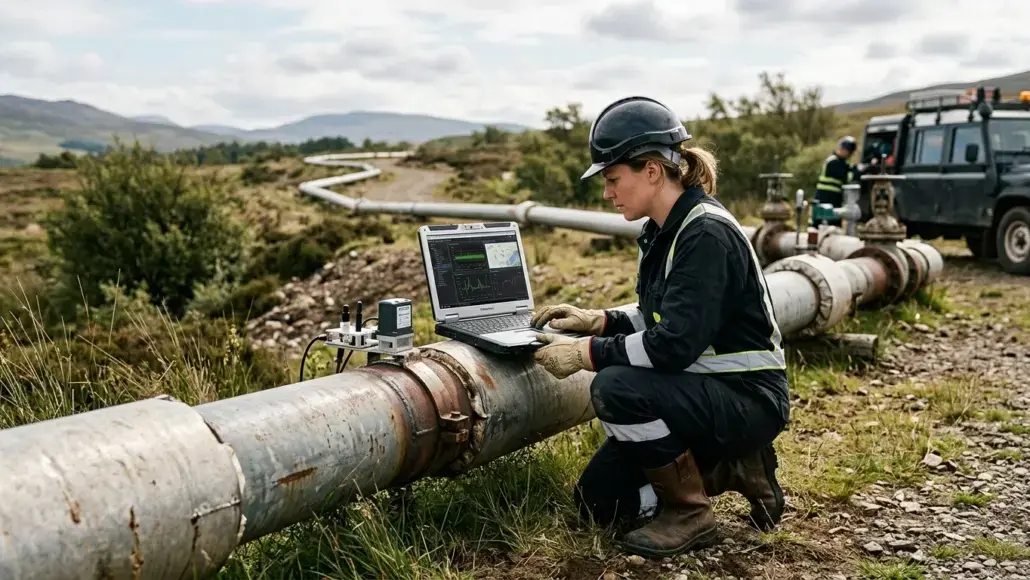
The global energy infrastructure is currently facing a dual challenge of aging assets and increasingly stringent safety and environmental regulations. For decades, the maintenance of vast pipeline networks relied on periodic inspections and reactive repairs—a strategy that was both costly and prone to catastrophic failures. However, the integration of advanced computational techniques is fundamentally shifting this paradigm. By leveraging machine learning for pipeline integrity, operators are now moving toward a predictive model that identifies potential vulnerabilities long before they manifest as leaks or ruptures. Oil & Gas Advancement notes that this transformation is not merely about replacing human intuition with algorithms; it is about synthesizing massive datasets from disparate sources to create a comprehensive, real-time understanding of asset health.
The Data Revolution in Midstream Operations
Modern pipelines are equipped with thousands of sensors that generate a continuous stream of data, ranging from pressure and temperature readings to acoustic signals and flow rates. In the past, much of this information remained siloed or was analyzed only after an incident occurred. The application of machine learning for pipeline integrity allows for the fusion of this historical SCADA data with results from In-Line Inspections (ILI) and external environmental factors. Algorithms can now scan through petabytes of data to find subtle patterns—correlations that are invisible to the human eye—such as the specific vibration frequency that precedes a structural fatigue crack or the minor pressure drop that indicates a nascent pinhole leak.
Beyond simply identifying patterns, these AI-driven systems continuously refine their models as new operational data becomes available. Instead of relying on fixed thresholds, machine learning algorithms learn how individual pipeline networks behave under different operating conditions, seasons, and product types. This adaptive capability significantly improves the accuracy of anomaly detection while reducing false alarms. Operators can also combine sensor information with maintenance histories, inspection reports, and operational logs to create a comprehensive digital profile of every asset. The result is a data-driven decision-making framework that enhances asset visibility, improves operational efficiency, supports predictive maintenance strategies, and enables faster responses to emerging integrity concerns before they escalate into costly failures.
Advanced Predictive Analytics for Corrosion Management
Corrosion remains the single greatest threat to pipeline longevity, and traditional models often struggle to account for the complex interplay between soil chemistry, temperature, and material coating degradation. Machine learning for pipeline integrity enables the creation of high-fidelity predictive models that can estimate corrosion growth rates with unprecedented accuracy. By training neural networks on decades of historical inspection data, operators can forecast exactly which sections of a pipeline will reach critical wall thinning milestones years in advance. This allows for the precise scheduling of maintenance crews, ensuring that resources are deployed where they are most needed, thereby reducing the noise of unnecessary physical inspections.
These predictive capabilities also support more effective integrity management by incorporating variables that conventional assessment methods often overlook. Factors such as moisture fluctuations, microbial activity, cathodic protection performance, and operational stress cycles can all be evaluated simultaneously within a single analytical framework. As fresh inspection data is collected, the models automatically recalibrate their forecasts, ensuring that corrosion predictions remain current and actionable. This continuous learning process enables operators to optimize maintenance budgets, extend the operational life of critical assets, reduce unexpected repair costs, and strengthen regulatory compliance through proactive rather than reactive corrosion mitigation strategies.
Risk Scoring and Prioritization Frameworks
Risk assessment in the pipeline industry has traditionally been a static exercise, often performed on an annual basis using generalized assumptions. Machine learning for pipeline integrity transforms this into a dynamic, living risk score. These systems assign a probability of failure and a consequence of failure to every meter of the pipeline, updated in real-time as new data arrives. For instance, if a satellite detects unusual ground movement near a pipeline segment, the algorithm immediately elevates the risk score for that specific coordinate. This level of granularity allows for a surgical approach to risk management, where the highest-risk assets receive the most aggressive monitoring and intervention, fundamentally enhancing public safety and environmental protection.
In addition to real-time updates, advanced risk models can incorporate operational priorities, population density, environmentally sensitive areas, and critical infrastructure located near pipeline routes. This provides decision-makers with a comprehensive understanding of both technical and societal risks associated with every asset. Maintenance schedules, inspection frequencies, and capital investments can therefore be prioritized according to measurable risk rather than fixed timelines. As the system continuously processes new operational and environmental information, it becomes increasingly effective at identifying changing threat levels, enabling organizations to allocate resources more efficiently while improving asset reliability, regulatory performance, and long-term operational resilience.
Leak Detection and Real-Time Signal Processing
The detection of small leaks—those that do not immediately cause a massive drop in pressure—is a notorious technical challenge. Conventional systems often trigger false positives that lead to expensive, unnecessary shutdowns. Machine learning for pipeline integrity solves this by using sophisticated pattern recognition to distinguish between normal operational fluctuations and true anomalies. By employing Deep Learning models trained on digital twins of the pipeline, the system can recognize the specific acoustic signature of a fluid escaping under pressure. This allows for the rapid identification and localization of leaks, often within meters, enabling a response that can prevent a minor leak from becoming an environmental disaster.
Modern leak detection platforms also combine multiple data streams, including pressure transients, flow imbalances, vibration measurements, and acoustic emissions, to improve confidence in anomaly detection. Rather than depending on a single sensor, machine learning algorithms validate events across multiple sources before issuing alerts. This significantly reduces unnecessary interventions while increasing the speed and accuracy of genuine leak identification. Integration with automated control systems further enables rapid isolation of affected pipeline segments, minimizing product loss and environmental impact. Such intelligent monitoring capabilities enhance operational continuity, improve emergency response coordination, and provide operators with greater confidence in maintaining safe and reliable pipeline operations.
Integrating External Factors and Geohazard Analysis
Pipelines do not exist in a vacuum; they are subject to the whims of the environment, from seismic activity to soil erosion caused by extreme weather. Machine learning for pipeline integrity excels at integrating these external variables into the integrity model. By processing geospatial data, weather patterns, and soil stability reports, algorithms can predict when a pipeline is at risk of displacement or external damage. This holistic view of the pipeline within its ecosystem is perhaps the most significant advancement in risk assessment, moving the industry away from looking at the pipe as a static object and toward seeing it as a dynamic component of a larger landscape.
The integration of satellite imagery, drone inspections, LiDAR surveys, and remote sensing technologies further strengthens the predictive capabilities of these systems. Machine learning models can detect gradual terrain shifts, flooding risks, vegetation changes, and land-use developments that may threaten pipeline infrastructure over time. By combining environmental intelligence with operational and inspection data, operators gain a comprehensive understanding of evolving geohazards across extensive pipeline networks. This proactive approach supports timely preventive maintenance, enhances infrastructure resilience against climate-related risks, minimizes service disruptions, and enables more informed long-term planning for safe and sustainable pipeline operations.
The Path Forward: Digital Twins and Continuous Learning
The ultimate goal of applying machine learning for pipeline integrity is the development of a fully realized Digital Twin—a virtual replica of the physical pipeline that updates itself in real-time. This twin allows operators to run ‘what-if’ simulations, testing how the asset will respond to extreme pressure surges or environmental shifts without risking the physical infrastructure. As more data is gathered, these models undergo continuous learning, becoming more accurate with every passing hour. This virtuous cycle of data collection and algorithmic refinement is setting a new standard for the industry, where the integrity of the pipeline is as much a digital attribute as it is a physical one.
As the energy sector continues to evolve, the reliance on advanced computational models will only deepen. Machine learning for pipeline integrity is not just a tool for optimization; it is the cornerstone of a sustainable and safe energy future. Oil & Gas Advancement highlights that by embracing these technologies today, pipeline operators are ensuring that they can meet the demands of tomorrow with absolute confidence in the integrity of their most critical assets.
