





Libya, home to Africa’s largest proven crude oil reserves estimated at approximately 48 billion barrels, is actively pursuing between $30 billion and $40 billion in investment to revitalize its energy sector. The ambitious USD 40B investment initiative aims to develop untapped resources, modernize aging infrastructure, and bring discovered fields into active production across the North African nation.
The drive for the USD 40B investment reflects Libya’s efforts to restore growth in an industry significantly hampered by decades of political instability, underinvestment, and security-related disruptions. With crude production currently standing at 1.4 million barrels per day, Libya oil investment represents a critical opportunity for both international energy firms and the continent’s broader energy future.
Current Production and Future Targets
The USD 40B investment plan centers on a comprehensive production expansion strategy. The National Oil Corporation (NOC) has established an ambitious target to increase output from current levels to 2 million barrels per day by 2030. More than 60 discovered oil and gas fields remain undeveloped, presenting substantial opportunities for international energy companies to participate in exploration, production operations, and infrastructure development projects.
To facilitate increased capital attraction, Libya is considering meaningful reforms to its investment framework. Proposed changes to production-sharing agreements would shift more upfront financing responsibilities to international investors, enabling projects to advance more rapidly than current arrangements permit. These structural modifications aim to accelerate development timelines and reduce barriers to participation by international energy companies.
Strategic Importance to African Energy Markets
Historically, Libyan crude has served European markets for decades, with major buyers including Italy, Germany, Spain, France, Greece, and the Netherlands. The proximity to Mediterranean ports and the nation’s production of light, low-sulfur crude, favored by numerous refineries, established Libya’s traditional export orientation toward European destinations.
Before the 2011 political transition, African crude production from Libya exceeded 1.6 million barrels per day, with substantial volumes flowing to European refineries. However, subsequent years of conflict, export blockades, and infrastructure disruptions caused significant production fluctuations.
More recently, Libya has begun strengthening its role within Africa’s regional energy ecosystem. In 2026, Libyan crude commenced supply to Nigeria’s Dangote Petroleum Refinery, Africa’s largest refining facility. During May 2026, Nigeria imported approximately 64,500 barrels daily of Libyan crude—roughly 2 million barrels for the month—marking the first documented import of Libyan crude into Nigeria according to available trade data. This development signals a meaningful shift toward intra-African energy trade and demonstrates reducing reliance on traditional overseas export markets.
International Industry Interest and Recent Commitments
Major international energy companies including Eni, TotalEnergies, Chevron, and ConocoPhillips maintain ongoing interests in Libya’s oil sector development opportunities. However, investment flows have been constrained by political uncertainty, governance concerns, and persistent security risks.
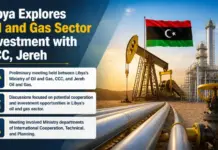
Recent positive developments provide encouraging signals for the sector. In July, Libya signed an exploration and production agreement with Qatar-based UCC Holding for Area 47, a project anticipated to attract approximately $1 billion in investment. Such commitments demonstrate continuing international interest despite existing challenges.
Persistent Challenges to Sector Growth
Despite substantial energy potential and investment opportunities, Libya’s oil ambitions face considerable obstacles. The country operates under competing authorities in eastern and western regions, with major oil fields and export terminals located in areas controlled by rival factions. This political fragmentation complicates coordinated energy infrastructure modernization efforts and investment coordination.
