
















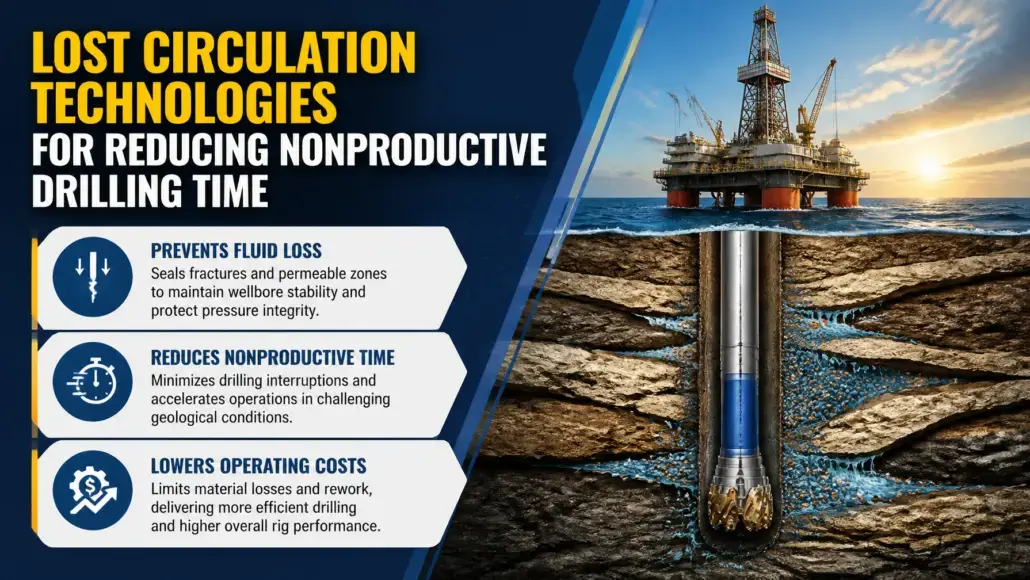
Drilling fluid loss into permeable, fractured, or depleted geological formations remains one of the most persistent operational bottlenecks in modern well construction. Uncontrolled fluid loss destabilizes the wellbore, compromises pressure containment, and triggers severe drilling delays that escalate rig operating expenses. Industry operational benchmarks indicate that fluid loss events account for approximately ten to twelve percent of total nonproductive drilling time in complex deepwater and mature basin campaigns, translating into global industry losses exceeding four billion dollars annually.
Oil & Gas Advancement observes that operators face increasingly unforgiving drilling margins as exploration pushes into deepwater pre-salt layers, high-temperature geothermal zones, and heavily depleted brownfield reservoirs. When the hydrostatic pressure exerted by the drilling mud column exceeds the fracture breakdown threshold of the surrounding rock, the formation fractures and absorbs valuable drilling fluids. Conversely, if mud density is reduced to prevent formation fracturing, formation pore fluids can enter the wellbore, creating catastrophic well control risks. Successfully navigating this narrow hydraulic window requires advanced lost circulation technologies that combine predictive geomechanics, engineered mechanical barriers, and automated surface pressure control.
Operational Mechanics of Severe Fluid Loss
Fluid loss occurs along a spectrum ranging from minor seepage in porous sandstones to catastrophic total loss in naturally fractured carbonates, subterranean vugs, and cavernous karst formations. Seepage losses, typically below ten barrels per hour, can often be managed through continuous treatment with conventional mud additives. However, severe losses exceeding one hundred barrels per hour deplete surface pit volumes rapidly, leaving the drill string vulnerable to differential sticking, thermal shock, and loss of hydrostatic head.
Depleted mature reservoirs present unique pressure challenges. Decades of hydrocarbon extraction lower formation pore pressure, causing a corresponding drop in fracture resistance. Drilling through alternating sequences of virgin-pressure shale caps and depleted sandstone intervals forces drilling engineers to manage conflicting hydraulic demands within a single hole section. Without specialized intervention, conventional drilling fluid formulations either fail to seal the depleted formation or plug downhole measurement tools, forcing operators to halt drilling, pull the bottomhole assembly, and conduct remedial cementing operations.
Engineered Chemical and Mechanical Sealing Systems
Remedying fluid losses has evolved beyond pumping coarse agricultural byproducts downhole. Modern lost circulation technologies rely on engineered lost circulation materials designed around precise particle size distributions and responsive chemical formulations. These systems bridge fracture apertures mechanically, creating an impermeable filter cake that isolates the formation from the hydrostatic pressure of the wellbore fluid column.
Leading chemical approaches utilize multi-modal solid blends, cross-linked polymer hydrogels, and shape-memory polyurethane formulations that expand upon encountering downhole temperature triggers:
- Engineered multi-modal cellulosic fibers create interlocking three-dimensional matrices across fracture widths ranging from fifty microns to several millimeters, providing structural bridging without damaging producing zones.
- Cross-linked viscoelastic polymer pills remain fluid during surface mixing and pumping through bottomhole assemblies, but rapidly gel upon entering the shear environment of formation fractures.
- Nanocomposite chemical sealants penetrate micro-fractures, consolidating the rock matrix and elevating the fracture gradient through active wellbore strengthening.
- Thixotropic cement slurries provide high yield strength under static conditions to seal extensive cavernous networks while remaining pumpable under continuous shear.
In late 2025, SLB introduced field deployments of its Losseal Max HT lost circulation control treatment in deep carbonate reservoirs across the Middle East. The engineered blend of resilient synthetic fibers and graded solids successfully arrested total fluid losses in heavily fractured karst zones, eliminating fourteen days of anticipated nonproductive drilling time and enabling the operator to reach total depth without setting an unscheduled contingency casing string.
Automated Managed Pressure Drilling Integration
While mechanical bridging materials address existing fractures, automated managed pressure drilling has emerged as a cornerstone technology for preventing fracture initiation altogether. By replacing atmospheric surface returns with a closed-loop, pressurized fluid circuit, managed pressure drilling allows operators to manipulate the equivalent circulating density of the drilling fluid in real time.
A rotating control device seals the wellhead annulus, diverting drilling fluid returns through an automated choke manifold. When the surface mud pumps are throttled down during pipe connections, downhole hydraulic friction drops, which would normally reduce bottomhole pressure and risk a fluid influx. The automated managed pressure drilling system compensates immediately by applying surface backpressure, maintaining a constant bottomhole pressure that stays strictly within the narrow operating window between pore pressure and fracture pressure.
- Precise annular pressure management prevents dynamic pressure surges and swabs during tripping operations, eliminating mechanical fatigue on fragile formation walls.
- Micro-flux detection algorithms identify fluid loss rates as low as one-half barrel per minute, alerting rig crews to formation breakdown before significant volumes leave the circulating system.
- Automated chokes respond within milliseconds to pressure anomalies, adjusting backpressure to suppress losses while sustaining continuous drilling operations.
- Early kick detection capabilities distinguish between formation fluid influxes and ballooning effects, preventing unnecessary well shut-ins.
Wellbore Strengthening and Advanced Measurement Integration
Treating fluid loss reactively often requires multiple treatment pills and prolonged curing periods that drain rig capital. Contemporary wellbore strengthening methodologies focus on proactively widening the operational mud window before losses manifest. By intentionally packing micro-fractures with precisely sized rigid particles, operators trap compressive stresses within the rock immediately adjacent to the wellbore wall, increasing the hoop stress and effectively raising the fracture breakdown pressure of the rock.
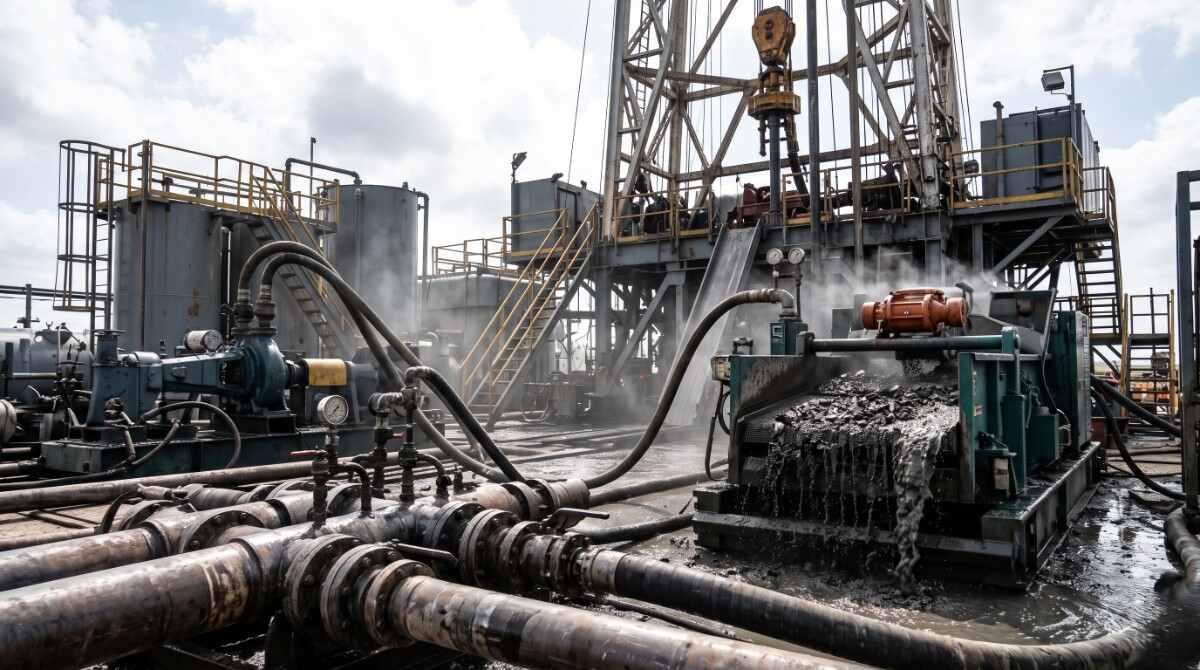
To ensure successful delivery of chemical treatments, downhole measurement tools have undergone extensive re-engineering. Traditional measurement while drilling pulsers often experienced severe erosion or mechanical jamming when exposed to high concentrations of fibrous lost circulation materials. In response, Baker Hughes expanded the commercial deployment of its NaviTrak LCP system alongside CHEK-LOSS engineered cellulosic fiber treatments in high-temperature North Sea drilling campaigns in 2025. The specialized measurement tool features an erosion-resistant pulser channel capable of sustaining real-time directional telemetry while pumping high-solids lost circulation slurries at concentrations exceeding eighty pounds per barrel.
In parallel with downhole tool hardening, surface monitoring capabilities have advanced. Weatherford International upgraded its automated Microflux Managed Pressure Drilling software suite in 2025, incorporating machine learning predictive models that analyze real-time flow-in versus flow-out differentials. The software correlates surface torque, standpipe pressure, and annular fluid velocity to characterize the geometry of induced fractures, recommending optimal particle sizing for subsequent lost circulation treatments.
Transitional Solutions for Severely Depleted Formations
In mature brownfields where pressure depletion is extreme, conventional rotary assemblies struggle to prevent fluid losses despite heavy chemical treatment and surface pressure management. In these scenarios, operators frequently abandon heavy overbalanced mud systems altogether, transitioning to specialized slimhole and underbalanced drilling methods. Deploying coiled tubing drilling provides an effective operational pathway, allowing operators to drill through depleted, loss-prone formations with continuous circulation of nitrified or lightened fluids that eliminate fluid losses and preserve reservoir productivity.
Economic and Environmental Impacts on Field Economics
Implementing advanced lost circulation technologies directly alters field development economics. High-performance synthetic drilling fluids, oil-based muds, and specialized completion brines can cost hundreds of dollars per barrel. Losing thousands of barrels of synthetic mud downhole incurs massive replacement costs, strains chemical logistics on offshore supply vessels, and increases environmental waste management liabilities at the surface.
Eliminating nonproductive drilling time allows operators to optimize casing seat selections, frequently eliminating contingency casing strings and reducing overall well construction budgets by fifteen to twenty percent. Oil & Gas Advancement notes that as drilling targets grow deeper and geologically more complex, deploying integrated lost circulation technologies transitions from an occasional troubleshooting measure into an essential component of upfront well engineering.
References
- “Losseal Max HT Treatment Eliminates Nonproductive Time in Fractured Carbonates” – SLB
- “NaviTrak LCP Measurement While Drilling Operations Under Severe Fluid Loss Conditions” – Baker Hughes
- “Microflux Automated Detection Systems for Closed-Loop Well Control” – Weatherford International
- “Mechanisms and Economic Realities of Lost Circulation in Modern Well Construction” – Society of Petroleum Engineers
