





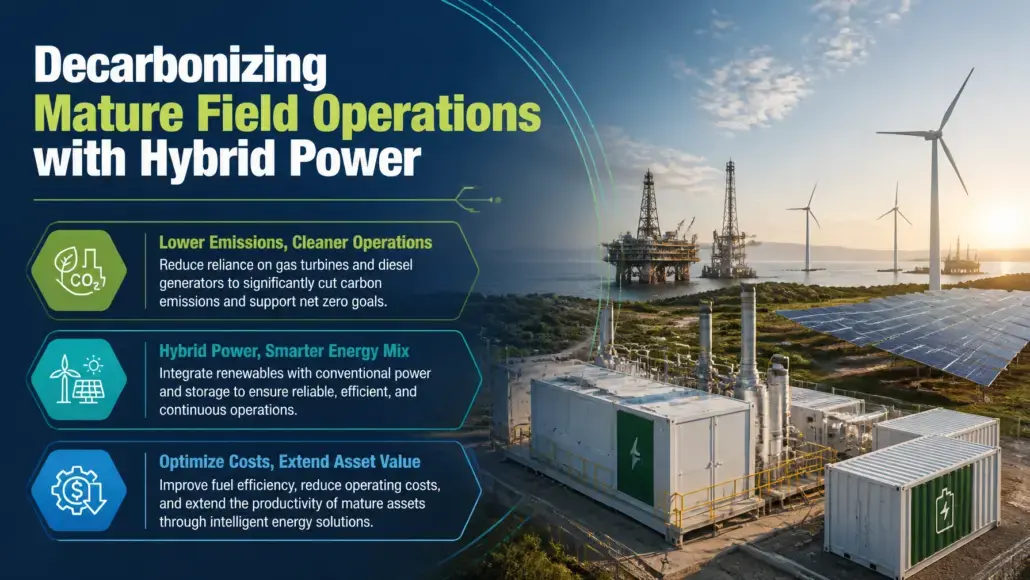
The operational landscape for mature oil and gas fields is undergoing a fundamental transformation as producers align with global net zero targets. Traditionally, these fields have relied on gas turbines or diesel generators for their substantial power needs which contributes significantly to their overall carbon footprint. Today, the focus has shifted toward decarbonizing mature fields with hybrid power systems that integrate renewable energy sources with conventional generation. This transition is essential for maintaining the social and regulatory license to operate in increasingly sensitive environments.
Recent data from Equinor shows that the industry average for upstream CO2 intensity remains high but leading operators are making rapid progress. In 2025, Equinor achieved an intensity of just 6.3 kilograms of CO2 per barrel of oil equivalent. This benchmark was reached through a combination of energy efficiency measures and the aggressive deployment of hybrid power solutions. By using offshore wind and power-from-shore, these operators are effectively decoupling their production volumes from their emissions profiles.
Oil and Gas Advancement notes that he integration of renewable energy into offshore platforms presents unique engineering challenges. Unlike onshore grids, offshore power systems must be highly resilient and capable of managing the inherent variability of wind and solar resources. Hybrid power systems address this by using advanced energy management software and battery storage to balance the load between renewable and fossil-fuel generation.
Offshore Wind Integration and Hybrid Architectures
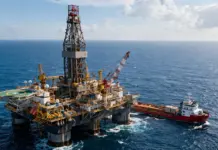
Offshore wind is the most common renewable source for decarbonizing mature basins, particularly in the North Sea and the Gulf of Mexico. These regions often have high-quality wind resources that can be harnessed using floating or fixed-bottom turbines. In some cases, a single large turbine can provide a significant portion of the base-load power for an older platform.
- ConocoPhillips’ Ekofisk Hybrid Project: A 2026 initiative installing two direct-drive offshore wind turbines to partially power the mature Ekofisk facility, targeting an offset of up to 20% of gas turbine usage to significantly curb annual emissions without requiring a complete power overhaul.
- TotalEnergies’ Low-Carbon Field Integration: A pipeline of over ten major projects slated for production by 2030 that integrate site-specific renewables, such as solar in arid areas and offshore wind in deep-water basins, to systematically lower the life-cycle carbon intensity per barrel.
Solar and Storage Solutions for Arid Mature Fields
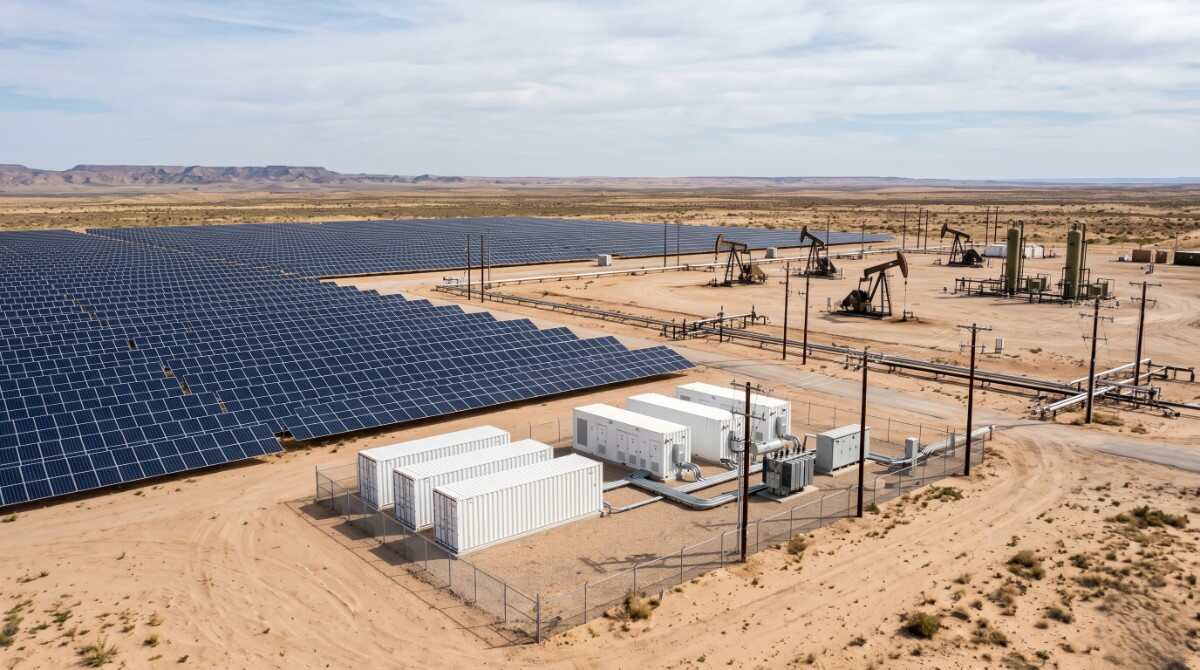
In terrestrial basins such as those in the Middle East or West Texas, solar power is becoming the primary driver for field decarbonization. Large-scale solar arrays can provide the electricity needed for water injection pumps, artificial lift systems, and surface processing. When combined with utility-scale battery storage, these systems can provide reliable power even after the sun goes down.
The economics of solar-powered oilfields have improved dramatically over the last two years. The cost of solar photovoltaic panels and lithium-ion batteries has continued to fall while the price of carbon remains high. For a mature field with decades of life remaining, the long-term savings on fuel and carbon taxes can far outweigh the initial capital expenditure of the solar installation.
Energy management systems are the brains of these hybrid operations. These digital platforms use real-time weather forecasts and production data to optimize the dispatch of power. If a cloud passes over a solar array, the system can instantly ramp up a battery or a gas turbine to maintain a steady voltage for critical production equipment. This seamless coordination is vital for preventing downtime in mature fields where reliability is the top priority.
The scalability of these energy management systems allows them to grow alongside the field’s needs. As an operator adds more renewable capacity, the software can be updated to include new assets without disrupting current operations. This modularity is a key factor in the long-term viability of hybrid power projects in brownfield sites where expansion is often done in stages to manage capital expenditure.
Power from Shore and Platform Electrification
Another powerful strategy for decarbonizing mature fields is the use of subsea cables to bring power from the onshore grid. This approach is particularly effective in regions with a clean national energy mix. By replacing platform-based generation with shore power, operators can virtually eliminate the direct emissions from their offshore facilities.
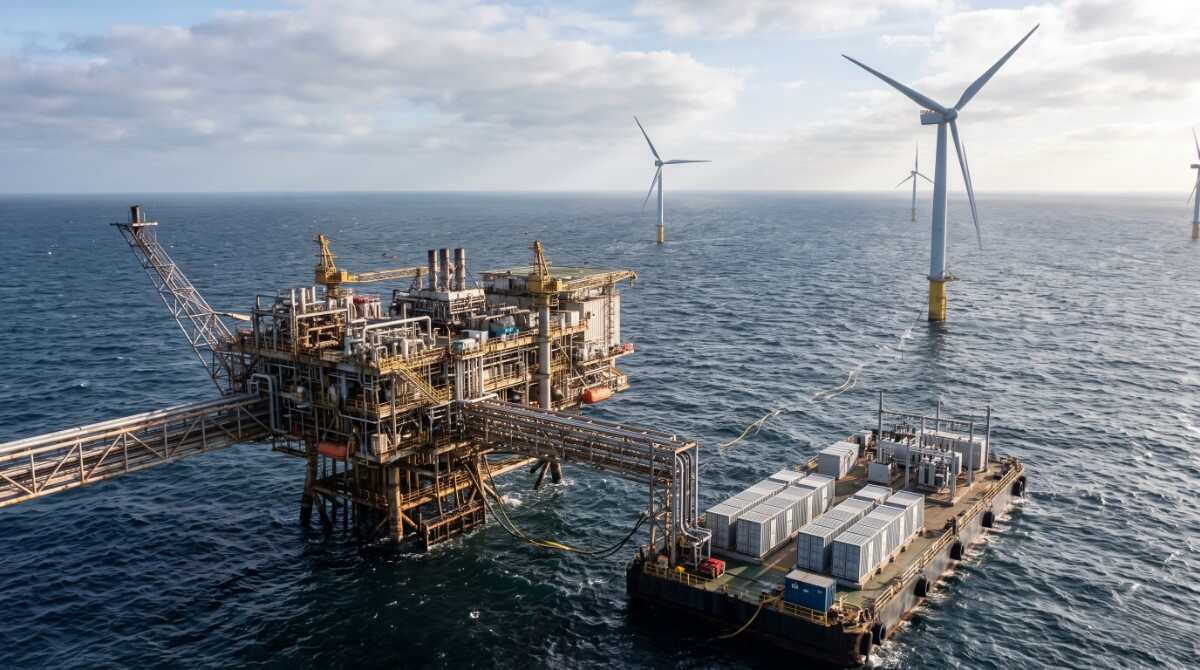
Electrification of mature platforms requires significant modifications to the existing power distribution system. Gas turbines must be decommissioned or put into standby mode and high-voltage transformers and switchgear must be installed. While the up-front costs are high, the operational benefits include reduced maintenance requirements and a more stable power supply.
Integrating Decarbonization with Production Enhancement
The shift toward hybrid power is often happening alongside other production enhancement activities. For example, the power saved by using efficient electric pumps can be used to increase the capacity of a water injection program. This creates a virtuous cycle where emissions go down while recovery rates go up.
Multi lateral re-entry is one such technique that benefits from a stable and low-carbon power supply. Drilling and completing new laterals requires significant power for drilling rigs and fluid management systems. By using hybrid power to fuel these operations, operators can ensure that their brownfield revival projects are as sustainable as possible.
The data gathered from hybrid power systems is also feeding into broader digital twin models. By understanding the energy consumption patterns of different parts of the field, operators can identify further opportunities for efficiency. This might include optimizing the timing of high-load activities to coincide with periods of high renewable energy availability.
Regulatory and Financial Drivers
- Regulatory Pressure & Carbon Pricing: Phasing in carbon taxes alongside stricter limits on flaring and venting significantly drives up the cost of operating legacy, inefficient gas turbines in mature fields.
- Green Finance & Capital Access: Clear commitments to hybrid power and verifiable emissions reductions enable operators to secure lower-cost capital and satisfy increasingly climate-focused investor demands.
Oil and Gas Advancement believes that as we look toward the second half of the decade, the electrification of the oilfield is set to accelerate. For mature fields, this transition represents the best path toward a sustainable and profitable future in a low-carbon world.
References
- “Energy Transition Plan” – Equinor
- “Factbook 2025” – TotalEnergies
- “ConocoPhillips Offshore Wind Initiatives for 2025” – Enki AI
- “Annual Report 2025” – Baker Hughes
- “Oil Market Report – March 2026” – International Energy Agency
