





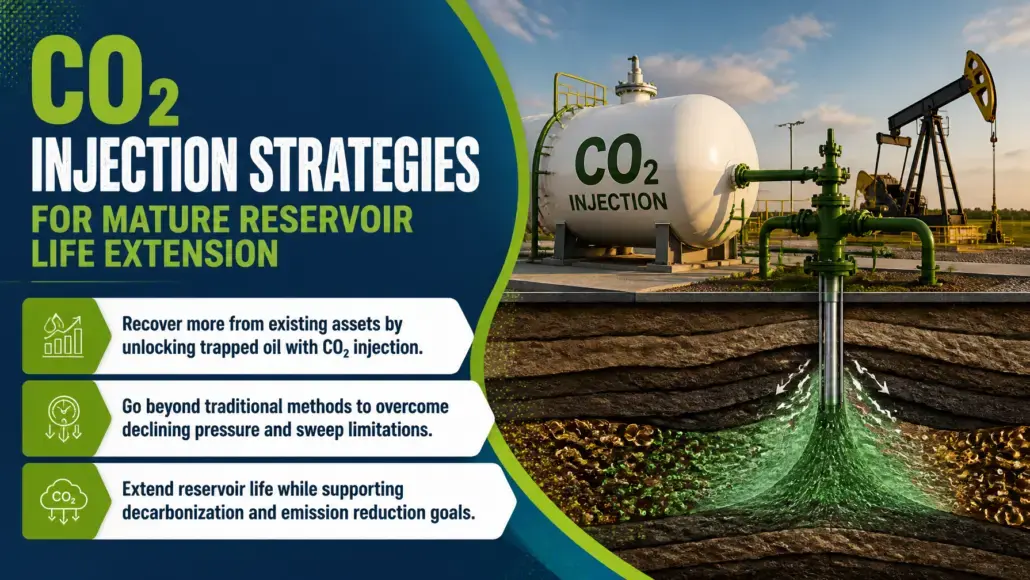
Global energy demand continues to pressure existing assets to perform beyond their original design lives. Mature reservoirs now represent a significant portion of global production but maintaining their output requires more than traditional waterflooding or pressure maintenance. Oil and Gas Advancement observes that the industry is shifting toward more sophisticated carbon dioxide injection for mature reservoirs to recover trapped oil while simultaneously addressing decarbonization goals. This dual-purpose approach is transforming how operators view their late-life assets.
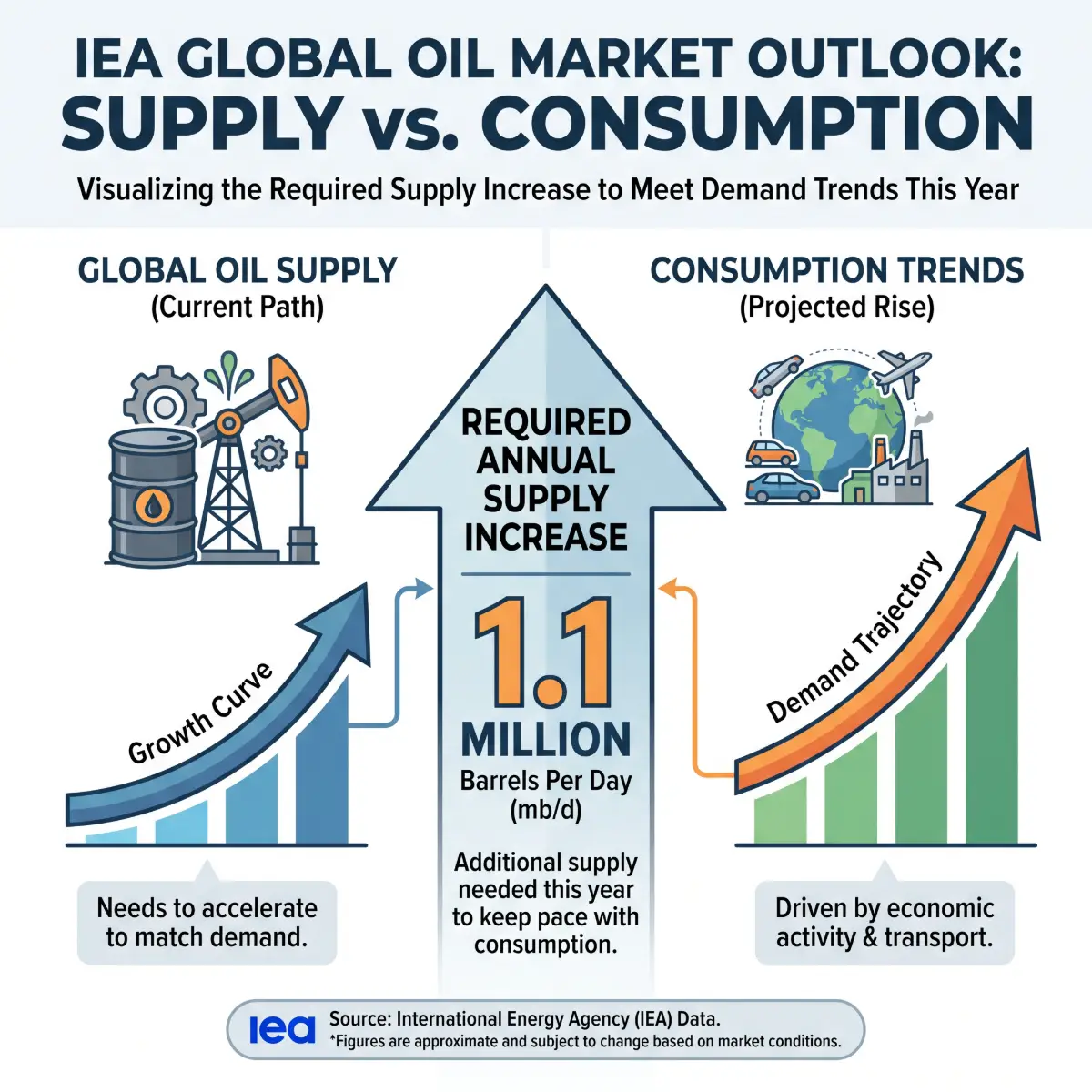
The technical landscape of Enhanced Oil Recovery (EOR) has matured significantly as we move through 2026. Data from the International Energy Agency indicates that global oil supply needs to rise by approximately 1.1 million barrels per day this year to keep pace with consumption trends.
Much of this volume must come from brownfield sites where primary and secondary recovery stages have already been exhausted. Conventional recovery methods typically leave behind more than half of the original oil in place. This trapped resource is often held by capillary forces that water cannot overcome. Carbon dioxide (CO2) injection changes the fluid dynamics within the rock pores by making the oil swell and reducing its viscosity. These changes allow the oil to flow more easily toward production wells.
Integrating Carbon Capture and Storage with Production
The economic viability of CO2-EOR is increasingly tied to Carbon Capture, Utilization, and Storage (CCUS) infrastructure. Companies are no longer just buying CO2 for recovery purposes. They are designing integrated systems where captured industrial emissions are transported to mature fields for permanent sequestration after the oil has been extracted. This creates a circular value chain that benefits both the environment and the balance sheet.
Equinor recently advanced its carbon management portfolio to include transport and storage capacity exceeding 3.7 million tonnes per annum. Their projects in the North Sea demonstrate how existing infrastructure can be repurposed for CO2 injection. By using old pipelines and wells, the capital expenditure for life extension projects is significantly reduced.
TotalEnergies is also making major investments in this space. Their 2025 Factbook highlights plans to grow production by three percent annually with a heavy emphasis on efficiency and carbon intensity reduction. Their involvement in carbon storage expansion projects in 2025, valued at over 700 million dollars, shows the scale of the commitment to these technologies.
Technical Variations in Injection Deployment
Success in reservoir life extension depends on the specific injection strategy chosen by the operator. Continuous CO2 injection is the most straightforward method but it can lead to early gas breakthrough where the CO2 reaches the production well without moving enough oil. This wastes expensive gas and requires complex separation equipment at the surface. New technologies and practices are being used to counter these issues:
- Water-Alternating-Gas (WAG) Cycles: Serving as the industry standard to manage injection risks, this method alternates CO2 and water injection, using water to force CO2 into smaller pores and gas to reduce viscosity, while leveraging real-time bottom-hole pressure data for cycle adjustments to boost reservoir sweep efficiency.
- Foam-Assisted CO2 Injection: An emerging, higher-cost alternative to standard WAG that utilizes surfactants to generate foam, effectively blocking high-permeability thief zones and redirecting CO2 into tighter, undrained reservoir areas to deliver cost-justifying incremental recovery rates in high-value offshore settings.
Operational Challenges in Mature Fields
Injecting CO2 into older fields is not without its difficulties:
- Material Upgrades & Corrosion: Wet CO2 is highly corrosive to legacy equipment, forcing costly capital replacements of wellheads, tubing, and seals with specialized alloys or elastomers.
- Pressure Management & MMP: Depleted reservoirs require precise injection control across multiple wells to rebuild and sustain the Minimum Miscibility Pressure (MMP), without which CO2 cannot properly mix with oil for effective recovery.
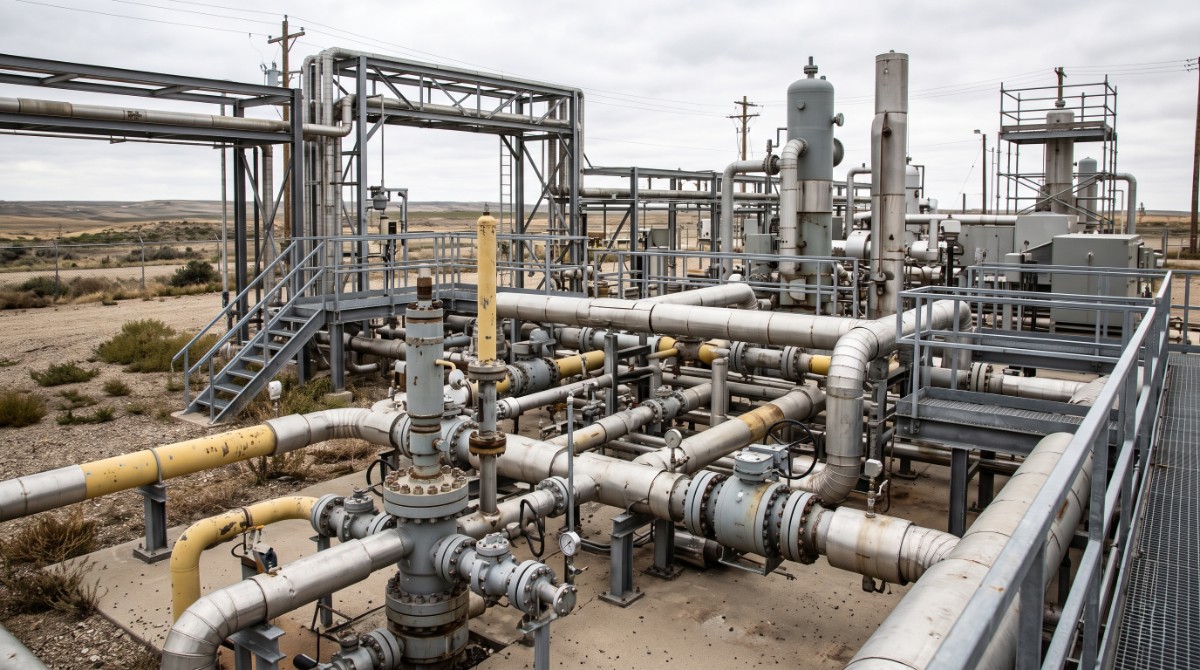
- Surface Facility & Footprint Constraints: Processing high volumes of produced gas demands substantial compression and separation capacity, driving the adoption of compact, modular units to bypass space limitations, particularly on offshore platforms.
Strategic Commercial Shifts in 2026
The commercial framework for CO2 injection is being reshaped by government incentives and carbon pricing. In the United States, updated tax laws in 2025 have unlocked billions of dollars in potential subsidies for carbon capture and EOR projects. These incentives make it feasible to develop fields that were previously considered too expensive for tertiary recovery.
Occidental Petroleum through its subsidiary 1PointFive is leading the way in atmospheric carbon removal for EOR. Their large-scale Direct Air Capture projects aim to provide a reliable source of CO2 that is independent of industrial location. This geographic flexibility allows for the development of mature fields in remote areas where pipeline access is limited.
As the industry looks toward the next decade, the focus remains on maximizing the value of existing discoveries. Extending the life of a mature reservoir is often more cost-effective and carries less exploration risk than drilling in frontier basins. The combination of carbon management and advanced recovery technology ensures that these assets remain productive in a low-carbon economy.
In the pursuit of optimizing these brownfield sites, many operators are also turning to biological solutions. Microbial enhanced oil recovery systems represent a different approach to changing fluid behavior within the reservoir. These systems use indigenous or injected bacteria to produce surfactants and gases directly in the rock formation.
Monitoring and Data Management in Injection Projects
Effective CO2 injection requires a high degree of situational awareness. Operators must track the movement of the CO2 plume to ensure it is staying within the target zones. Seismic monitoring and observation wells are commonly used to provide this data.
New sensor technologies are providing more granular information than ever before:
- Fiber-Optic Wellbore Monitoring: Continuous temperature and acoustic sensing along the wellbore enables immediate detection of gas breakthroughs, allowing operators to make real-time injection adjustments.
- Chemical Tracers for Plume Management: Adding distinct chemical markers to injected CO2 pinpoints specific injector-to-producer pathways, providing the flow detail needed to optimize WAG cycles and maximize overall recovery.
The Role of International Collaboration
National oil companies and international majors are increasingly working together to share the risks of these large-scale projects. The complexity of CCUS and EOR integration requires a diverse set of skills ranging from subsurface engineering to industrial capture technology. Joint ventures are becoming the preferred vehicle for developing regional CO2 hubs.
These hubs allow multiple operators to share the cost of pipeline infrastructure and storage sites. This economy of scale is vital for making CO2 injection accessible to smaller players in the industry. As more hubs come online in 2026 and 2027, the volume of CO2 injected for recovery is expected to grow significantly.
References
- “Oil Market Report – March 2026” – International Energy Agency
- “Factbook 2025” – TotalEnergies
- “Carbon Capture Boosting Oil Recovery” – American Oil and Gas Reporter
- “Energy Transition Plan” – Equinor
- “Energy Transition Outlook 2025-26” – Wood Mackenzie
