










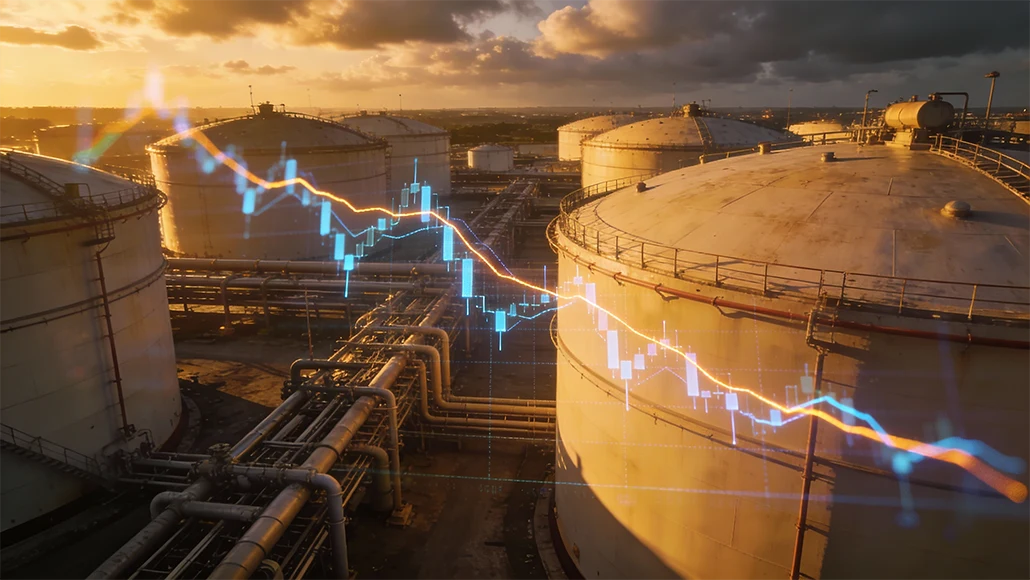
As we look toward the start of the next decade, the midstream energy sector is on the cusp of a total technological metamorphosis. The vision for the year 2030 is a world where thousands of miles of critical infrastructure operate with minimal human intervention—a future defined by autonomous pipeline operations. This shift is not merely a gradual improvement in existing automation. It is a fundamental move toward a self-healing and self-optimizing grid. Driven by the convergence of Artificial Intelligence, ubiquitous connectivity, and advanced robotics, Oil & Gas Advancement believes the pipelines of 2030 will be a sophisticated, sentient network that manages its own safety, efficiency, and environmental footprint with millisecond precision.
The Roadmap to Full Autonomy: From Automation to Cognition
To understand the future of autonomous pipeline operations, one must distinguish between traditional automation and true autonomy. While today’s pipelines are automated to follow preset logic (e.g., closing a valve if pressure exceeds X), the autonomous system of 2030 will be cognitive. It will use AI to evaluate complex scenarios and make decisions based on multi-variable optimizations. For instance, if a solar-powered compressor station experiences a drop in energy production, the autonomous system will automatically reroute flow or adjust pump speeds across the entire network to maintain throughput while minimizing energy costs—all without a human operator in the loop.
Digital Twins and the Sentient Network
The backbone of autonomous pipeline operations in 2030 will be the next-generation digital twin. Unlike the static models of today, these will be high-fidelity, real-time replicas that are deeply integrated with every physical component of the asset. Every bolt, weld, and sensor will have a digital counterpart that tracks its stress, temperature, and age. This sentient network will be able to feel its environment. When a heavy storm is predicted, the digital twin will simulate the potential soil erosion and automatically deploy autonomous drones to monitor the most vulnerable sections. This proactive, simulation-driven management style is what will make the pipelines of 2030 the safest in history.
The Role of 6G and Edge Computing in Connectivity
Full autonomy requires a level of connectivity and latency that current 4G and 5G networks struggle to provide over vast, remote distances. By 2030, the integration of LEO (Low Earth Orbit) satellite constellations and the early adoption of 6G will provide unbreakable connectivity to even the most isolated segments of the pipeline. Coupled with Edge Computing—where the AI processing happens at the sensor level rather than in a distant cloud—this ensures that autonomous pipeline operations can respond to a rupture or a security breach in milliseconds. This localized intelligence is the key to preventing a localized incident from cascading into a network-wide failure.
Robotics: The Hands of the Autonomous Pipeline
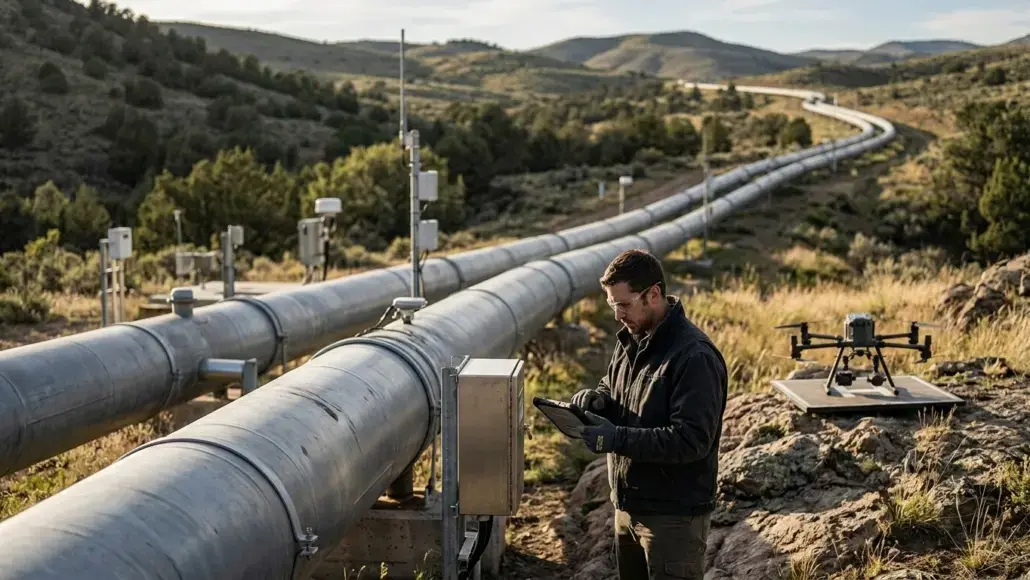
While AI is the brain, robotics will be the hands of the future. By 2030, we expect to see the widespread deployment of autonomous robotic residents. These are drones and crawlers that live at the pipeline facility, autonomously performing inspections and even basic maintenance. We will see multi-modal robots that can fly to a site, land on the pipe, and then crawl to perform a detailed ultrasonic scan. Some robots may be equipped with specialized tools for remote valve turning or minor coating repairs. These robotic workforces will eliminate the need for humans to perform Dull, Dirty, and Dangerous tasks, fundamentally changing the labor model of the oil and gas industry.
Self-Healing Materials and Predictive Repair
Perhaps the most futuristic trend shaping 2030 is the development of self-healing technologies. Research into self-healing coatings that can automatically seal micro-cracks before corrosion sets in is already well underway. In an environment of autonomous pipeline operations, the system would detect the chemical signature of a coating breach and automatically deploy a repair drone to apply a precise patch. This closed-loop maintenance cycle—detect, evaluate, and repair—is what will enable pipelines to operate safely for decades beyond their original design life, significantly reducing the environmental impact of new infrastructure construction.
The Human Element: From Operators to Orchestrators
A common misconception is that autonomous pipeline operations will eliminate the need for people. On the contrary, the role of the human will shift from a line operator to a system orchestrator. The professionals of 2030 will be data scientists and robotics managers who oversee the high-level goals and ethics of the autonomous system. They will focus on strategy, regulatory compliance, and high-level problem solving, while the AI handles the millions of tactical decisions required every day. This shift will require a massive upskilling of the workforce, creating a new class of high-tech jobs within the energy sector.
Conclusion
The transition toward autonomous pipeline operations is no longer a distant concept but an increasingly achievable objective driven by rapid advances in artificial intelligence, robotics, digital twins, edge computing, advanced connectivity, and predictive analytics. As these technologies continue to mature, pipeline networks will evolve from reactive infrastructure into intelligent ecosystems capable of continuously monitoring their own condition, anticipating operational challenges, and responding to potential risks with unprecedented speed and accuracy. This transformation promises significant benefits, including improved asset integrity, lower operating costs, reduced emissions, enhanced regulatory compliance, and greater reliability across global energy supply chains.
However, achieving this vision will require more than technological innovation alone. Energy companies must invest in robust cybersecurity frameworks, standardized communication protocols, reliable data governance, and workforce development to ensure autonomous systems operate safely and transparently. Collaboration among operators, technology providers, regulators, and research institutions will also be essential for establishing industry standards and accelerating adoption.
By 2030, the most successful organizations will be those that embrace digital transformation while maintaining strong human oversight and operational resilience. Rather than replacing people, autonomous pipeline operations will empower skilled professionals with better insights and decision-making tools, enabling them to manage increasingly complex infrastructure more effectively. As the industry moves toward a future of intelligent, connected, and self-optimizing assets, Oil & Gas Advancement highlights that autonomous pipelines will play a pivotal role in delivering safer, cleaner, and more efficient energy systems that meet the growing demands of a rapidly evolving global economy.
