



















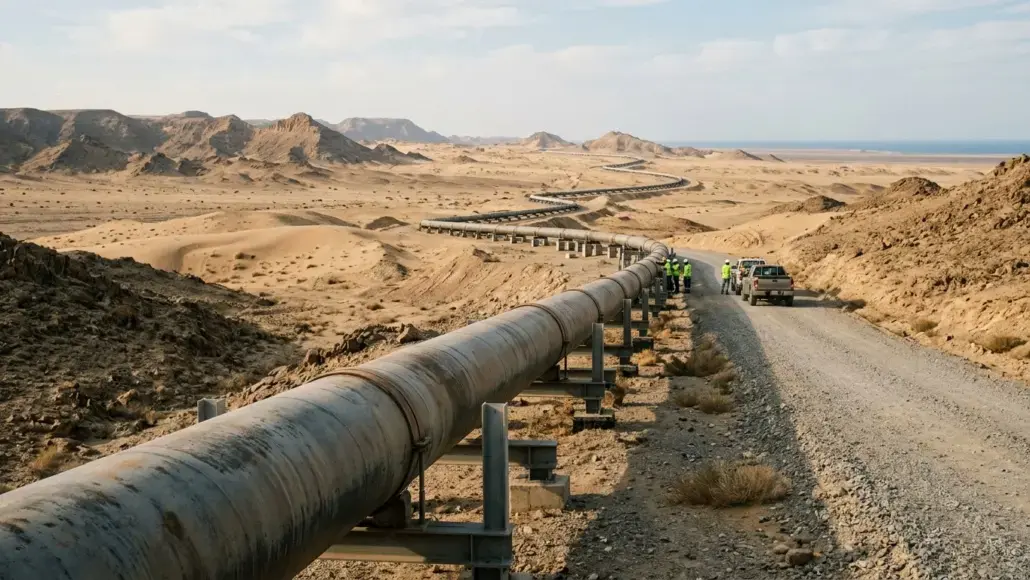
Saudi Arabia is currently exploring a significant increase in the capacity of its primary East-West pipeline stretching to the western Red Sea coast. According to sources, this move aims to facilitate the movement of more oil for the kingdom and its neighbors without the necessity of navigating the Strait of Hormuz. This initiative for enhanced crude oil transport is a response to regional shifts that have highlighted the vulnerabilities of traditional maritime shipping routes. The pipeline, originally established in the early 1980s, has gained renewed strategic importance as a vital Strait of Hormuz bypass.
Enhancing Regional Energy Security Through Infrastructure
The existing East-West pipeline infrastructure can manage up to 7 million barrels per day (bpd). Currently, approximately 5 million bpd are designated for export through the Yanbu port, while 2 million bpd supply refineries on the western coast. Preliminary discussions are underway regarding a potential East-West Pipeline expansion by up to 2 million bpd. This development is viewed as a critical step toward strengthening regional energy security, potentially involving upgrades to current facilities or the development of entirely new pipelines, including a smaller line specifically for oil products.
Collaborative Efforts for Crude Oil Transport
Neighboring nations including Kuwait, Bahrain, and Qatar currently lack reliable alternatives to the Strait of Hormuz. While Iraq possesses a pipeline to Turkey, it remains hindered by technical and political disputes, often running well below its intended capacity.
Implementing the East-West pipeline expansion would be a multi-year project requiring billions of dollars in investment. It would also necessitate adjustments to the pricing mechanisms for Saudi crude.
The urgency for a Strait of Hormuz bypass has intensified following recent regional blockades that forced producers to halt significant production, leading to global price volatility. Although some crude oil transport flows have resumed, they have not yet returned to levels seen before the recent disruptions.
