







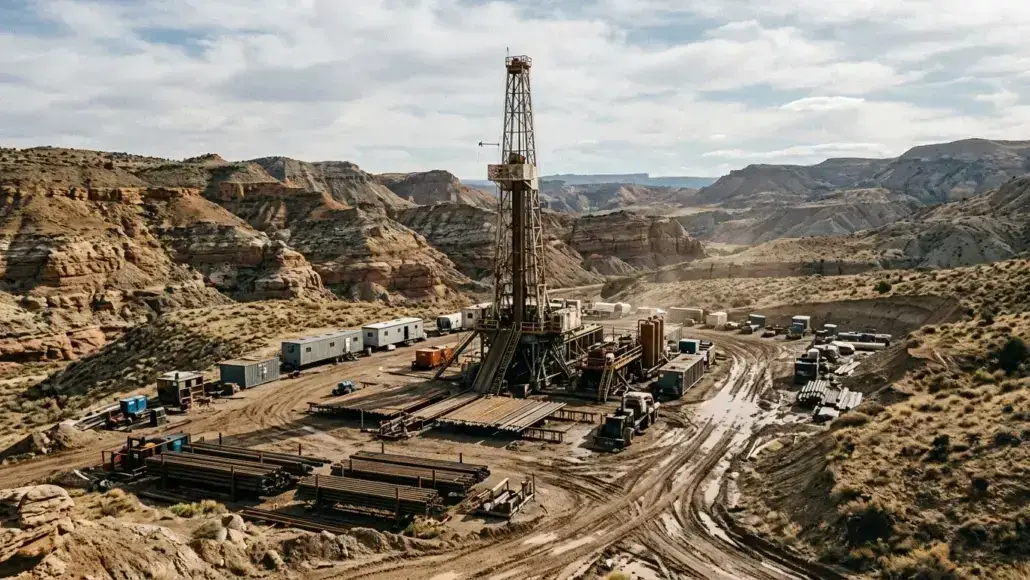
The global demand for energy continues to drive the relentless pursuit of new hydrocarbon reserves. Yet, the very nature of this exploration, peering into the Earth’s hidden depths, is fraught with immense uncertainty and substantial financial risk. A significant portion of this risk materializes in the form of ‘dry wells‘, or exploration wells that fail to encounter commercially viable quantities of oil or gas. The cost associated with drilling a single dry well can run into tens, even hundreds of millions of dollars, representing a colossal drain on resources and a tangible blow to a company’s bottom line and investor confidence. For decades, the industry has relied on sophisticated geological and geophysical techniques, with seismic imaging at the forefront, to mitigate these risks. However, traditional methods, while invaluable, have inherent limitations that often leave a crucial margin for error. Enter the transformative potential of AI-powered seismic imaging, a groundbreaking technological advancement poised to fundamentally redefine the economics of hydrocarbon exploration by dramatically reducing dry well costs. This isn’t merely an incremental improvement. Oil & Gas Advancement notes that this technology represents a paradigm shift in how we understand the subsurface, making exploration more efficient, precise, and ultimately, far more profitable.
The Conventional Paradigm: Challenges in Subsurface Exploration
Traditional seismic imaging involves sending acoustic waves into the Earth and recording the echoes that bounce back from various geological layers. These echoes are then processed and interpreted by geophysicists to create a subsurface map. While incredibly powerful, this process has historically been highly interpretive and, to some extent, subjective. The sheer volume of seismic data, coupled with its inherent complexity, riddled with noise, anomalies, and ambiguities, requires highly skilled human experts to sift through, process, and make sense of it.
Navigating Data Overload and Interpretation Nuances
The challenge lies in extracting meaningful geological information from vast datasets, often under tight deadlines. Subtle geological features indicative of hydrocarbon reservoirs can be easily missed or misinterpreted. Furthermore, the presence of geological noise, such as multiples or incoherent energy, can obscure critical reflections, leading to blurred or inaccurate images of the subsurface. This human element, while crucial for expert judgment, introduces variability and can be time-consuming, leading to bottlenecks in the exploration workflow. The ultimate consequence of these limitations is an elevated risk of making suboptimal or incorrect drilling decisions, directly contributing to the prevalence of costly dry wells.
The Dawn of a New Era: Understanding AI-Powered Seismic Imaging
AI-powered seismic imaging represents a monumental leap forward, integrating artificial intelligence and machine learning algorithms directly into the seismic data processing and interpretation workflow. This innovative approach moves beyond the limitations of traditional methods by leveraging the computational power of AI to analyze seismic data with unprecedented speed, accuracy, and objectivity. Instead of relying solely on human interpretation of visual patterns, AI systems can identify subtle correlations, anomalies, and structural features that might be invisible or overlooked by the human eye.
Unpacking the AI Advantage in Data Analysis
At its core, AI-powered seismic imaging utilizes sophisticated algorithms, including machine learning and deep learning models, to process raw seismic data, enhance its quality, and extract geological insights. These algorithms are trained on vast datasets of seismic images, well logs, and geological models, learning to recognize patterns associated with different rock types, fluid content, and geological structures. This training allows the AI to perform tasks such as noise attenuation, fault detection, stratigraphic interpretation, and reservoir characterization with remarkable efficiency and precision. The result is a far clearer, more detailed, and reliable representation of the subsurface, leading to better-informed exploration strategies.
The process typically begins with robust seismic data analysis, where AI algorithms are employed to denoise and enhance the raw seismic signal. This initial step is critical, as clean data forms the foundation for accurate interpretation. Machine learning models can then be deployed to automatically identify and delineate geological features, predict rock properties, and even estimate fluid types based on complex seismic attributes. This drastically reduces the time and effort traditionally required for manual interpretation, accelerating the exploration cycle and significantly improving the quality of the derived geological models.
Precision Unleashed: How AI Transforms Subsurface Interpretation
The true power of AI-powered seismic imaging lies in its capacity to revolutionize the interpretation of the Earth’s subsurface. Oil & Gas Advancement notes that AI introduces a level of precision and objectivity that was previously unattainable, fundamentally altering the way exploration teams approach potential reservoirs.
Enhanced Subsurface Accuracy
Perhaps the most significant contribution of AI is its ability to deliver dramatically enhanced subsurface imaging accuracy. Traditional interpretation often grapples with ambiguities arising from complex geology, signal noise, and limitations in human cognitive processing. AI algorithms, particularly deep neural networks, are adept at identifying intricate patterns and subtle seismic attributes that correlate with specific geological features, even in highly noisy or structurally complex environments. They can effectively differentiate between valid geological signals and random noise, leading to clearer, sharper images of underground structures. This granular level of detail allows geoscientists to construct far more precise geological models, delineate reservoir boundaries with greater confidence, and accurately characterize the rock and fluid properties within potential traps. The reduction in ambiguity directly translates into a more reliable understanding of where hydrocarbons might reside.
With a more accurate understanding of the subsurface comes the ability to conduct prospect ranking with unparalleled confidence. AI models can analyze a multitude of geological, geophysical, and petrophysical data points for each potential prospect. They can learn from historical drilling success and failure rates, identifying the subtle signatures associated with productive reservoirs versus barren structures. By evaluating factors like trap integrity, reservoir quality, source rock maturity, and migration pathways, AI can assign probability scores to prospects, objectively ranking them based on their likelihood of containing economic hydrocarbon accumulations. This data-driven approach moves beyond qualitative assessments, enabling exploration teams to prioritize the most promising targets and allocate their valuable resources more effectively, thereby optimizing their drilling portfolio.
Optimized Drilling Decisions
The ultimate goal of all subsurface interpretation is to inform and optimize drilling decisions. With AI-powered seismic imaging, the guesswork is significantly reduced. By providing highly accurate subsurface models and robust prospect rankings, AI empowers explorationists to make more confident and strategic choices about where to drill. The improved clarity in identifying target zones means wells can be placed with greater precision, maximizing the chance of hitting the reservoir. Furthermore, AI can aid in predicting potential drilling hazards, such as overpressured zones or unstable formations, allowing for proactive mitigation strategies. This foresight not only saves time and money but also enhances safety during drilling operations. Each optimized drilling decision is a step closer to a successful well and a step further from the financial drain of a dry hole.
Quantifying the Impact: Direct Cost Reductions from AI
The theoretical advantages of AI-powered seismic imaging translate directly into tangible financial benefits, primarily through a substantial reduction in dry well costs. For an industry where each exploration well represents an enormous capital outlay, minimizing these unproductive expenditures is paramount for sustainable profitability and long-term viability.
Minimizing Dry Well Costs Through Informed Action
The most straightforward and impactful benefit is the direct reduction in dry well frequency. By providing exploration teams with superior subsurface insights, AI significantly improves the probability of drilling successful wells. This means fewer wells are drilled into uneconomic formations, directly saving the considerable costs associated with rig mobilization, drilling operations, logging, casing, and abandonment of a dry hole. These savings alone can run into hundreds of millions of dollars annually for larger exploration companies, fundamentally reshaping their capital efficiency.
Streamlined Data Processing and Reduced Cycle Times
Beyond avoiding dry wells, AI contributes to cost reduction through efficiency gains. Traditional seismic data analysis and interpretation are labor-intensive, time-consuming processes. Oil and gas AI algorithms can process vast amounts of seismic data in a fraction of the time it would take human geophysicists, and with greater consistency. This machine learning in exploration capability means quicker turnaround times from data acquisition to drill-ready prospects, accelerating the decision-making cycle and reducing the overall exploration timeline. Faster processing translates into lower operational costs and the ability to respond more rapidly to market dynamics or new data.
Improved Exploration ROI
Ultimately, all these benefits converge to significantly enhance exploration ROI (Return on Investment). By reducing dry well frequency, optimizing well placement, and streamlining data processing, AI minimizes capital expenditure while maximizing the probability of discovering commercially viable hydrocarbon reserves. The capital that would otherwise be wasted on unproductive wells can be reinvested into more promising ventures, further fueling growth and innovation. In a fiercely competitive and capital-intensive industry, an improved ROI is not just a desirable outcome; it’s a strategic imperative for long-term success. AI-driven exploration shifts the balance from high-risk, high-reward to higher-probability, higher-efficiency ventures.
The Technological Backbone: AI, Machine Learning, and Deep Learning in Action
The capabilities of AI-powered seismic imaging are underpinned by advances in various facets of artificial intelligence. Machine learning algorithms, such as Support Vector Machines or Random Forests, are used for classification tasks like identifying different lithologies or fluid types based on seismic attributes. Deep learning, a subset of machine learning involving neural networks with multiple layers, truly excels in complex pattern recognition. Convolutional Neural Networks (CNNs), for instance, are particularly effective in image processing tasks, making them ideal for denoising seismic data, detecting faults, or mapping geological horizons with incredible accuracy. These systems learn from vast amounts of historical data, seismic surveys, well logs, production data, to build predictive models, constantly improving their accuracy with more data and feedback. This continuous learning aspect is what makes seismic interpretation AI so powerful; it’s not just a tool, but an evolving intelligence that becomes smarter over time.
Real-World Applications of AI-powered Seismic Imaging
While the theoretical advantages of AI-powered seismic imaging are compelling, its real impact is best understood through its practical application in the field. Across the oil and gas industry, pioneering companies are already leveraging this technology to unlock new efficiencies and achieve tangible reductions in dry well costs.
Transforming Exploration Success Rates
Consider a multinational energy company operating in a geologically complex basin. Traditionally, their exploration campaigns in this area had a dry well rate approaching 40-50%, a figure that severely impacted their profitability. By integrating AI-powered seismic imaging into their workflow, they were able to re-evaluate historical seismic data, revealing subtle geological features and fluid contacts that were previously missed by human interpreters. The AI models, trained on regional well data, identified a previously overlooked stratigraphic trap, predicting its presence and likely hydrocarbon content with high confidence. Upon drilling, the well proved to be a significant discovery, transforming what would have been another high-risk venture into a successful exploitation project. This success not only reduced the dry well count for the campaign but also significantly boosted their exploration ROI for the region.
Gaining a Competitive Edge with AI
Another example involves a mid-sized independent producer looking to optimize their drilling program in mature fields. By applying machine learning in exploration to existing seismic data, combined with production history and well log data, they were able to perform a high-resolution re-interpretation of the subsurface. The AI identified bypassed pay zones and subtle structural traps within areas previously deemed fully depleted. This advanced subsurface imaging allowed them to strategically place infill wells and sidetracks with a much higher success rate than conventional approaches, extending the economic life of their assets and substantially increasing production. Such early adoption of oil and gas AI grants these companies a distinct competitive advantage, allowing them to extract more value from existing assets and approach new frontiers with greater assurance.
Navigating the Future: Challenges and Opportunities
While the benefits of AI-powered seismic imaging are undeniable, its widespread adoption and continued evolution are not without challenges. However, these challenges are overshadowed by the immense opportunities this technology presents for a more efficient, sustainable, and data-driven future for the oil and gas industry.
Overcoming Integration Hurdles and Data Silos
One primary challenge is the integration of diverse datasets and legacy systems. For AI models to perform optimally, they require vast amounts of high-quality, standardized data, which can often be siloed across different departments or stored in disparate formats within large organizations. Overcoming these data integration hurdles and establishing robust data governance frameworks are crucial for unleashing the full potential of AI. Another aspect is the need for a skilled workforce capable of understanding, deploying, and interpreting the output of AI models. This necessitates investment in training and upskilling geoscientists and engineers in data science and machine learning principles.
Despite these challenges, the future of AI-powered seismic imaging is incredibly promising. Continuous advancements in computational power, algorithm development, and data acquisition techniques will further enhance its capabilities. We can anticipate even more sophisticated AI models that can perform real-time interpretation, integrate with autonomous drilling systems, and even predict reservoir behavior with greater accuracy throughout the entire asset lifecycle. The collaboration between data scientists, geophysicists, and engineers will drive further innovation, pushing the boundaries of what’s possible in subsurface exploration. The move towards cloud-based AI platforms will also democratize access to these powerful tools, enabling smaller companies to leverage advanced analytics previously only available to industry giants. This evolution promises not just a reduction in dry well costs, but a complete transformation of the exploration and production landscape, fostering a more sustainable and profitable future for the energy sector.
A New Horizon in Hydrocarbon Exploration
The journey of hydrocarbon exploration has always been one of constant innovation, driven by the imperative to find and extract energy resources from the Earth’s most challenging environments. Today, we stand at the precipice of another transformative era, one powered by the remarkable capabilities of artificial intelligence. AI-powered seismic imaging is not just an incremental improvement; it is a fundamental shift in our approach to understanding the subsurface, promising to mitigate the historically high risks and costs associated with discovering new oil and gas reserves.
By harnessing the power of machine learning and deep learning, this technology elevates seismic data analysis to unprecedented levels of precision, moving beyond the inherent limitations of human interpretation. It delivers clearer subsurface imaging, enables superior prospect ranking, and leads to far more optimized drilling decisions. The direct consequence of these advancements is a substantial reduction in dry well costs and a significant boost to exploration ROI, ensuring that capital is deployed more efficiently and effectively. For the oil and gas industry, embracing AI-powered seismic imaging is not merely an option; it is an essential step toward a future where exploration is smarter, more sustainable, and ultimately, more successful. Oil & Gas Advancement believes this intelligent frontier has promise to unlock new opportunities and sustain energy supply with greater confidence and responsibility.
