



























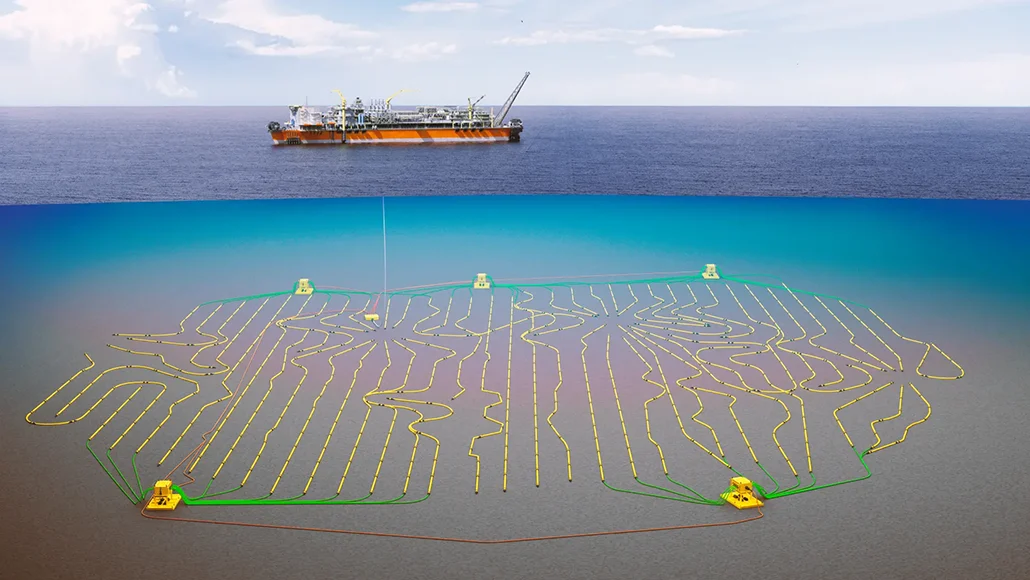
Petrobras, alongside its partners in the Libra Consortium, is committing approximately $450 million to what is described as the world’s most extensive seismic monitoring project. The initiative applies a technology comparable to an ultrasound of the seabed, enabling detailed visualization of geological structures and tracking the movement of fluids such as oil, gas, and water. At the core of the seismic monitoring project is a subsea infrastructure made up of a network of sensors and optical instruments designed to observe the behavior of the Mero field reservoir in the Santos Basin. Mero, recognized as one of Brazil’s main oil-producing fields, is currently advancing through its implementation and production expansion phase. In January 2026, output surpassed an average of 680,000 barrels per day each month, underlining its importance within the national energy landscape.
This seismic monitoring project, unprecedented in deepwater environments, is expected to generate critical datasets that deepen understanding of reservoir behavior and its evolution over time. Such insights are intended to support improved reservoir management and enhance oil recovery rates. The installation of a permanent network of seismic sensors on the seabed, referred to as PRM, or Permanent Reservoir Monitoring System, forms the backbone of the seismic monitoring project. By enabling optimized field management, the system is designed to maximize oil production without significantly increasing emissions, thereby contributing to a lower carbon footprint.
Progress on the seismic monitoring project has already advanced through its first phase, completed in March of this year, which involved installing more than 460 km of cables equipped with optical sensors across an area of 222 km². This system will monitor production activities linked to the FPSOs Guanabara (Mero 1) and Sepetiba (Mero 2), with initial data collection scheduled for the second quarter of 2026. Work is ongoing in the second phase, which includes laying an additional 316 km of seismographic cables over a further 140 km² tied to the FPSOs Duque de Caxias (Mero 3) and Alexandre de Gusmão (Mero 4), with completion expected next year. While platform-based computers will initially process seabed data, future plans include transmitting information via fiber optics to company headquarters. In parallel, Petrobras, working with UFRJ (Federal University of Rio de Janeiro), will apply Artificial Intelligence to continuously interpret PRM system data in the Mero area, supporting both scientific research and operational safety.
The Mero unitized field is situated within the Libra Block and is operated by Petrobras in collaboration with Shell Brasil Petróleo Ltda., Total Energies EP Brasil Ltda., CNPC, CNOOC Petroleum Brasil Ltda., and Pré-Sal Petróleo SA – PPSA, which serves as manager of the Production Sharing Contract and represents the Union in the adjacent area.
