







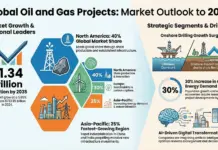
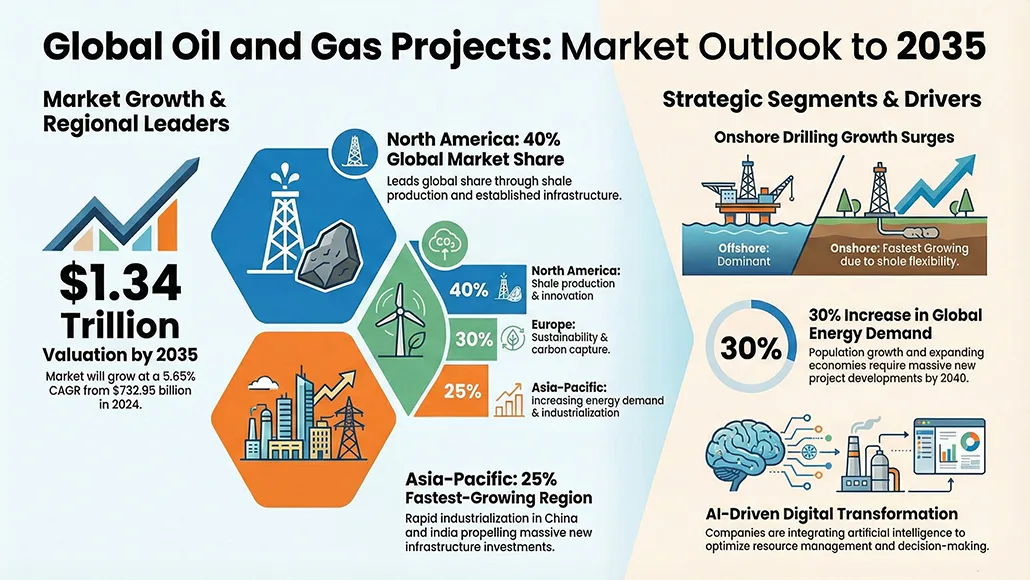
The global oil and gas projects market is entering a decade of significant transformation, characterized by steady capital appreciation and a strategic shift in operational focus. As the industry moves into the next phase of development, the market size is projected to grow from the projected value of 774.38 USD Billion in 2025 to an impressive 1341.93 USD Billion by 2035. This growth trajectory represents a compound annual growth rate (CAGR) of 5.6% during the forecast period from 2025 to 2035. This expansion is being fueled by a complex interplay of rising global energy needs, rapid technological integration, and a necessary evolution in regulatory compliance.
Strategic Market Drivers
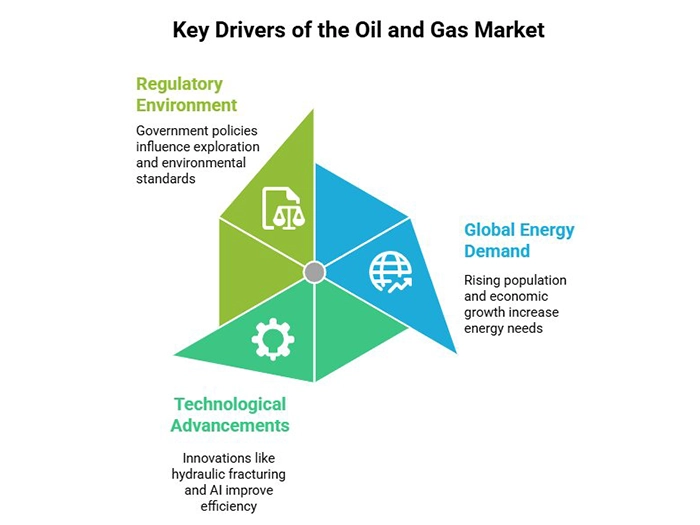
The primary catalyst for investment in the oil and gas projects market is the relentless rise in global energy demand. As populations grow and economies across the globe continue to expand, the fundamental need for reliable energy sources remains a top priority. Current projections suggest that total energy consumption could increase by as much as 30% by the year 2040. This surge is particularly evident in emerging markets where rapid industrialization is amplifying the requirement for consistent power and fuel sources. Consequently, massive capital investments are being directed toward expanding production capacities and building the necessary infrastructure to ensure long-term energy security.
Technological advancements are simultaneously reshaping the feasibility of extraction and processing. Innovation in drilling techniques, such as hydraulic fracturing and horizontal drilling, has fundamentally altered the industry by allowing operators to access vast reserves that were once considered unreachable. These improvements not only increase production levels but also enhance overall extraction efficiency. Furthermore, the integration of digital technologies, including data analytics and artificial intelligence, is streamlining operations and improving safety standards. These technological levers are expected to drive down long-term operational costs, making new projects more economically viable even in challenging environments.
The regulatory environment also serves as a critical driver for market direction. Governments worldwide are increasingly implementing policies aimed at achieving energy independence while maintaining strict environmental standards. These frameworks often dictate exploration practices, taxation structures, and emissions targets. While stricter regulations can present challenges, they also act as a stimulus for investment in cleaner, more efficient technologies. Favorable policies, such as tax incentives for exploration and infrastructure development, continue to encourage the launch of new projects in strategic regions.
Major Market Trends and Shifts
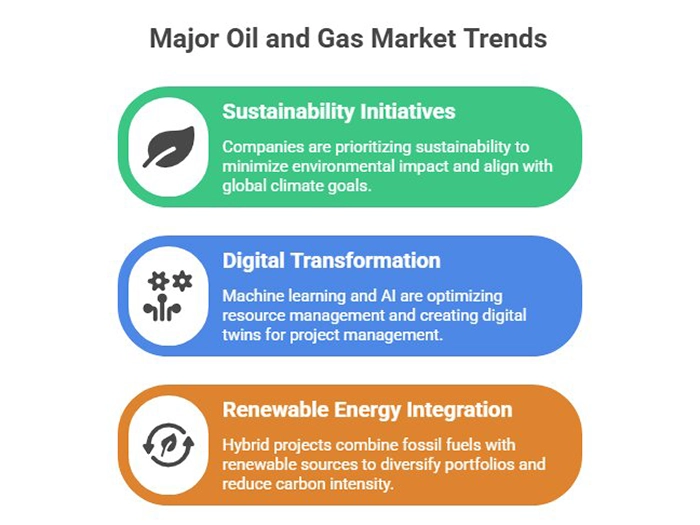
The oil and gas projects market is currently navigating a dynamic phase where sustainability and digital transformation are no longer optional. Oil & Gas Advancement observes that a prominent trend is the increasing prioritization of sustainability initiatives, with companies adopting practices that minimize their environmental footprint. This shift reflects a broader commitment to corporate social responsibility and a strategic move to align with global climate goals. There is a growing emphasis on “green” processes that enhance public perception and ensure compliance with evolving international standards.
Digital transformation has become a cornerstone of modern project development. The adoption of machine learning and advanced AI-driven analytics allows for the optimization of resource management and more informed decision-making. These tools are increasingly used to create “digital twin” solutions for project management, which enhance efficiency from the design phase through to decommissioning. This digital evolution is essential for maintaining competitiveness in a market that demands higher transparency and precision.
Another significant shift is the integration of renewable energy into traditional oil and gas operations. The market is witnessing the rise of hybrid projects that combine fossil fuel extraction with renewable sources like solar or wind power. This strategy allows companies to diversify their portfolios and reduce the carbon intensity of their operations. Such integration is becoming a key component of long-term survival as consumer preferences and government mandates move toward a lower-carbon energy mix.
Segmentation by Project Type
The infrastructure of the oil and gas projects market is divided into several specialized segments, each with distinct growth patterns and valuations.
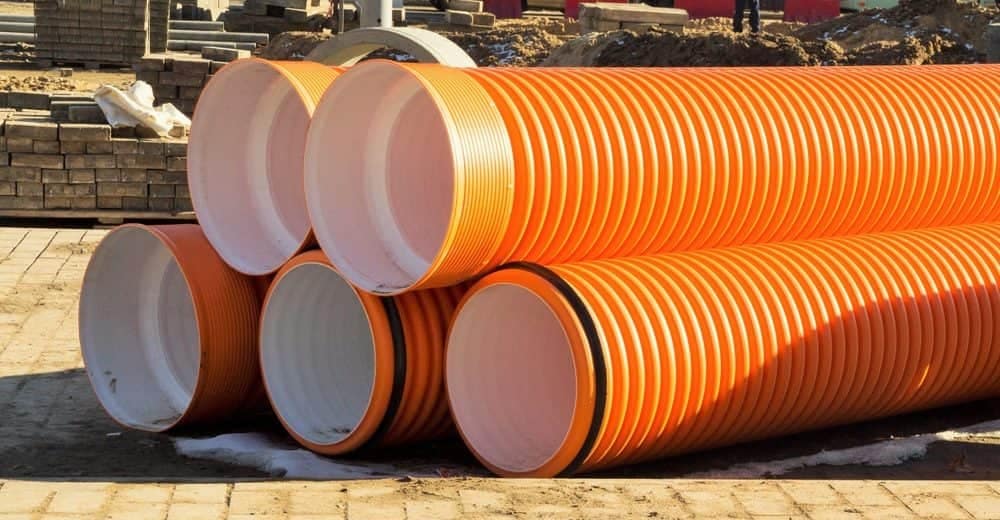
- Oil and Gas Pipelines: This segment currently dominates the market, holding the largest share due to its essential role in transporting crude oil and natural gas over vast distances. Its continued relevance is secured by the ongoing need for robust distribution networks and long-standing capital investments in midstream infrastructure.
- Gathering and Processing: Identified as the fastest-growing segment, gathering and processing is seeing a surge in investment driven by the need for efficient initial collection and treatment of resources. Innovations in processing technology are enhancing operational efficiencies at the start of the supply chain, making this a vital area for new project developments.
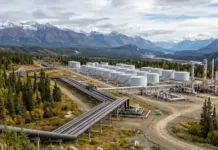
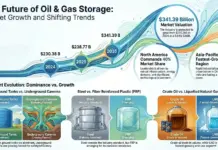
- Oil and Gas Storage: This segment is projected to grow significantly as energy security concerns lead to increased stockpiling and strategic reserve management.
- Refining and Oil Products: This segment is on a strong upward trajectory, after the oil and gas pipelines segment.
- Export Terminals: The importance of global trade is reflected in the growth of export terminals. The upward trend in this segment means the expanding role of liquefied natural gas (LNG) and international energy exports.
Segmentation by Drilling Method
The drilling landscape is split between offshore and onshore operations, each presenting unique opportunities and challenges.
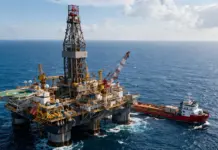
- Offshore Drilling: Traditionally the largest segment in terms of yield potential, offshore drilling focuses on tapping into vast reserves located beneath the seabed. While offshore projects benefit from high potential yields, they face higher operational costs and more stringent environmental regulations.
- Onshore Drilling: This segment is emerging as a rapid growth leader, largely due to the booming shale market. The flexibility, lower initial costs, and advancements in horizontal drilling make onshore projects highly attractive for meeting immediate energy demands.
Regional Market Insights
The global distribution of projects reveals a market led by established powers but fueled by emerging economies.
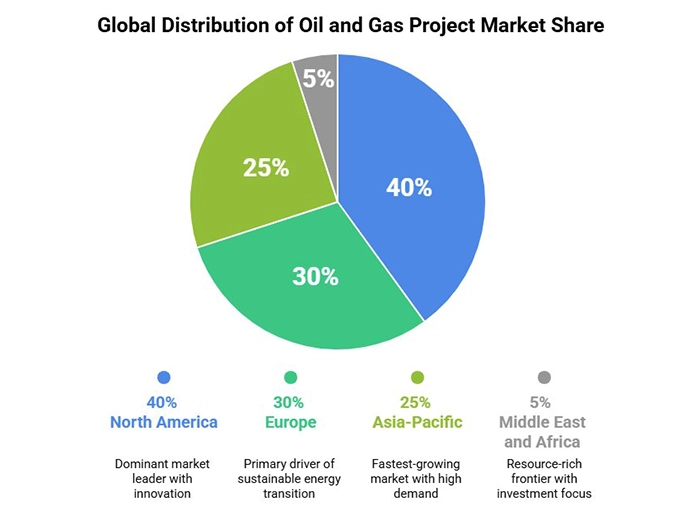
- North America: Remaining the global leader, North America holds approximately 40% of the market share. Its dominance is sustained by technological innovation in shale extraction, strong regulatory support for energy independence, and high domestic demand. The region is also at the forefront of integrating renewable energy and carbon capture technologies into traditional operations.
- Europe: As the second-largest market with a 30% share, Europe is the primary driver of the sustainable energy transition. Projects in this region are heavily influenced by the EU’s Green Deal, focusing on offshore wind, carbon capture, and energy efficiency.
- Asia-Pacific: This region is the fastest-growing market, currently holding about 25% of the global share. Rapid industrialization and urbanization in major economies are creating an insatiable demand for energy infrastructure, making Asia-Pacific a focal point for international investment.
- Middle East and Africa: While holding a smaller 5% share of new project development volume, this region remains a critical resource-rich frontier. Investment is focused on maximizing production from vast oil reserves while beginning to navigate the transition toward more diversified and sustainable energy sources.
Future Outlook to 2035
The future of the market is defined by resilience and adaptation. Between 2025 and 2035, new opportunities will emerge in the development of carbon capture and storage (CCS) technologies, which are essential for meeting net-zero targets. The expansion of digital twin solutions and AI-integrated management will become standard practice to ensure project viability in a volatile geopolitical climate. Furthermore, the continued integration of renewable energy will likely lead to a market dominated by hybrid energy hubs rather than isolated fossil fuel sites. As per the forecast, Oil & Gas Advancement believes that by 2035, the market is expected to be robust, driven by a strategic balance of traditional extraction and innovative, sustainable energy management.
