







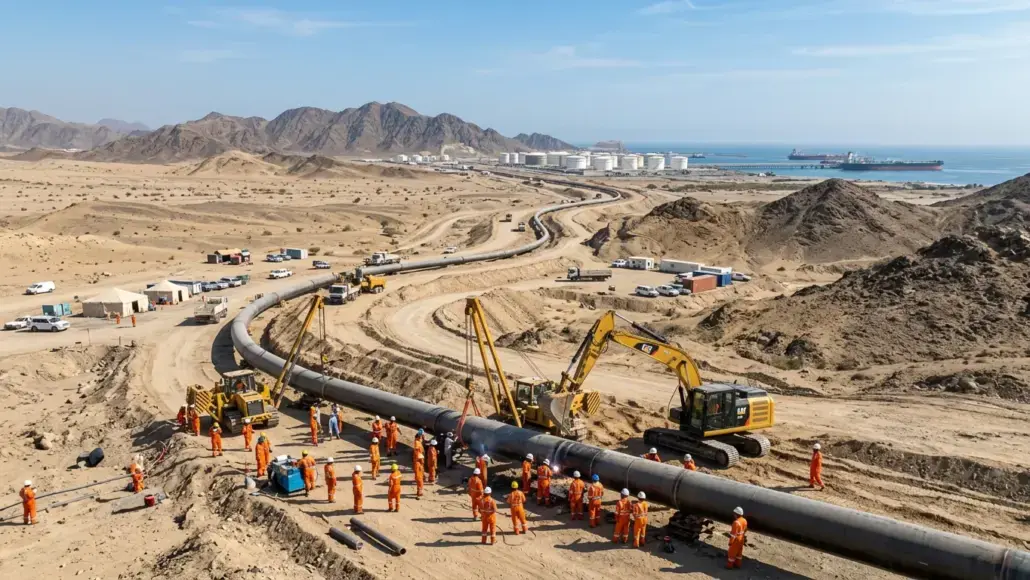
The United Arab Emirates (UAE) has announced its intention to finalize a second oil pipeline designed to circumvent the Strait of Hormuz by the year 2027. This strategic infrastructure development is being undertaken amidst ongoing regional tensions that have consistently impacted global energy markets. The initiative gains further significance as current disruptions impacting the Strait of Hormuz approach an eleventh week. Prior to the onset of regional conflicts, approximately 20% of the world’s seaborne oil and gas trade transited through this narrow maritime chokepoint. The persistent disruptions have precipitated a sharp escalation in oil prices and have placed considerable economic strain on Gulf nations.
The construction of the second oil pipeline is a core component of the UAE’s broader strategy to diminish its reliance on the Strait of Hormuz. This waterway, situated between Iran and Oman, is a crucial artery for a substantial volume of global oil shipments. Identified as the West-East Pipeline, the project will operate in conjunction with the UAE’s existing Habshan-Fujairah pipeline, also known by its acronym, ADCOP.
The established Habshan-Fujairah pipeline already facilitates the transport of crude oil from the extensive Habshan oil fields in Abu Dhabi to the port city of Fujairah, located on the Gulf of Oman. Spanning nearly 380 kilometers (approximately 235 miles) across the desert landscape, this pipeline offers the UAE a vital alternative for oil exports, reducing its complete dependence on the Strait of Hormuz. Currently, the existing pipeline possesses the capacity to move between 1.5 to 1.8 million barrels of oil daily.
The forthcoming second oil pipeline is projected to effectively double the UAE’s existing export capacity. Upon the full operationalization of both pipelines, the UAE is expected to possess the capability to transport approximately 3.6 million barrels of oil per day directly to Fujairah, thereby completely bypassing the Strait of Hormuz. Construction on this significant infrastructure project is already underway.
The announcement of the expanded pipeline capacity comes shortly after the UAE’s departure from the Organization of the Petroleum Exporting Countries (OPEC) after a 60-year membership. This decision was widely interpreted as an indicator of escalating tensions between Abu Dhabi and Riyadh. Saudi Arabia, historically the influential leader within OPEC, has generally advocated for production caps to sustain elevated oil prices. In contrast, the UAE appears keen to increase its oil output as market conditions become more favorable. Effective 1st May 2026, the UAE is no longer bound by OPEC’s production quotas and is free to adjust its output based on its strategic objectives and market demand. Reports suggest that the country has the immediate capacity to increase its daily oil production by approximately 1 million barrels.
Other nations in the Gulf are closely observing the UAE’s strategic moves regarding alternative export routes. Saudi Arabia already possesses alternative pipelines that enable a portion of its oil exports to bypass the Strait of Hormuz. However, the current geopolitical climate has prompted many regional countries to more seriously consider reducing their reliance on this single, narrow maritime passage. The second pipeline will also serve as a critical safeguard for the UAE should the regional conflict persist beyond anticipated timelines. Even in the event of a peace agreement, there remain concerns that the unimpeded transit of oil tankers through the Strait of Hormuz may not fully resume its pre-disruption levels for some time. By expanding its pipeline infrastructure, the UAE is positioning itself to continue pursuing its export growth objectives irrespective of these broader geopolitical uncertainties.
