








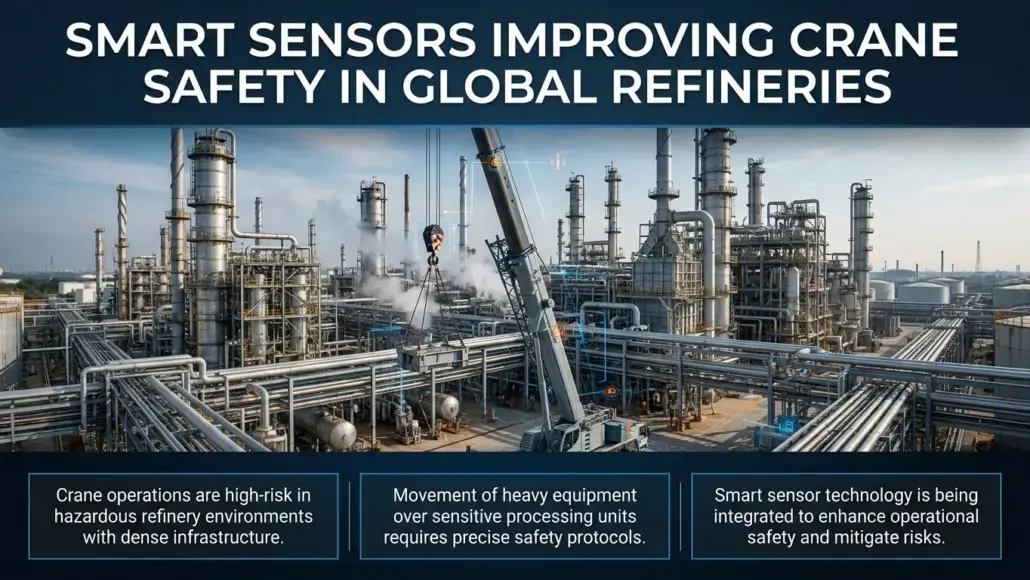
The operational landscape of a modern oil refinery is one of the most hazardous industrial environments on the planet. Characterized by a dense network of high-pressure pipelines, volatile chemicals, and towering distillation units, every action taken within these facilities is scrutinized under the lens of safety. Among the many critical activities, crane operations stand out as a particularly high-risk endeavor. The movement of heavy maintenance equipment or new structural components over sensitive infrastructure requires surgical precision. In this context, the integration of smart sensors into crane systems has become a game-changer, providing a digital layer of protection that significantly improves crane safety in global refineries. These advanced systems do not just monitor. They actively intervene, turning cranes into intelligent assets capable of navigating the complex refinery maze with unprecedented security.
The deployment of crane sensor safety systems is a response to the inherent limitations of human observation in large-scale industrial settings. Even the most experienced operator can be hampered by blind spots, poor weather conditions, or the sheer cognitive load of managing a multi-ton load amidst a sea of obstacles. Smart sensors bridge this gap by providing a 360-degree awareness of the environment. Oil & Gas Advancement notes that by utilizing a combination of radar, LiDAR, and ultrasonic technologies, these sensors feed real-time data into the crane’s control system, allowing for instantaneous adjustments that prevent collisions and structural overloads. This shift toward sensor-driven safety is not merely a technical upgrade. It represents a fundamental change in the refinery’s approach to risk management.
The Technological Evolution of Refinery Crane Operations
The transition from purely mechanical lifting to sensor-enhanced operations has been driven by the rapid maturation of the Internet of Things (IoT). In the past, crane safety was largely dependent on the visual cues of a signalperson and the manual skill of the operator. Today, global refineries are adopting a more holistic technological framework. Modern cranes are equipped with a suite of sensors that monitor everything from the angle of the boom to the tension in the hoist lines. This evolution has transformed the crane from a standalone piece of machinery into a node within a larger, interconnected digital ecosystem. This network often serves as the data foundation for digital twins securing heavy lifting in modern oil fields, where sensor inputs are mapped to virtual models to provide predictive insights into structural health.
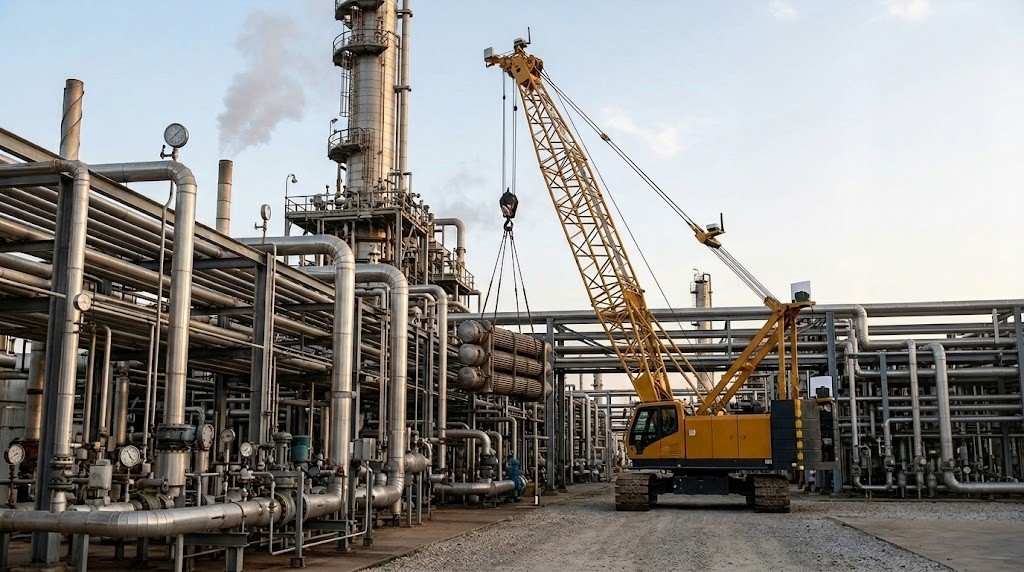 This technological evolution is particularly evident in the way data is processed and utilized. Previously, data might be collected but was rarely used in a real-time, proactive manner. Now, sophisticated algorithms analyze sensor inputs at lightning speed, identifying patterns that indicate potential hazards. For example, if a sensor detects a sudden gust of wind that exceeds the crane’s safe operating limits, the system can automatically stabilize the load or restrict further movement. This level of automated responsiveness is a hallmark of how smart sensors are improving crane safety in global refineries, ensuring that safety protocols are upheld even when human reaction time might falter.
Wireless Sensor Networks and Connectivity
One of the most critical components of modern crane sensor safety systems is the establishment of robust wireless sensor networks. In a refinery setting, laying physical cables to every sensor point is often impractical and cost-prohibitive. Wireless technology allows for the deployment of a high density of sensors across the crane structure without the need for extensive wiring. These sensors communicate via low-latency protocols, ensuring that the information reaches the control unit in milliseconds. This connectivity is the lifeline of the safety system, allowing for the seamless flow of data from the hook to the operator’s cabin and beyond to a centralized safety dashboard.
Furthermore, the connectivity of these sensors allows for remote monitoring and diagnostics. Maintenance teams can access the real-time status of a crane from anywhere in the facility, or even from a central hub halfway across the world. This means that a technician can identify a malfunctioning sensor or a worn-out component before the crane is ever deployed for a lift. By ensuring that the crane’s digital nervous system is always in peak condition, refineries can avoid the catastrophic consequences of a safety system failure during a critical operation. The reliance on wireless networks underscores the importance of cybersecurity, as these data paths must be protected from interference to maintain the integrity of the safety net.
Automated Collision Avoidance and Proximity Detection
The most visible impact of smart sensors in refinery operations is the implementation of automated collision avoidance systems. Refineries are often extremely crowded, with narrow access paths and overhead obstructions that change as maintenance projects progress. Sensors equipped with LiDAR (Light Detection and Ranging) can create a real-time 3D map of the crane’s surroundings, identifying the exact location of nearby equipment, pipes, and personnel. If the boom or the load enters a pre-defined safety buffer, the system can provide visual and audible warnings to the operator.
In more advanced setups, proximity detection sensors can trigger an automatic soft stop or a speed reduction if a collision is imminent. This is particularly valuable during blind lifts, where the operator cannot see the load and must rely entirely on external signals. The sensor system provides a secondary, objective set of eyes that cannot be distracted or fatigued. By significantly reducing the margin for human error, these automated systems provide a level of security that was previously unattainable, ensuring that heavy lifting projects can be completed in tight quarters without endangering the refinery’s critical infrastructure.
Data-Driven Risk Management and Compliance
Beyond the immediate prevention of accidents, the data generated by crane sensor safety systems is a goldmine for long-term risk management. Every movement, load weight, and safety alert is recorded in a digital log. This wealth of information allows refinery managers to analyze operational trends and identify areas where safety can be further improved. For instance, if a specific area of the refinery consistently triggers proximity alerts, management can investigate whether the workspace layout needs to be adjusted or if additional training is required for the operators working in that zone.
This data-driven approach also simplifies the complex task of regulatory compliance. Refineries are subject to stringent safety standards from organizations like OSHA and various international bodies. Traditionally, documenting compliance required a mountain of paperwork and manual record-keeping. Smart sensors automate this process, creating an immutable audit trail of every lift performed. This not only makes inspections faster and more accurate but also provides proof that the refinery is taking proactive steps to maintain the highest safety standards.
Real-Time Monitoring and Alerting Protocols
The efficacy of a safety system is only as good as its ability to communicate with the people who need the information. Modern crane sensor safety systems utilize intuitive interfaces to provide operators with clear, actionable data. Instead of being overwhelmed by a barrage of raw numbers, operators see a simplified representation of their safety zone. Critical alerts are prioritized, ensuring that the most urgent information—such as a sudden overload or a high-wind warning—is immediately addressed. This user-centric design is crucial in high-stress environments where a split-second decision can make all the difference.
In addition to the operator’s cabin, these alerts can be broadcast to ground crews and site safety officers. If a sensor detects that a load is swaying dangerously, a warning can be sent to the smartphones or wearable devices of everyone in the immediate area. This multi-layered alerting protocol ensures that safety is a collective effort, with technology acting as the central coordinator. By keeping everyone informed in real time, refineries can create a transparent safety environment where potential hazards are visible to everyone involved, not just the crane operator.
Enhancing Regulatory Compliance through Automated Logging
The transition to automated logging marks a significant shift in industrial accountability. In the event of a near-miss or an incident, investigators can reconstruct the event with pinpoint accuracy using the data from the crane sensor safety systems. They can see exactly what the sensor was detecting, how the machine responded, and what inputs the operator provided in the seconds leading up to the event. This level of forensic detail is invaluable for identifying the root causes of problems and implementing corrective actions to prevent recurrence.
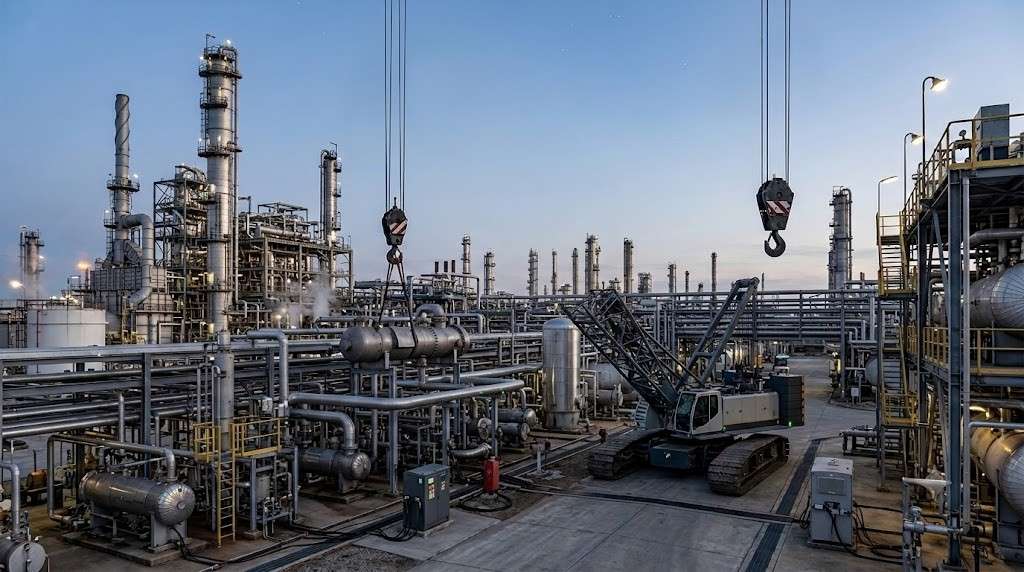
Moreover, automated logging helps in managing the certification and maintenance cycles of the lifting equipment. The system can track the working class of the crane based on actual usage, ensuring that structural inspections are performed when they are truly needed, rather than just on a calendar basis. This ensures that the equipment is always fit for purpose, reducing the risk of structural failure due to fatigue. For refinery operators, this means less downtime and a more robust safety profile, as they can prove to regulators and insurers that their assets are being managed with the highest degree of diligence.
Intelligent Sensor Networks Elevating Refinery Crane Operations
The Economic and Human Impact of Sensor Integration
While the primary driver for integrating smart sensors is safety, the economic benefits are equally compelling. A single major accident in a refinery can result in billions of dollars in damage, environmental cleanup costs, and lost production time. By preventing even one such incident, a crane sensor safety system pays for itself many times over. Furthermore, the increased efficiency gained from more precise lifting and reduced downtime for manual checks contributes to the refinery’s overall profitability. Technology, in this case, serves as both a protector of life and a driver of business continuity.
However, the most profound impact is on the workforce. Knowing that they are supported by a state-of-the-art safety system reduces the stress and fatigue associated with high-stakes crane operations. It fosters a culture of confidence where workers feel protected by their equipment. In an industry that often struggles to attract and retain skilled labor, providing a safer, technologically advanced workplace is a major advantage. Oil & Gas Advancement believes that by improving crane safety in global refineries, smart sensors are not just protecting pipes and distillation towers. They are ensuring that the men and women who keep our energy systems running can return home safely at the end of every shift.
References
- Shaping the next generation of crane technology—one update at a time
