









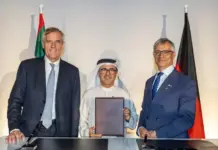






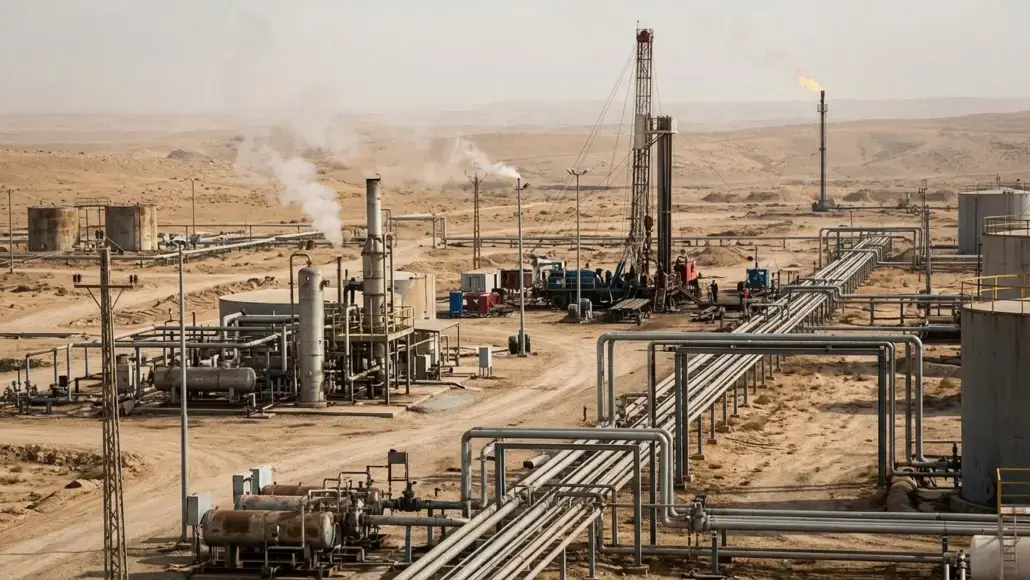
Iraqi Oil Minister Basim Khudair met with representatives from Chevron to discuss potential areas of cooperation aimed at supporting the ministry’s strategy to increase oil production and strengthen infrastructure development. The discussions took place during an official visit to Washington by an Iraqi delegation led by Iraq’s Prime Minister Ali al-Zaidi, where meetings with American officials are being held to reinforce bilateral relations.
According to a statement issued by the Oil Ministry, Khudair held talks with Chevron’s head of corporate business development, Jake Spiering, on opportunities for cooperation between the ministry and the U.S.-based company. The meeting also examined approaches to broaden collaboration in developing Iraq’s oil and gas sectors while supporting future oil production objectives. Khudair highlighted the ministry’s determination to work closely with leading international companies in pursuit of shared goals and the implementation of major projects across Iraq’s oil and gas industry.
Chevron representatives, in turn, expressed their interest in strengthening cooperation with Iraq and evaluating potential investment opportunities in the oil and gas sectors, reaffirming the company’s intention to expand its activities within the Iraqi market.
Existing Agreements and Future Contract Discussions
Earlier in July 2026, the Iraqi cabinet approved the state-owned Basra Oil Company (BOC) to sign a preliminary agreement and non-disclosure agreement with a consortium comprising US-based Capital TI and Chevron, together with Qatar’s UCC, for the construction of strategic oil pipelines. According to the Prime Minister’s Office (PMO), the consortium will conduct technical and financial feasibility studies comparing the Basra-Haditha-Kirkuk-Ceyhan and Basra-Haditha-Baniyas routes.
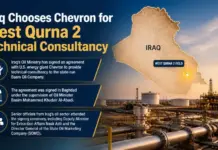
The discussions build on agreements signed by the Iraqi Oil Ministry and Chevron in February 2026 to oversee and develop major hydrocarbon resources in the country. Under the first agreement, Chevron acquired Russia-based Lukoil’s share in Iraq’s West Qurna-2 oil field, one of the largest oil resources in Iraq and globally. A second agreement was signed between Chevron, Iraq’s Dhi Qar Oil Company, and North Oil Company (NOC) to develop the Nasiriyah oil field, four exploration blocks in the southern Iraqi province of Dhi Qar, and the Balad oil field in Salah al-Din province, supporting future oil production efforts.
The negotiations between Chevron and the Iraqi Oil Ministry are intended to improve the terms of the contract, with discussions focusing on profit margins, revenue-sharing arrangements, capital spending caps, and greater operational flexibility. Chevron reiterated its commitment to expanding long-term partnerships with the Iraqi government to effectively develop oilfields across the country.
