




















The escalating urgency of climate change has amplified the call for comprehensive and innovative solutions capable of tackling greenhouse gas emissions on a monumental scale. While renewable energy sources and energy efficiency measures are foundational to our decarbonization efforts, there remains a critical gap, particularly within heavy industrial sectors, where direct electrification or fuel switching proves challenging or cost-prohibitive. It is within this complex landscape that carbon capture and storage (CCS) has emerged from the realm of experimental pilot projects and theoretical discussion to become an increasingly indispensable component of global climate strategies, now rapidly transitioning to commercial scale.
For years, the concept of capturing carbon dioxide emissions from large point sources, transporting it, and safely storing it permanently underground seemed an ambitious, even futuristic, endeavor. Today, however, we are witnessing a profound shift. Governments, industries, and investors alike are converging to realize the potential of CCS, unlocking substantial funding, accelerating the expansion of vital infrastructure, and providing heavy industries with a robust pathway to dramatically cut their carbon footprint. Oil & Gas Advancement sees this evolution as a pivotal moment, signaling that CCS is no longer just an option but a strategic imperative in the race towards net-zero emissions.
The Indispensable Role of CCS in Decarbonization
The global commitment to limit warming to well below 2 degrees Celsius, preferably to 1.5 degrees Celsius, necessitates an unprecedented transformation of our energy and industrial systems. While advancements in renewable energy technologies have been remarkable, certain sectors, such as cement production, steel manufacturing, chemical plants, and even some forms of power generation, present unique challenges. These industries often rely on high-temperature processes or emit CO2 as an inherent part of their chemical reactions, making direct electrification difficult. Here, industrial decarbonization becomes a complex puzzle that CCS is uniquely positioned to solve.
Relying solely on renewables, while crucial, may not be sufficient to abate all emissions. The Intergovernmental Panel on Climate Change (IPCC) and other leading climate authorities consistently highlight that CCS will play a significant role in achieving global climate targets, especially in scenarios that limit warming to 1.5°C. It serves as a pragmatic bridge, allowing existing, essential industries to continue operating while dramatically reducing their environmental impact, thereby buying critical time for more radical technological shifts or allowing these industries to evolve sustainably. Without CCS, the pathway to deep emissions reductions in these hard-to-abate sectors becomes considerably more arduous and costly, underscoring its indispensable nature.
From Early Ventures to Established Methodologies
The journey of carbon capture and storage began decades ago with foundational research and small-scale demonstrations. Early efforts focused on understanding the physics and chemistry of capturing CO2 from flue gases, the challenges of transporting it, and, crucially, identifying secure geological formations for CO2 storage. These formative years were characterized by meticulous experimentation, slowly building the technical confidence required for larger applications. Initial CCS projects often faced significant hurdles, from technical complexities to the high costs associated with nascent technologies.
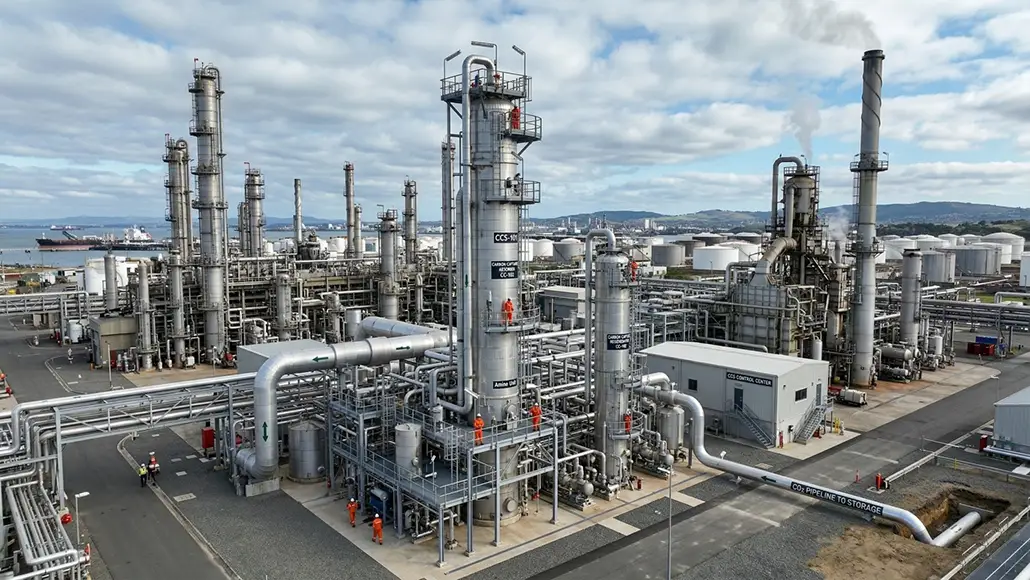
Over time, the core components of CCS, capture, transport, and storage, have matured significantly. Capture technologies have evolved, encompassing post-combustion (where CO2 is separated from exhaust gases after combustion), pre-combustion (capturing CO2 before combustion, often from gasification processes), and oxy-fuel combustion (burning fuel in pure oxygen to produce a concentrated CO2 stream). The transport of CO2, often via pipelines, benefits from decades of experience in natural gas and oil pipeline networks. Most importantly, the science behind geological CO2 storage has advanced, with extensive research confirming the long-term safety and security of storing CO2 in deep saline aquifers, depleted oil and gas reservoirs, and unmineable coal seams. Projects like Boundary Dam in Canada and Gorgon in Australia, despite their own learning curves, demonstrated the viability of integrated, large-scale CCS operations, paving the way for the current wave of commercial deployment.
The Catalysts for Commercial Scale CCS
The current acceleration of carbon capture and storage towards widespread commercial scale CCS is driven by a potent confluence of factors, ranging from robust policy frameworks to evolving market demands and technological breakthroughs.
The most significant driver has arguably been the introduction of supportive policy and regulatory frameworks. Governments worldwide have recognized the strategic importance of CCS and have begun implementing incentives such as tax credits (like the enhanced 45Q tax credit in the United States), grants, and carbon pricing mechanisms. These policies significantly improve the economic viability of CCS projects by offsetting the initial capital costs and providing a predictable revenue stream for captured carbon. Such governmental backing provides the necessary de-risking for investors and fosters an environment conducive to large-scale infrastructure development.
Simultaneously, industrial demand for decarbonization pathways has intensified. Major players in sectors like steel, cement, chemicals, and fertilizers are facing increasing pressure from shareholders, regulators, and consumers to reduce their emissions. Many have set ambitious net-zero targets that cannot be met without the inclusion of CCS. For these industries, CCS represents a viable, often the only, path to maintain competitiveness while meeting their environmental responsibilities. This creates a strong pull factor for the technology, translating into numerous project announcements and collaborations.
Furthermore, technological maturity and cost reduction have played a pivotal role. Continuous research and development have led to more efficient capture technologies, improved solvent performance, and optimized operational processes. As more CCS projects move forward, economies of scale are realized, and supply chains become more robust, contributing to a downward trend in per-tonne capture costs. Alongside this, significant private sector investment and funding have flowed into the CCS space, fueled by environmental, social, and governance (ESG) considerations, green financing initiatives, and the recognition of CCS as essential clean energy infrastructure. Early applications like Enhanced Oil Recovery (EOR), where injected CO2 helps extract more oil while being stored underground, have also provided an early revenue stream for some projects, further accelerating deployment.
Navigating the Challenges of Scaling Up
Despite the growing momentum, the journey to fully scalable commercial scale CCS is not without its challenges. Addressing these hurdles effectively is paramount to realizing the technology’s full potential.
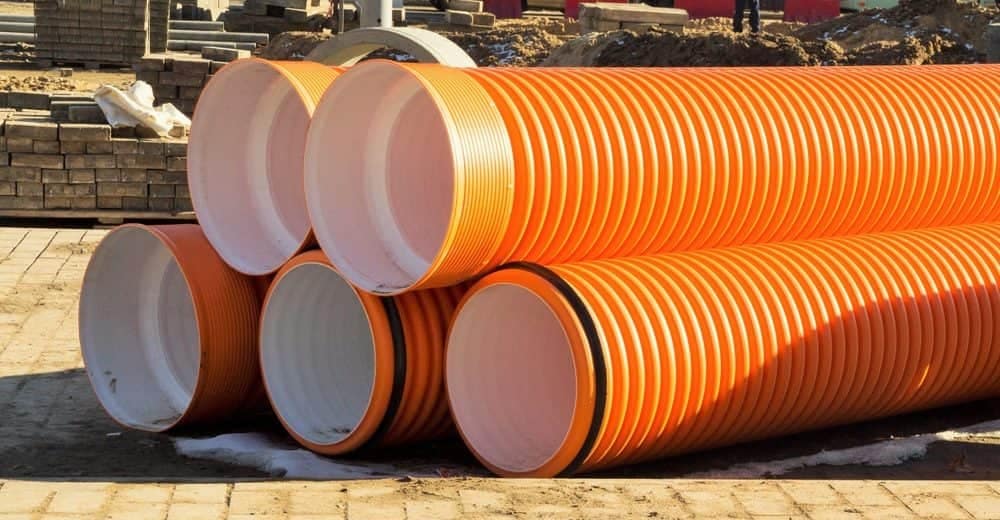
One primary concern remains cost. While costs are decreasing, the upfront capital expenditure for building capture facilities and associated infrastructure is still substantial. This necessitates continued policy support, innovative financing mechanisms, and further technological advancements to drive costs down. Related to this is the challenge of infrastructure development. Building extensive CO2 pipeline networks to transport captured carbon from industrial emitters to secure CO2 storage sites (such as deep saline aquifers or depleted gas fields) requires significant investment, complex planning, and streamlined permitting processes. The logistical undertaking is immense and often crosses jurisdictional boundaries.
Public perception and acceptance also represent a crucial challenge. Concerns about the safety of CO2 transport pipelines and the long-term security of geological storage sites can lead to local opposition (“Not In My Backyard” or NIMBY issues). Effective public engagement, transparent communication, and a demonstrable track record of safety are essential to build trust and ensure community buy-in. Robust measurement, reporting, and verification (MRV) protocols are vital to assure stakeholders that CO2 is indeed permanently and safely stored, preventing leakages and upholding environmental integrity.
Finally, the patchwork of existing legal and regulatory frameworks for CO2 transport and storage can impede progress. Establishing clear guidelines for pore space ownership, liability, and cross-border CO2 movement is critical for the seamless deployment of large-scale CCS projects. International collaboration and harmonization of standards will be key to facilitating the global growth of this essential clean energy infrastructure.
Industries at the Forefront of CCS Adoption
Several heavy industries, characterized by their significant process emissions, are leading the charge in adopting carbon capture and storage technologies as a core strategy for their industrial decarbonization.
The cement and steel sectors are prime examples. Producing cement, a key ingredient in concrete, involves calcination, a chemical reaction that inherently releases CO2 regardless of the energy source used. Similarly, traditional steelmaking processes, particularly blast furnaces, produce vast amounts of CO2. For these industries, CCS offers one of the most viable and immediate pathways to dramatically reduce their carbon footprint, often representing 70-90% of their total emissions. Companies are investing in capture technologies integrated directly into their production lines, aiming to decarbonize these foundational materials.
The chemical and petrochemical industries also present significant opportunities for CCS. These sectors utilize fossil fuels both as feedstock and for energy, resulting in substantial emissions. Capturing CO2 from these complex processes is technically challenging but increasingly feasible, offering a pathway to produce essential chemicals with a much lower carbon intensity.
While renewable energy dominates new power generation capacity, power generation with CCS still holds relevance, particularly for natural gas-fired power plants. These plants can provide reliable, dispatchable power, and when coupled with CCS, they offer a low-carbon energy source that complements intermittent renewables, enhancing grid stability and accelerating overall emissions reduction.
Looking beyond traditional point-source capture, carbon removal technology like Direct Air Capture (DAC) and Bioenergy with CCS (BECCS) are gaining traction as complementary solutions. DAC extracts CO2 directly from the atmosphere, while BECCS combines biomass energy production with CCS, resulting in net-negative emissions. These technologies will be crucial for removing historical or hard-to-abate emissions that cannot be prevented at the source, contributing significantly to achieving net-zero targets.
The Future Trajectory
The trajectory for carbon capture and storage is clear: accelerated scaling and deeper integration into a broader clean energy infrastructure. We are moving towards a future where CCS is not a standalone solution but a key component of interconnected industrial ecosystems.
A significant trend is the emergence of CCS hubs and clusters. These initiatives involve multiple industrial emitters in a concentrated geographical area sharing common CO2 transport pipelines and large-scale CO2 storage sites. This approach offers significant cost efficiencies, reduces individual project risks, and streamlines permitting processes. Regions with suitable geology and existing industrial activity are rapidly developing these clusters, becoming focal points for commercial scale CCS deployment.
As the technology matures, we can anticipate further innovation in capture methods, potentially leading to even lower costs and higher efficiencies. Solid sorbents, membrane technologies, and novel solvent development are continually advancing. Furthermore, the global nature of climate change demands international cooperation. Collaborative efforts, knowledge sharing, and harmonized regulations across borders will be essential to deploy CCS at the speed and scale required.
Ultimately, carbon capture and storage is poised to become an indispensable tool in the global fight against climate change. Its transition from a promising concept to a commercially viable and rapidly expanding technology underscores a renewed determination to achieve ambitious decarbonization goals. While challenges persist, the concerted efforts of governments, industries, and researchers are steadily paving the way for CCS to play a foundational role in building a sustainable, low-carbon future. The era of commercial scale CCS has truly arrived, offering a vital lifeline to industries striving for deep emissions reduction and contributing profoundly to the resilience of our planet.
