

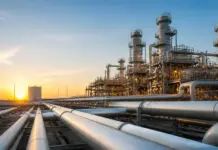
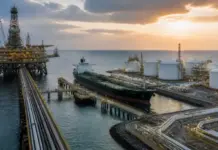



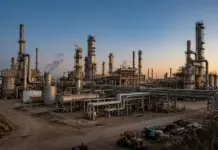
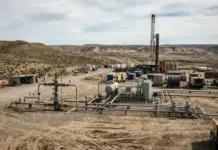
Southern Union, a Houston-based natural gas company, completed the Infrastructure Enhancement Project (IEP) of its Trunkline LNG terminal in March 2010. Situated in Lake Charles, Louisiana, it is the biggest import terminal in the US. The terminal is operated by Trunkline LNG and its capacity is fully contracted to BG LNG Services until 2030.
The IEP added ambient air vaporisation units and a natural gas liquids (NGL) extraction plant to the terminal. Southern Union announced the $430m Trunkline project in April 2006. With the completion of the project, the terminal became the first such facility in the US to use AVU technology.
Construction and infrastructure
Southern Union received approval to carry out the IEP in December 2006 and construction activities began in February 2007.
About 33.1 acres of land were required for the IEP. The project added four AVUs to help increase fuel efficiency and generate cost savings.
Construction of the NGL facility added processing facilities for LNG conditioning. The NGL facility will help in extracting butane, propane, ethane and other heavier hydrocarbons from the LNG. It will also help BG widen its LNG supply sources and import LNG from various locations.
“Southern Union announced the $430m Trunkline project in April 2006.”
Other facilities added as part of the project included 64 air heaters and two 1,160ft, 12in diameter product piping for ethane and propane, two propylene glycol heaters and a glycol storage and a circulation system.
In addition, two electrical switchgear buildings, one remote instrumentation building and a foam building were added to the existing facilities.
Southern Union also expanded the existing electric substation and a meter station. Two 18 mile take-away pipelines from the NGL were also constructed. The two pipelines include a 10in diameter ethane pipeline and a 6in diameter propane pipeline.
Trunkline contractors
Mustang Engineering was awarded the engineering, procurement and construction contract and provided its LNG Smart Vaporisation process technology for the project.
BG hired PetroLogistics to design, construct and operate the meter station and the two pipelines. The pipelines extend from the meter station at the terminal to PetroLogistics storage facility in Louisiana.
Developments at Lake Charles
Construction of the Trunkline LNG terminal began in 1978 over a 382 acre site near Lake Charles. Construction was completed in 1981 with a send-out capacity of 630mcf per day, 6.3bcf per day of storage and three LNG storage tanks.
“Mustang Engineering provided its LNG Smart Vaporisation process technology.”
Since its construction, the Trunkline LNG terminal has been expanded in two phases. The IEP was supplemental to these expansions.
Phase I began in 2002 and expanded the send-out capacity to 1.2bcf per day and peak send-out capacity to 1.5bcf per day. A second ship berth and a fourth LNG storage tank were also constructed.
Installation of the LNG tank increased the terminal storage capacity to 9bcf per day. The phase I expansion was completed in April 2006.
The second phase of expansion, which started in 2003, boosted the send-out capacity to 1.8bcf per day and the peak send-out capacity to 2.1bcf per day. Phase II also included the addition of unloading facilities at the plant. The expansion was completed in July 2006.
Trunkline technology
“Since its 1978 construction, the Trunkline LNG terminal has been expanded in two phases.”
The AVUs installed at the terminal use Mustang Engineering’s LNG Smart Vaporisation process to regasify the LNG. The process uses heat from the air to warm an intermediate fluid (potassium formate), which converts LNG into natural gas. This process helps to reduce the hydrocarbon fuel required to regasify the LNG.
The vaporisation technology is environmentally friendly because it does not use hydrocarbon fuel to heat water and regasify the LNG. This in turn reduces air emissions.
The four new AVUs are the primary vaporisers for the plant. The existing 14 submerged combustion vaporisers, however, have been retained to enable operations when weather conditions are not conducive for use of the ambient-air technology.
Trunkline LNG Lake Charles Terminal, Louisiana, United States of America
AI Summary