













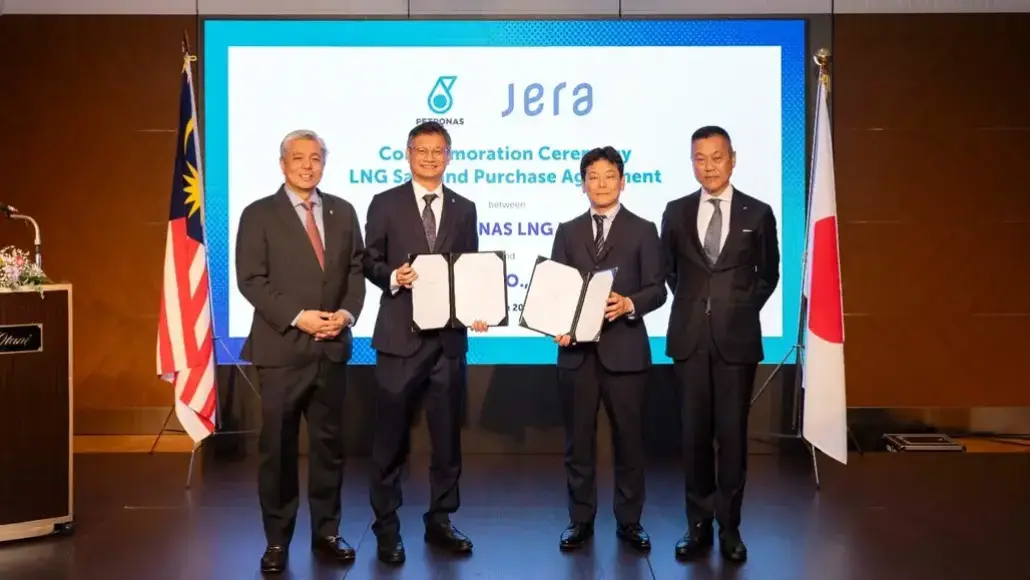
Japan’s JERA has entered into a significant liquefied natural gas (LNG) supply contract with Malaysia’s state-owned major, Petronas. This LNG supply agreement is set to span a period of 20 years, with deliveries slated to begin in 2028. The development underscores Japan’s ongoing efforts to secure stable energy sources in an increasingly unpredictable global landscape.
Following a meeting with Malaysia’s Premier, Anwar Ibrahim, and the announcement of the LNG supply agreement, Japan’s Prime Minister Sanae Takaichi said, “Amid growing uncertainty in the international energy situation, cooperation with Malaysia, a stable supplier of LNG to Japan, is becoming increasingly important.”
As one of the world’s most energy import-dependent nations, Japan has historically relied heavily on supplies from the Middle East. Recent geopolitical events have prompted a concerted effort to secure alternative energy provisions.
The LNG supply agreement is a substantial component of this strategy, with the contract covering 2 million tons of liquefied gas annually. This adds to other supply agreements JERA has recently established, demonstrating a proactive approach to meeting its energy needs. The company, recognized as the largest buyer of LNG globally, has previously outlined plans to significantly increase its purchases from the United States, aiming to procure up to 5.5 million tons annually. Such an expansion would represent a 10% increase in its current U.S. imports, potentially accounting for one-third of its total LNG procurement.
Malaysia holds a prominent position in Japan’s LNG import portfolio, serving as the second-largest supplier after Australia. Currently, Malaysia contributes approximately 15% of Japan’s total LNG imports. The nation’s energy demand is experiencing a notable rise, driven in part by seasonal factors such as summer temperatures that increase the need for air-conditioning, even with fluctuating prices. Reports suggest that Japan could face an LNG shortage if it does not manage to secure sufficient supply or enhance its coal-fired power generation capacity further. This situation has already compelled Japan, along with other Asian nations, to increase reliance on coal power due to tightening gas supplies from the Middle East and difficulties in acquiring LNG cargoes at competitive prices.
