


















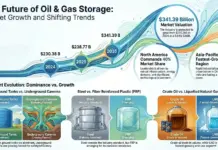
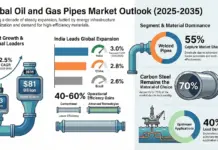
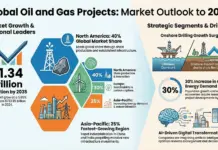
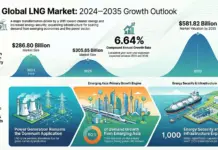
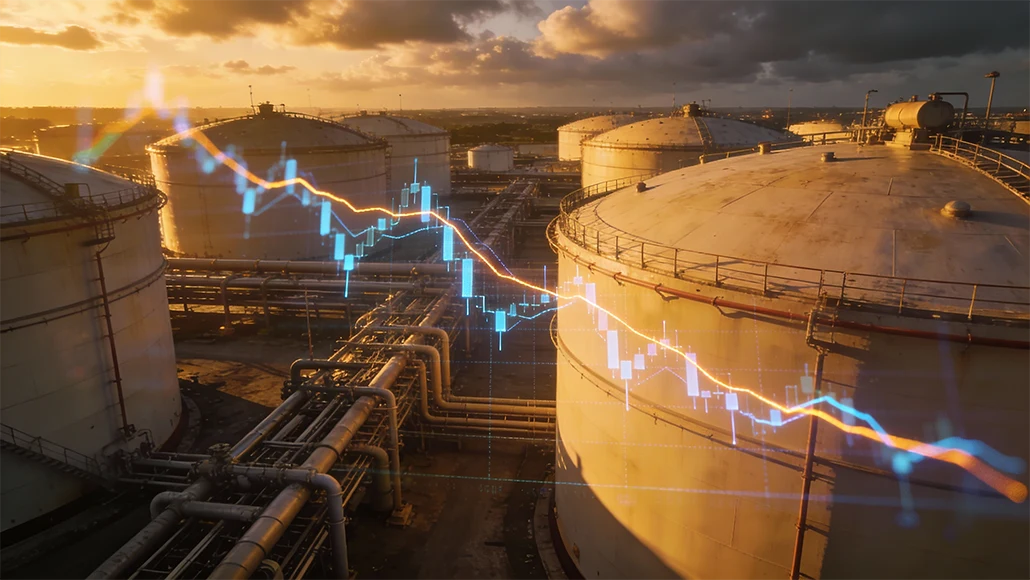
According to the International Energy Agency (IEA), the surge in oil demand resulting from the recovery after the pandemic will come to an end this year. The agency stated that a sluggish economy and the transition to cleaner fuels will dampen growth starting in 2024. While China and India’s strong demand contributed to a positive growth outlook for this year, with an increase of almost 300,000 barrels per day (bpd) to 2.4 million bpd, that projection will decrease by nearly two-thirds, primarily due to the widespread adoption of electric cars.
The transition towards a cleaner energy economy is accelerating, and there is a clear projection of reaching the peak of global oil demand before the end of this decade. This shift is driven by advancements in electric vehicles, energy efficiency, and other technologies. Investments in oil and gas exploration, production, and extraction globally may reach $528 billion in 2023, the highest level since the year 2015. These investments are predicted to sufficiently meet global oil demand by 2028, based on current insights.
There was no specific reaffirmation from the organization regarding the recommendation made in 2021 that investors should refrain from financing new projects related to oil, gas, and coal supply in order to achieve net-zero emissions by 2050. Nonetheless, it did mention that the current level of investment surpasses the necessary amount required in a world that is on the path to achieving net-zero emissions.
In order for overall oil demand to decrease earlier, aligning with the IEA’s Net Zero Emissions by 2050 Scenario, additional policy actions and changes in behavior would be necessary. The IEA predicts that economic challenges will reduce growth to 860,000 bpd next year and further decline to just 400,000 bpd in 2028, resulting in a total demand of 105.7 million bpd compared to 102.3 million bpd in 2023.
The deceleration of oil demand has been accelerated by concerns over energy security, notably due to Russia’s invasion of Ukraine. Additionally, governments’ post-COVID recovery plans have allocated over $2 trillion towards clean energy investments by 2030. Oil demand from combustible fossil fuels, excluding petrochemical feedstocks, biofuels, and other non-energy uses, is expected to reach its peak at 81.6 million barrels per day in the year 2028. The IEA also predicts that oil demand for transportation will reach its peak in 2026.
