









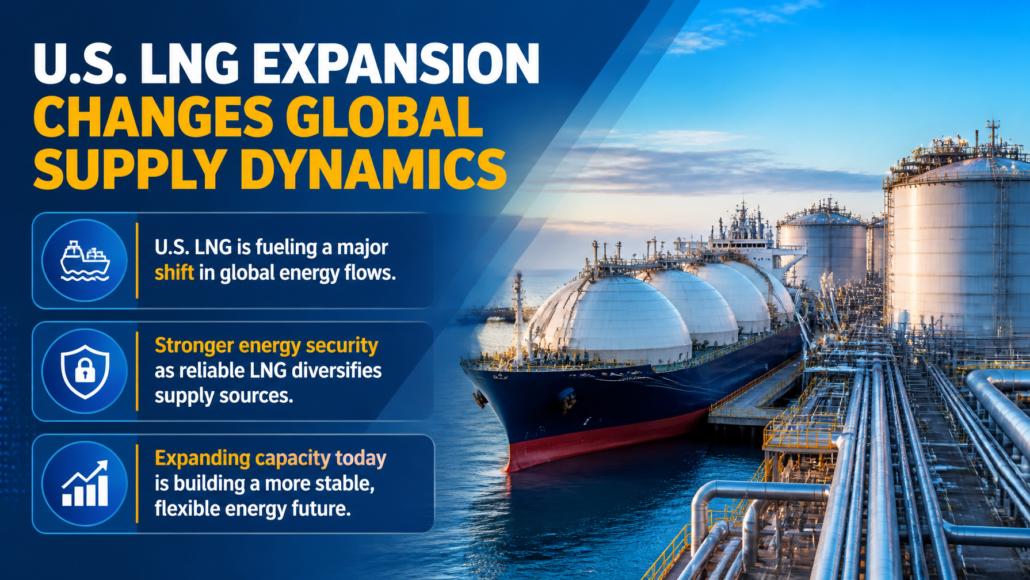
The international energy landscape is currently undergoing its most profound structural realignment since the mid-20th century, driven primarily by the rapid acceleration of U.S. LNG expansion. As the world transitions toward cleaner fuel sources while simultaneously grappling with unprecedented geopolitical volatility, the role of North American liquefied natural gas has evolved from a supplemental resource to a foundational pillar of global energy security. This expansion is not merely a matter of increased volume. It represents a fundamental shift in the global balance of power, as traditional pipeline dependencies are replaced by a more flexible, seaborne market that allows for real-time responsiveness to demand spikes across both Atlantic and Pacific basins.
Gulf Coast Dominance and Evolving Maritime Trade Routes
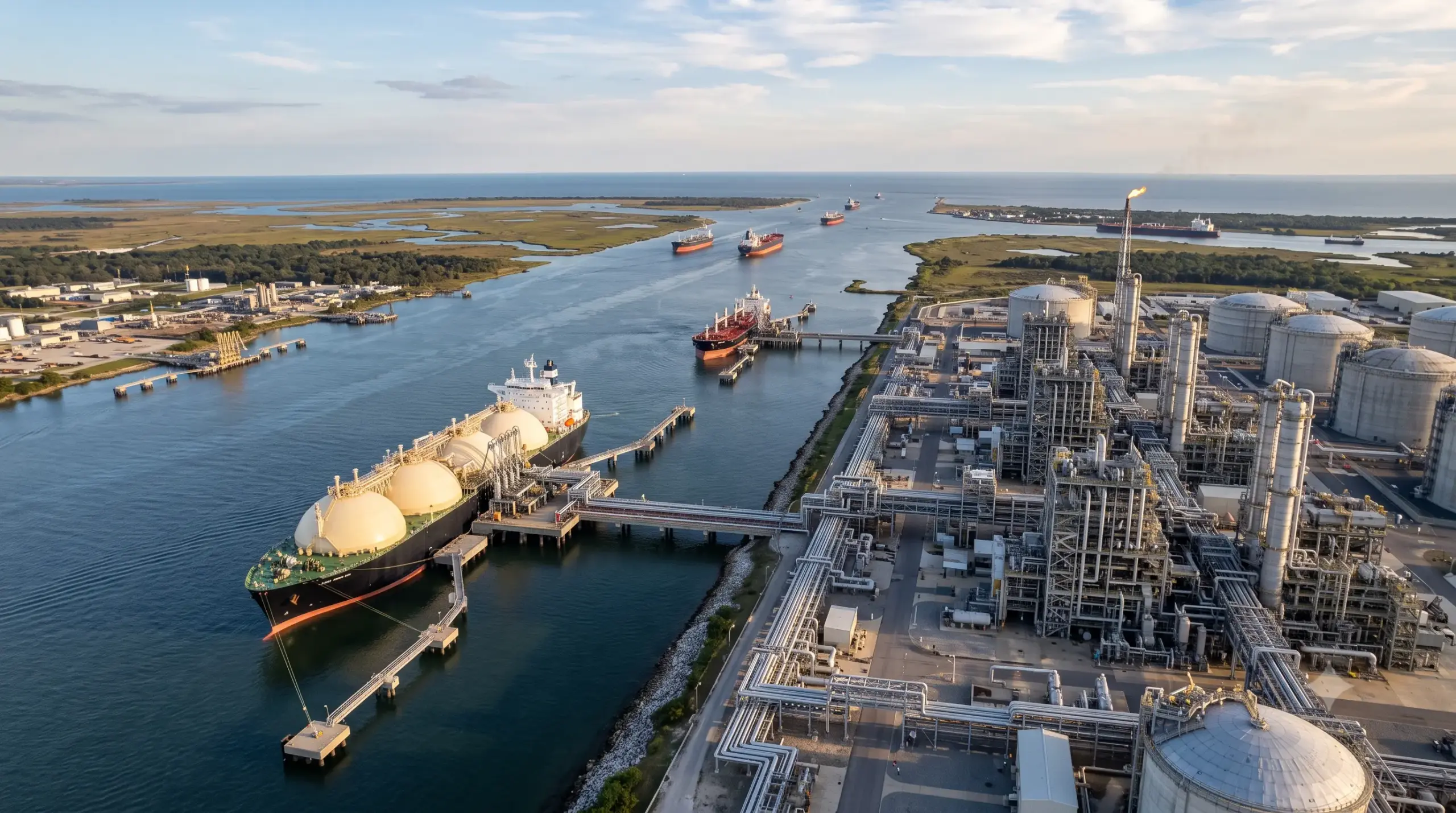
The sheer scale of the investment currently flowing into the Gulf Coast infrastructure is unprecedented. With dozens of projects in various stages of development, the United States is poised to maintain its position as the world’s leading exporter of LNG for the foreseeable future. This dominance is underpinned by a robust domestic production environment and a regulatory framework that, despite periodic shifts, has largely facilitated the rapid scaling of liquefaction capacity.
The implications for global trade routes are equally significant, as the Panama Canal remains a critical bottleneck, forcing a re-evaluation of maritime logistics. The Suez Canal, too, has faced its share of disruptions, leading to a noticeable shift in how energy is transported across the globe. Consequently, the Cape of Good Hope has seen a marked increase in traffic from massive tankers destined for Asian markets—such as Japan, South Korea, and emerging economies in Southeast Asia—seeking to diversify away from regional suppliers and establish long-term security through American contracts. This logistical shift is driving the development of larger, more efficient LNG carriers that can withstand the longer journeys while minimizing boil-off gas losses, thereby maintaining the economic viability of transatlantic and transpacific trade.
Decoupling from Crude: The Rise of Henry Hub Pricing
Furthermore, the expansion of U.S. export capacity is fundamentally altering the pricing mechanisms of natural gas. For decades, gas prices were largely indexed to crude oil, a legacy of the early days of the industry when gas was seen as a secondary byproduct. The emergence of the Henry Hub as a global benchmark for LNG pricing, independent of oil markets, has introduced a new level of price transparency and competition. This shift allows utilities and industrial consumers to hedge their energy costs more effectively, reducing the energy risk that has historically hampered long-term industrial planning in import-dependent regions. The decoupling of gas and oil prices is a clear indicator of a maturing, standalone global gas market.
Vertical Integration Across the Gulf Coast Hub
The strategic importance of the U.S. Gulf Coast as a global energy hub cannot be overstated. The concentration of liquefaction terminals, pipeline networks, and storage facilities in this region creates a unique ecosystem that benefits from economies of scale. Major players are not just building terminals; they are investing in the entire value chain, including upstream production assets and midstream gathering systems. This vertical integration ensures a steady supply of feed gas, insulating the export terminals from domestic price volatility and ensuring that commitments to international buyers are met with unwavering reliability. As these clusters grow, they become centers for innovation in cryogenic engineering and large-scale project management.
Speed and Scale: The Plaquemines LNG Benchmark
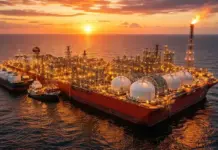
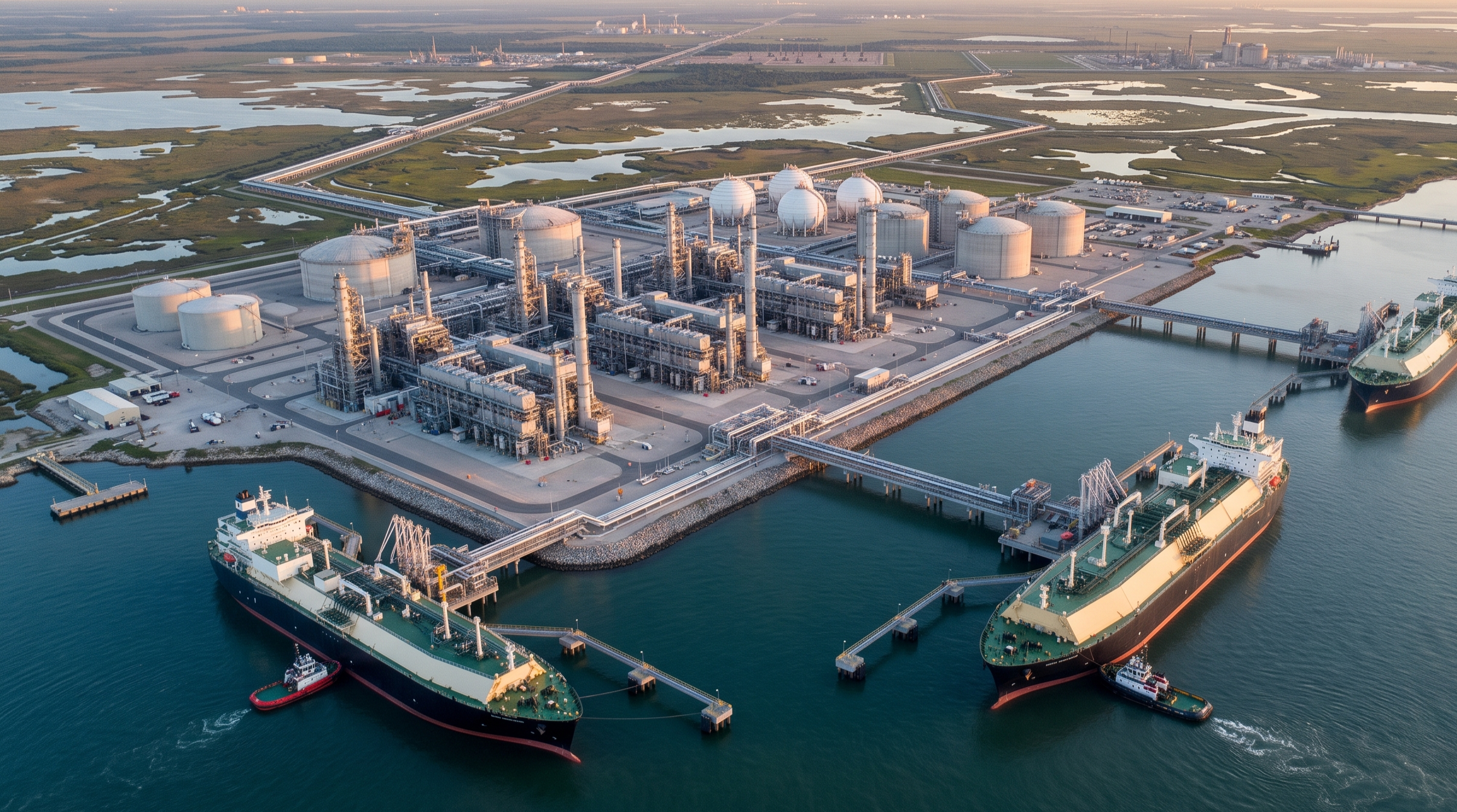
A defining moment in this trajectory occurred in late 2024, when the industry witnessed a major technological and operational milestone that solidified the speed of the American energy build-out. Venture Global successfully achieved first LNG production at its Plaquemines LNG facility in Louisiana, reaching this critical stage just 30 months after the final investment decision. This project, which carries a nameplate capacity of 20 million tonnes per annum (MTPA), represents the eighth major export facility in the United States and underscores the industry’s ability to deliver large-scale infrastructure at a pace that far outstrips international competitors. The facility’s first commissioning cargo, loaded onto the Venture Global Bayou, departed in December 2024 destined for Germany, marking a tangible success for transatlantic energy cooperation.
The speed at which Plaquemines was brought online serves as a benchmark for the entire industry, demonstrating that modular construction techniques and streamlined engineering processes can significantly reduce the ‘time-to-market’ for massive energy projects. This is particularly relevant in the current geopolitical climate, where energy needs are urgent and delay can have severe economic consequences for entire nations. The success of Plaquemines has prompted other developers to revisit their construction timelines, seeking ways to emulate the efficiency demonstrated by the Venture Global team. It also signals to global investors that the U.S. remains a premier destination for energy capital, capable of delivering complex projects with predictable schedules and costs.
Contract Flexibility and Market Commoditization
Beyond the immediate production metrics, the expansion is fostering a new era of contract flexibility. Historically, the LNG market was defined by rigid, multi-decade destination-bound contracts that prevented buyers from rerouting cargoes. The U.S. model, characterized by free-on-board (FOB) delivery and no destination restrictions, has effectively commoditized natural gas. This liquidity is crucial for European nations that have had to rapidly pivot away from Russian pipeline gas, providing a reliable floating pipeline that can be redirected as seasonal needs and storage levels fluctuate. The strategic depth provided by this flexibility cannot be overstated, as it serves as a primary hedge against supply disruptions.
Decarbonization and Upstream Clean Tech Integration
Furthermore, the integration of advanced technologies within these expanding terminals is setting new benchmarks for operational efficiency and environmental stewardship. While the primary goal remains capacity growth, the current wave of U.S. LNG expansion is increasingly focused on the carbon intensity of the entire supply chain. Developers are now incorporating electric drive (e-drive) turbines, carbon capture and storage (CCS) modules, and direct air capture (DAC) technologies to ensure that American gas remains competitive in a market that is increasingly sensitive to Scope 1 and Scope 2 emissions. This technological evolution ensures that the infrastructure being built today remains viable throughout the multi-decade lifespan of the facility.
As industrial clusters look to stabilize their energy inputs, the convergence of different energy systems becomes apparent. The stabilization provided by large-scale gas supply often serves as the baseload foundation upon which more localized, innovative solutions are built. For instance, the transition toward geothermal-hybrid microgrids provides baseload stability for industrial clusters, creating a complementary relationship where localized renewable baseloads reduce the overall volatility that global gas markets must absorb. This systemic integration highlights how the macro-level expansion of LNG is intrinsically linked to the micro-level innovations in localized power distribution and decentralized energy management.
Macroeconomic Headwinds and Supply Chain Ripples
The macroeconomic impact of these projects extends far beyond the energy sector, stimulating significant growth in the maritime, construction, and specialized engineering industries. The demand for state-of-the-art LNG carriers has led to a record-breaking order book for global shipyards, particularly in South Korea and China, where the next generation of ‘Q-Max’ and ‘Q-Flex’ vessels are being designed to carry even larger volumes of gas with lower emissions.
 Simultaneously, the specialized components required for liquefaction—such as cryogenic heat exchangers, high-capacity centrifugal compressors, and advanced filtration systems—have created a sustained boom for industrial equipment manufacturers. This ripple effect ensures that the U.S. LNG sector remains a central engine of industrial activity, providing high-skilled employment and driving innovation in materials science, particularly in the development of alloys that can withstand extreme cryogenic temperatures.
Midstream Modernization and AI-Driven Pipelines
The expansion also necessitates a massive upgrade to the domestic pipeline network. To feed the new liquefaction trains, thousands of miles of high-pressure pipelines are being constructed or retrofitted, requiring advanced monitoring systems and leak detection technologies. This midstream expansion is as critical as the terminals themselves, as it ensures that the abundant supply from the Permian and Haynesville basins can reach the coast efficiently.
The integration of AI and machine learning into these pipeline networks allows for predictive maintenance and real-time flow optimization, further enhancing the reliability of the entire export system. The synergy between upstream production, midstream transport, and downstream liquefaction is the secret to the U.S. LNG success story.
Catalyzing the Coal-to-Gas Transition Abroad
Moreover, the role of U.S. LNG in supporting the transition of developing economies cannot be overlooked. In countries where coal remains the dominant source of electricity, the introduction of natural gas can lead to immediate and significant reductions in carbon emissions and local air pollution. By providing a reliable and affordable alternative to coal, U.S. LNG expansion is facilitating a coal-to-gas switch in regions like South Asia and Southeast Asia. This transition is a vital component of the global effort to mitigate climate change, proving that energy security and environmental responsibility are not mutually exclusive. The availability of U.S. gas gives these nations the confidence to retire aging coal plants and invest in modern, gas-fired infrastructure.
Regulatory Compliance and Certified Low-Carbon Gas
Strategic foresight in the sector is also being driven by the need to navigate evolving environmental regulations. The European Union’s Methane Strategy and the implementation of the Carbon Border Adjustment Mechanism (CBAM) are compelling U.S. exporters to provide transparent, third-party verified data regarding the methane intensity of their gas. Consequently, the expansion of physical infrastructure is being mirrored by the development of sophisticated data management platforms that track every molecule of gas from the wellhead to the liquefaction terminal. This transparency is becoming a competitive advantage, as buyers are willing to pay a premium for certified or green LNG that aligns with their corporate sustainability targets.
The Bridge to a Resilient Global Energy Future
The shift toward geothermal-hybrid microgrids provides baseload stability for industrial clusters, creating a complementary relationship where localized renewable baseloads reduce the overall volatility that global gas markets must absorb. The trajectory of U.S. LNG expansion is reshaping the global energy map in ways that were unimaginable just a decade ago. By providing a secure, flexible, and increasingly low-carbon source of energy, the United States is enabling the global transition to a more resilient energy future. As capacity continues to come online and new technological frontiers are crossed, the influence of American natural gas will only grow, serving as a critical bridge to a net-zero world while ensuring that the lights stay on and the engines of global commerce continue to turn in the interim.
2026: A Landmark Year for U.S. Liquefaction Capacity
The momentum of the American energy sector has reached a new crescendo in 2026, characterized by the successful delivery of multi-billion-dollar projects and the signing of strategic long-term agreements that redefine transatlantic and transpacific trade. A primary catalyst for this growth has been the substantial completion of Cheniere Energy’s Corpus Christi Liquefaction (CCL) Stage 3 project in Texas. As of 31st August 2026, Cheniere announced that this expansion has increased its total production capacity by more than 20%, bringing the facility’s nominal capacity to approximately 3.1 billion cubic feet per day (Bcf/d). This milestone solidified the Corpus Christi terminal as the second-largest LNG export facility in the United States, just as the company celebrated the historic export of its 5,000th LNG cargo. The operational efficiency demonstrated by Cheniere, a company with thousands of employees, serves as a testament to the scalability of the U.S. export model.
Simultaneously, Sempra Infrastructure, a major player in the North American energy landscape, has continued to expand its global footprint through strategic partnerships. In September 2026, the company announced a significant 20-year sales and purchase agreement (SPA) with Petrobras, the Brazilian state-owned energy giant. Under this agreement, Sempra Infrastructure will supply approximately 0.8 million tonnes per annum (Mtpa) of LNG from its portfolio, further diversifying its customer base and ensuring long-term revenue stability for its massive infrastructure projects, including the Port Arthur LNG terminal. These developments underscore a broader trend of vertical integration and market expansion that characterizes the current wave of U.S. energy investment.
Further east along the Gulf Coast, Venture Global has maintained its aggressive development schedule for the Plaquemines LNG facility in Louisiana. In early September 2026, reports confirmed that deliveries for Phase 2 of the project remain on schedule, with long-term commercial operations targeted for the end of the second quarter of 2027. This assurance is particularly significant for major U.S. energy giants like ExxonMobil and Chevron, both of whom are key customers for the facility’s output. The continued progress at Plaquemines, even amidst global price volatility, highlights the resilience of the American supply chain and the unwavering commitment of major corporations to securing a stable energy future. As these facilities reach full capacity, the global market is increasingly reliant on the steady flow of gas from the Gulf Coast, cementing the United States’ role as the ultimate guarantor of global energy security.
References
- Venture Global’s Plaquemines LNG Achieves Historic First LNG Production
- Venture Global Announces Departure of Inaugural Commissioning Cargo from Plaquemines LNG
- Cheniere Announces Substantial Completion of CCL Stage 3 Project, Production and Export of 5,000th LNG Cargo
- Sempra Infrastructure Announces Long-Term LNG Supply Agreement with Petrobras
